
Stellantis is in a state of transition.
The parent company of Jeep, Dodge, and Chrysler has had a rough go since Fiat Chrysler merged with French automaker Peugeot in 2021.
Former CEO Carlos Tavares left the company in late 2024, and new CEO Antonio Filosa started his tenure on Monday, June 23.
Related: Classic Jeep, Dodge, Chrysler fans just got the best news from Stellantis
Filosa is in the midst of trying to turn around a car company that shipped 7% fewer vehicles this year than it did in the first half of 2024. But somehow, that decline was better than the 14% decline it reported in the second half of 2024, when Tavares stepped down in October.
Added to that is the company’s tariff burden.
Stellantis expects tariff expenses for the full year to be at the high end of its previous estimate of between 1 billion and 1.5 billion euros ($1.15 billion to $1.73 billion).
These struggles might help explain why the company is reportedly giving up on developing a game-changing technology, despite its competitors continuing to pour money into that very same tech.
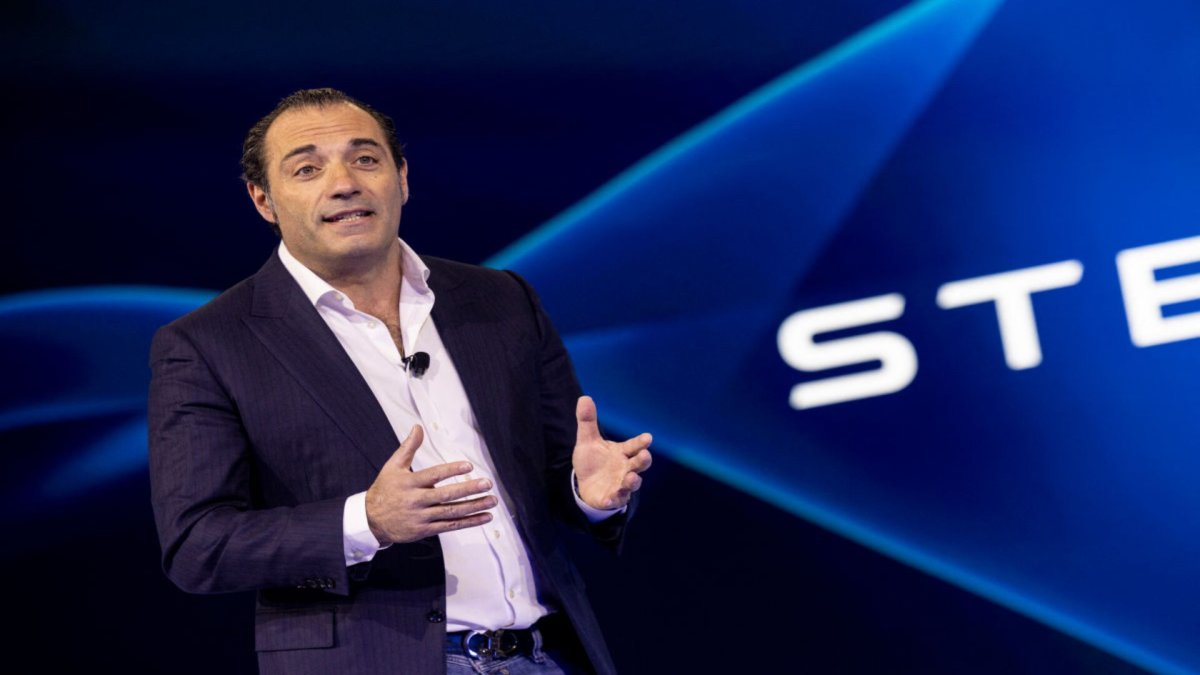 New Stellantis CEO Antonio Filosa has his work cut out for him.
Image source: Laurent/AFP via Getty Images
Stellantis abandons ADAS program due to costs
Stellantis is going to shelve plans to develop the advanced driver-assistance system that is part of its AutoDrive program due to the high costs of developing the tech, Reuters reported, citing three sources familiar with the matter.
This is a sharp departure from what the company indicated earlier this year, when it said a program that would allow users to take their hands off the wheel and off the road under certain conditions would be ready for deployment soon.
Stellantis still says the program is ready to be launched, but it won’t be doing so.
Related: Jeep, Dodge parent has no solution for this emerging problem
“What was unveiled in February 2025 was L3 technology, for which there is currently limited market demand, so this has not been launched but the technology is available and ready to be deployed,” a Stellantis spokesperson said.
However, Reuters sources say the program is no longer being developed and is not expected to be deployed. Stellantis did not specify how much money it has spent on a program it won’t launch.
But the company did share that it is still committed to AutoDrive.
Stellantis shares were down more than 1% Tuesday on the news.
ADAS systems are the future, but developing them is expensive
Advanced driving tech is the brass ring that car companies worldwide are trying to grab.
Everyone from Mercedes-Benz to BYD to Tesla is working on autonomous driving, to varying levels of success.
Stellantis rival General Motors has also announced plans to “realign its autonomous driving strategy,” but GM is focusing its efforts more on ADAS and less on building its own robotaxi.
GM has reportedly spent more than $10 billion developing its Cruise robotaxi, but the move away from Cruise is also financial. The company says it will save $1 billion annually by moving away from the venture.
New Stellantis CEO Antonio Filosa has a lot of work to do
Last month, Stellantis shared that Filosa would be moving the CEO’s office to Detroit, Michigan, while also revealing that it will build a $388 million “Megahub” in Van Buren Township, just outside Detroit.
Filosa, 51, who has been with the company for 25 years, is stepping in at a time when tariffs are eating into the company’s bottom line and it is losing market share in North America, its most important market.
More automotive:
- Tariffs bring Japanese automakers to their breaking point
- Tesla’s latest move could make it tougher to sell more Cybertrucks
- GM’s tech czar has a novel view of what AI can do
“For sure, one important root cause of our market deterioration, both in North America, especially, but also in Enlarged Europe, is the fact that in the past, we decided to phase out many important, relevant, and successful nameplates,” Filosa said.
Earlier this year, Stellantis reported that total first-quarter 2025 U.S. sales decreased 12% year-over-year, despite a 16% increase in Ram brand sales and a 1% increase in Chrysler brand sales.
Jeep brand sales increased 2%. Stellantis reported that first-half net revenues fell 13% year over year, driven once again by declines in North America and Europe.
The company’s net loss was 2.3 billion euros ($2.66 billion) after reporting a 5.6 billion euro profit a year ago.
Related: US car buyers feel tariff pain as one automaker raises prices