
Tesla (TSLA) recognized its crumbling market share as early as last year.
To combat slowing momentum, Tesla lowered prices on its most popular brands starting in April 2024.
But that move was at the tail end of a bunch of other red flags at the EV maker. Tesla had just fired 10% of its workforce, lost key executives, and struggled to keep its promise of debuting a $25,000 budget model.
Related: BYD follows Tesla’s radical approach; the results are just as disastrous
Though the company is no longer cutting headcount, it is still losing executives, and the $25,000 remains just a figment of Elon Musk’s imagination. Tesla’s market share is still tanking.
The company delivered just 384,122 vehicles in the second quarter, a 13.5% year-over-year decline that missed analyst estimates by about 3,000 units.
Last year, Tesla experienced its first annual sales decline since 2011 after reporting a 1.1% drop in overall deliveries to 1.79 million from 1.81 million the year prior, the AP reported, citing data from analytics firm Global Data.
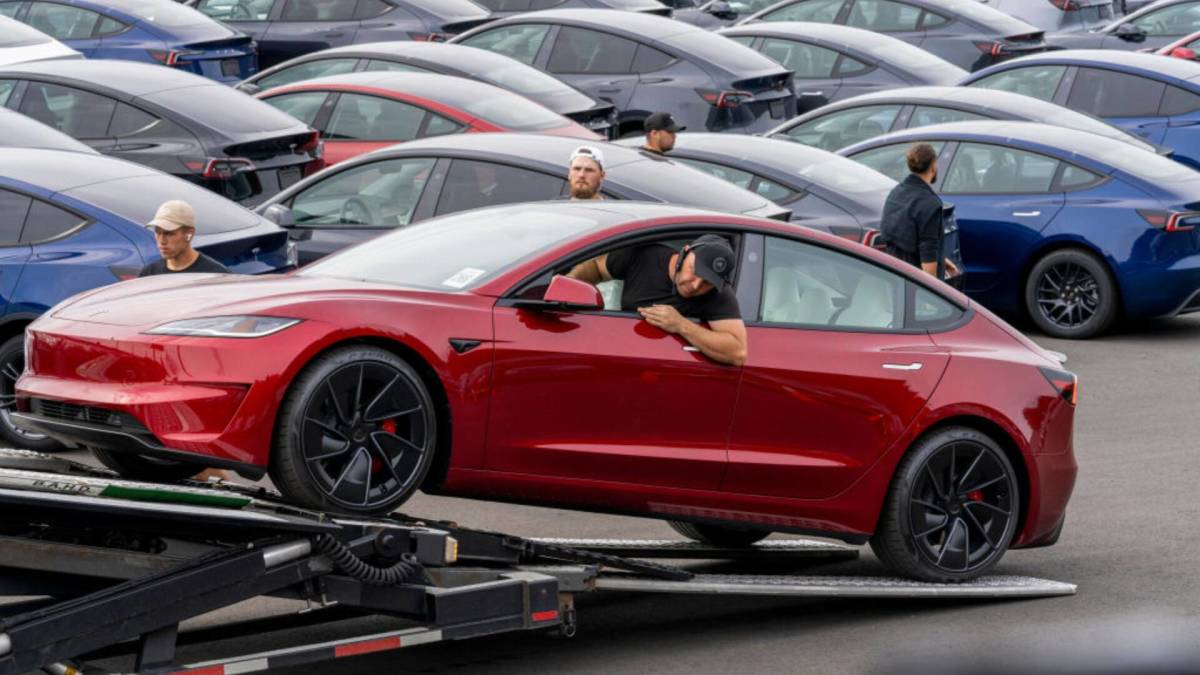 Tesla is expected to begin shippping to India in September.
Image source: Brauer/Bloomberg via Getty Images
Tesla’s international efforts are failing in India and China
While the U.S. EV industry has yet to catch fire, the industry is ready to explode in Asia.
China has dived feet first into the EV industry with the government pushing its citizens to adopt green technology using cash, tax, and other incentives to get them to purchase EVs and hybrids.
Meanwhile, India also seems ripe for EV cultivation.
India is currently the third-largest automobile market, behind China and the U.S., according to S&P Global, and the government says it wants to boost EVs from the current 5% to 30% of the country’s automobile sector by 2030.
Related: Tesla Robotaxi fails miserably in Cathie Wood street test
But Tesla’s maiden voyage into the country hasn’t connected to that increased demand.
Tesla has received orders for just over 600 cars since it entered the market in mid-July, according to Bloomberg, citing “people familiar with the matter.”
Tesla now plans to ship between 350 and 500 cars to India this year, with the first batch set to land from Shanghai in September.
Deliveries are limited to Mumbai, Delhi, Pune, and Gurugram, but the company cannot fulfil its 2,500-car annual quota this year.
Meanwhile, Tesla has been marketing in China using the made-in-China mantra, but data shows that production at its China plant is slowing.
Tesla made 58,459 Model 3 and Model Y vehicles at Gigafactory Shanghai in April, a 6% year-over-year decline. This came as demand fell, with delivery data also declining in recent weeks.
Hybrid cars are eating into Tesla’s bottom line
Tesla has been facing a demand problem for 18 months, which has only been exacerbated by Musk’s foray into politics.
The company delivered just 384,122 vehicles in the second quarter, a 13.5% year-over-year decline that missed analyst estimates by about 3,000 units.
“It’s already turned around,” Musk responded curtly during the Qatar Economic Forum in May when asked about turning around Tesla’s declining sales.
“Europe is our weakest market, but we’re strong everywhere else. Our sales are doing well now, and we don’t anticipate any shortfall.”
But now there’s evidence that the company is also declining in one of its strongest markets.
Tesla sales fell 21% in California in the second quarter to 41,138 units, according to data from the California New Car Dealers Association.
More automotive:
- GM’s tech czar has a novel view of what AI can do
- Defense accuses Ford of retaliation in messy RICO lawsuit
- Latest car industry trend is great news for buyers
This is the seventh consecutive quarter Tesla has reported a year-over-year decline and the fourth consecutive sequential quarterly decline.
Tesla faces the same issue in California that it does in Europe and China: Hybrid vehicles are more popular.
“Hybrid vehicles are gaining momentum and paving the way for a cleaner, greener California. Registrations for hybrids have climbed 54 percent so far this year, now accounting for 19.2 percent of the market,” CNCDA said in its report.
Related: Tesla loses even more precious ground in this key region