
While most people consider autonomous driving a new technology, Waymo has been around for nearly two decades.
Waymo was founded in 2009, and by 2012, it had passed the first U.S. state self-driving test in Las Vegas, Nevada.
Since then, the company has been at the forefront of autonomous driving, and its parent company, Alphabet, spun Waymo out as a separate subsidiary in 2016.
Related: Tesla Robotaxi fails miserably in Cathie Wood street test
As of July 2025, Waymo One is available 24/7 to customers in Los Angeles, Phoenix, and the San Francisco Bay Area. Waymo partners with Uber in Austin and Atlanta.
Waymo’s current fleet features over 1,500 vehicles spread across its four current host cities, but by next year, it expects to more than double that with more than 2,000 new additions.
The company recently detailed its next steps and the new cities in which it plans to expand.
Waymo announces robotaxi expansion plans
Waymo announced that it will begin test-driving its autonomous vehicles in Denver in the fall.
Waymo will bring its fleet of Jaguar I-PACE vehicles, the fifth-generation Waymo Driver, and Zeekr RT vehicles equipped with its latest tech.
It also says it has trained its model to handle the cold-weather terrain it will encounter in Denver.
“Our next-generation system is informed by years of winter weather experience across Michigan, upstate New York, and the Sierra Nevada and engineered to autonomously sustain operations in harsher climates,” the company said in a recent blog post.
Related: Tesla Robotaxi pulls ahead of Waymo in San Francisco
The company is also expanding to Seattle, a city Waymo says has been one of the “early leaders in autonomous vehicle testing.”
Waymo says it has spent years canvassing the area due to its unique weather and layout, and that data has informed its tech as it operates in other cities.
Waymo will have safety drivers in the front seat while it tests out these new markets. The company has been running similar tests in New York City, much to the chagrin of some locals.
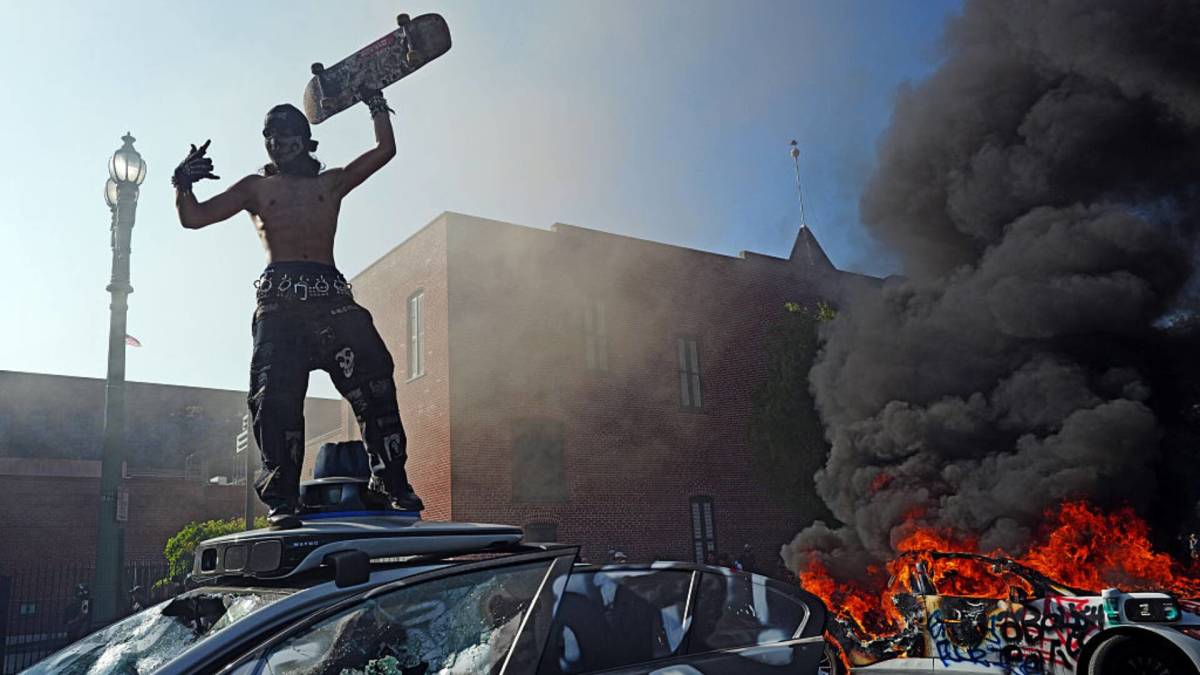 Waymo has run into opposition from locals in some cities.
Image source: Nick Ut/Getty Images
City dwellers have not been kind to Waymo or other autonomous driving
Urban centers have large clusters of college-educated citizens, so one would think that cities embrace forward-looking tech like autonomous driving with open arms.
However, this could not be further from the truth.
Advocacy groups are making their voices heard in New York City, where Waymo recently received permission to conduct tests.
“This was a pilot initiated with very little public input,” Michael Sutherland, a policy researcher with Open Plans, told Gothamist. “From a safety perspective, this is a technology that hasn’t been tested out in incredibly dense cities like New York City.”
Open Plans says NYC is comparable to the other cities where Waymo operates due to the density of human and vehicle traffic.
“The future of transportation is public transit that runs reliably and regularly, and active transportation that’s available to everybody. It’s not cars,” Sutherland said.
And it’s not just a New York thing.
Nearly 80% of California voters support requiring a human safety operator in self-driving trucks and delivery vehicles, and just 33% of voters express a favorable general impression of autonomous vehicles.
Waymo says compared to those with human drivers, its autonomous vehicles have been involved in 88% fewer crashes with serious injuries.
Groups such as Safe Street Rebels, however, say they have documented hundreds of crashes and failures by autonomous vehicles over the years.
Related: Alphabet’s Waymo flexes on Tesla Robotaxi with latest update