
The latest buzz on who’s hiring for what job in which company will have a potentially huge economic impact on your wallet – and very soon.
Yes, U.S. job openings are more than a measure of hiring.
Related: Fed official sends bold 5-word message on September interest rate cuts
They are a leading indicator shaping how the Federal Reserve responds to both inflation and employment.
This is why the Job Openings and Labor Turnover Survey (Jolts) for July released Sept. 3 is an influential data point in terms of whether the Federal Open Market Committee will cut the benchmark interest rates at its Sept. 17 meeting.
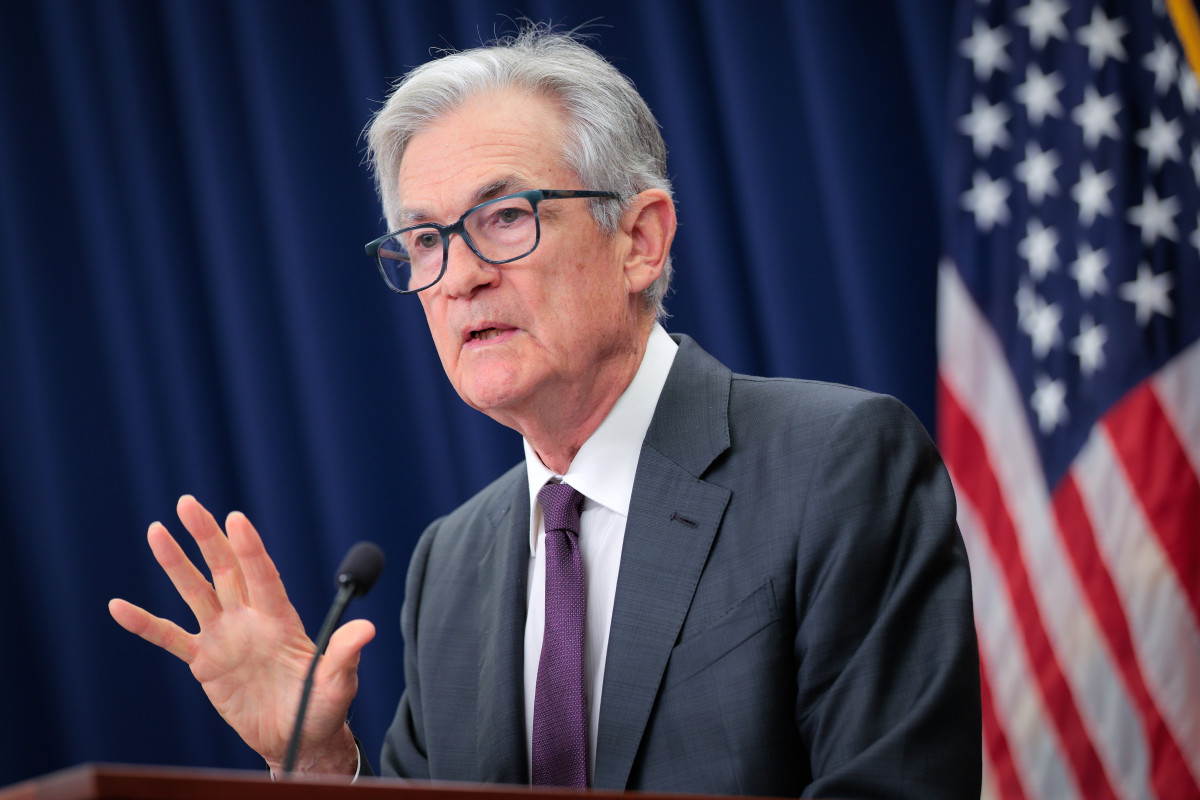 The Federal Open Market Committee will consider the Sept. 3 Jolts as part of the most recent economic data when it takes up interest rate cuts on Sept. 17.
Image source: Chip Somodevilla/Getty Images
How Jolts relates to Fed interest rate cut percentage
The Jolts, a monthly report published by the Bureau of Labor Statistics, tracks job openings, hires, and separations across industries.
The report offers:
- A detailed look at labor demand, showing how many positions employers are trying to fill, how quickly workers are being hired, and how often they quit or are laid off
- A key tool for economists, businesses, and policymakers that helps measure the health and flexibility of the job market
- Data the Federal Reserve can use to weigh its dual mandate from Congress to maintain maximum employment and price stability
- Signals — such as the number of job openings relative to available workers — indicating tight labor conditions that could fuel wage growth and inflation
- Indicators, such as slowing hiring or rising layoffs, that point to weakening economic momentum and influence how the Fed sets interest rate policy
Is the labor market cooling?
The July Jolts report showed U.S. job openings fell to the lowest in 10 months, the Bureau of Labor Statistics reported.
- Available positions decreased to 7.18 million from a downwardly revised 7.36 million in June.
- The drop in openings was driven by health care, retail trade, and leisure and hospitality.
- Vacancies in health care, a major driver of job growth in 2025, dropped to the lowest level since 2021.
State, government jobs also impacted in Jolts report
Neil Dutta, head of economic research at Renaissance Macro Research, said in a note that the decline also centered on state and local government job openings.
“This is notable because these acylical parts of the jobs market have been the areas lifting employment growth the most,’’ Dutta said. “If you lose these acyclical areas you don’t really have much else [to] keep payroll growth with a plus sign in front of it.”
More Federal Reserve:
- Morgan Stanley makes major change to Fed interest rate cut forecast
- Can the president fire a Federal Reserve governor?
- DOJ turns up the heat to remove embattled Fed official
In addition to the openings data, the pace of hiring has slowed, and it is taking longer for unemployed people to find another position.
Fed officials link labor market to interest rate cuts
The FOMC has taken a cautious “wait and see” approach to interest rate cuts, balancing signs of tariff inflation with concerns about the slowing labor market.
Fed Chair Jerome Powell said last month that with inflation close to the central bank’s 2% target, policymakers must weigh risks associated with the labor market.
Related: New inflation report may have major impact on your wallet
Powell signaled flexibility, noting the Fed would respond to new data as it is released rather than lock in a preset course.
The FOMC last cut the funds rate in December 2024.
It has been tracking the expected inflationary impact of the largest U.S. tariffs in 90 years imposed by President Donald Trump.
What Fed officials say about the labor market
Fed Governors Christopher Waller and Michelle Bowman dissented in July when the FOMC voted to hold the Federal Funds Rate steady at 4.25% to 4.5%.
It was the first FOMC dissent of Powell’s term as chair, and in decades at the Fed.
Waller doubled down on the need for multiple rate cuts on Sept. 3, saying the “labor market has come in much softer” in a CNBC interview.
“When the labor market turns bad, it turns bad fast,” Waller said, adding that any inflation from the tariffs would be short-term.
Related: Exclusive: What the experts think about Powell’s new comments on Fed interest rate cuts
