
Remember Woody Allen’s 1973 movie “Sleeper”? The comedy with gigantic fruits and vegetables, dietary science upside down, and the infamous “orgasmatron” that replaced traditional romance?
Fast forward 50 years, and the future is not that different. True, we don’t have orgasmatrons, but we do have AI “friends.” We don’t encourage cigarette smoking to boost our health, but we do have AI therapists, GMO foods, weight-loss drugs, and now…meat grown in a lab.
Alas, this is real life, so there’s nothing comical about it.
Texas is now under fire over its recent ban on the sale of lab-grown meat. In September, the Lone Star State joined five others that are cautious about cell-grown food’s safety and ethics, as well as its environmental and economic impacts.
Now, two food-tech companies — Upside Foods and Wildtype — are suing the state.
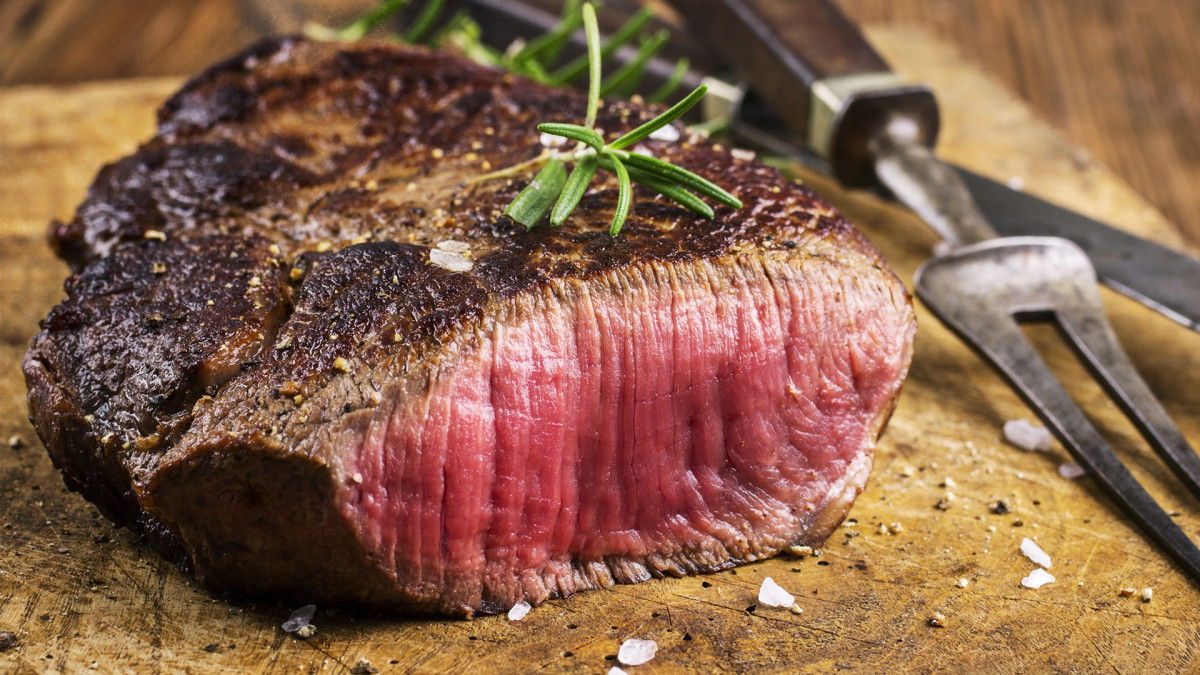 In June 2023, the U.S. approved the sale of lab-grown meat for the first time.
Image source: Shutterstock
What is lab-grown meat?
About 12 years ago, scientists found a way to grow various types of meat in a laboratory. This process is often called cultured, cultivated or cell-cultivated meat.
Scientists take a small sample of cells from a real-life animal, then provide those cells with a nutrient-rich environment to multiply.
Related: CDC shares a food warning for all Americans
In 2013, Dutch scientist Mark Post unveiled the first cultivated meat burger on live television, and in June 2023, the U.S. approved the sale of lab-grown meat for the first time.
Earlier this year, the Food and Drug Administration cleared a food tech company, Wildtype, to offer its lab-grown salmon in the United States. This was the first time the agency greenlighted a cultivated seafood product.
While lab-grown meat might seem like a good idea to reduce land and water use, cut greenhouse emission, and eliminate animal killing, many experts are raising eyebrows and several states are banning the production.
Texas is one of them, and it’s now getting sued for this reason.
Cultivated meat producers sue Texas over ban on lab-grown protein
Seven U.S. states have enacted laws prohibiting the production and sale of cultivated meat so far, and many other states are considering doing the same.
States banning the sale and production of lab-grown meat:
- Texas
- Indiana
- Mississippi
- Montana
- Alabama
- Florida
- Nebraska
Texas was the latest to make that move this September, and it has done so in a similar way to Nebraska, setting the ban to two years, while more research is done to assess the potential benefits, risks and disadvantages.
Upside and Wildtype, two of just a handful of FDA-approved companies that sell lab-grown meat, have filed a lawsuit to challenge a recent Texas ban on cultivated meat, writes Food Dive.
The two companies argue that the ban not only prevents them from developing their business across Texas, but also has more serious implications for the future of this nascent industry.
Motives behind banning lab-grown meat: protecting ranchers or just eliminating competition?
Cultivated meat producers worry that the ban aims only to (unlawfully) protect the Texas agriculture industry by eliminating out-of-state competition.
“The Texas ban on cultivated meat is a classic example of special interest legislation,” attorney Paul Sherman told The Dallas Morning News. “The law has nothing to do with public health and safety, and everything to do with protecting the powerful agriculture lobby from innovative out-of-state competition.”
Ranchers and family farmers praise the ban.
“Ranchers across Texas work tirelessly to raise healthy cattle and produce high-quality beef,” Texas & Southwestern Cattle Raisers Association President Carl Ray Polk Jr. stated. “Our association is grateful for those legislators who voted to support this legislation and understood the core of this bill, to protect our consumers, the beef industry and animal agriculture.”
Related: Supermarket inflation: Beef prices soar as egg prices fall
Violators of the ban could be subject to a $25,000 fine per day, or up to one year in prison. Cultivated chicken producer Upside previously also sued Florida over the same type of ban.
Why are some states banning lab-grown meat?
Experts are divided on controversial cultivated meat
Some researchers argue that cultured meat could be healthier than traditional meat, as it is not exposed to potential contaminants found in farmed animals, such as feed, pesticides, additives, antibiotics, and environmental pollutants, writes DW.
“Lab grown meat could be also an excellent functional food to cover specific dietary needs for people with various ailments,” wrote food hygiene expert Daniel Sergelidis in the Biomedical Journal of Scientific & Technical Research.
However, just like with any developing industry, there are still many unanswered questions and significant skepticism. European Livestock Voice notes several risks and concerns associated with the consumption of cultivated meat.
Relying on the first of four reports published in 2023 from the Food and Agriculture Organization and World Health Organization, there are 53 identified potential health risks related to cultured meat. Among the most significant ones is the “proliferation of cancer cells and interference with the human endocrine system.”
Concerns with lab-cultured meat include:
- Potential health risks: Bioactive molecules could interfere with human metabolism and potentially trigger the development of deadly diseases.
- Environmental impact: According to a recent study, the environmental toll of lab-grown foods could, for some metrics, surpass that of traditional livestock farming.
- Nutritional quality: Lab-grown meat’s micronutrient composition differs from that of natural meat.
- Socioeconomic consequences: Consuming lab-grown food instead of food sourced from the land could reduce jobs within the traditional agriculture industry and cause geographic inequities in access to food-production technology.
Many experts agree on one concern: Making these products at scale to feed a large population may not be economically feasible.
Related: McDonald’s CEO raises alarm about new customer behavior