
Tesla’s year started out promising, with its CEO firmly planted in the White House as the leader of the Department of Government Efficiency, helping lead President Donald Trump’s administration.
However, 2025 hasn’t exactly rolled out according to the company’s plan, as Elon Musk left his position at DOGE and burned some bridges on his way out of Washington, D.C.
The stock has had a strong upward trajectory since April, but is still down more than 11% year to date (though shares were up another 3.5% Sept. 11).
Part of the company’s struggle has been its global decline.
Tesla EU August struggles (registrations):
- France: -47.7%
- Sweden: -84%
- Denmark: -42%
- Netherlands: -50%
- Italy: -4.4%
Tesla EU August triumphs (registrations):
- Norway: +21.3%
- Portugal: +30%
- Spain: 161%
Tesla has always been the standard-bearer for EVs in America, but the tide is also turning here.
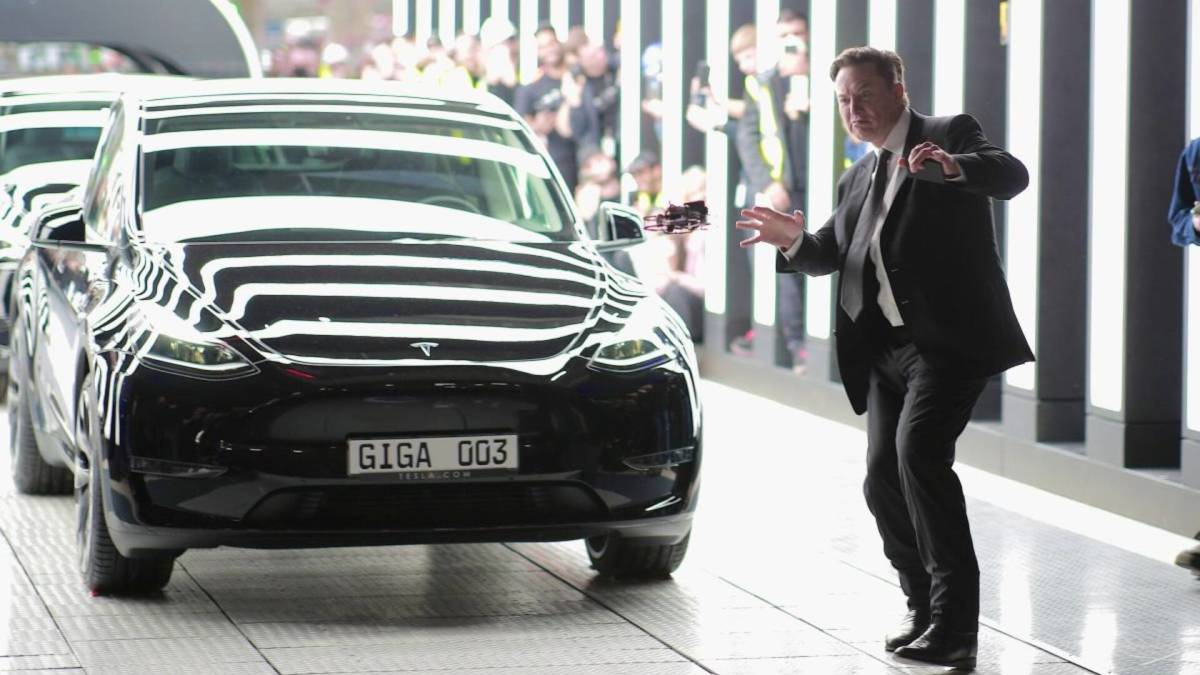 Tesla is losing market share even as EV sales are rising.
Image source: Marquardt – Pool/Getty Images
U.S. EV sales reach new records in August, with more growth expected
Tesla is losing ground in China and most countries in Europe, but the U.S. is by far the biggest market, and it is losing ground here, too.
In August, Tesla’s market share in the U.S. shrank to 38%, down from 80% at its height.
While some of that degradation is tied to increased competition here in the States, the decline in more mature markets like Europe and China could be a serious problem for the automaker.
Related: Tesla report reveals concerning customer behavior
U.S. EV sales rose to 9.9% of all new car sales in August, a 10% jump from the 9.1% share held in July and the highest-ever record, according to Cox Automotive data.
Market share increased despite an uptick in prices, as the average transaction price (ATP) for an EV was $57,245 in August, a 3.1% increase. The ATP for a traditional new vehicle rose just 0.5% to $49,077.
So despite being more expensive and experiencing a larger price increase, total EV sales in the U.S. reached a record of 146,332 in August.
“With government-supported EV tax credits set to expire at the end of September, current sales trends suggest Q3 2025 will set an all-time record for EV sales in the U.S.,” according to Cox Automotive.
The current quarterly record is 365,824.
Tesla gears up to pivot away from EVs
Last month, Tesla and CEO Elon Musk released the Master Plan 4, the fourth (or third, depending on how you count) iteration of Musk’s grand scheme for the company’s future.
However, Master Plan 4 is different from its predecessors. It’s much less about the green revolution or even electric vehicles and more about a future with Tesla-branded humanoid robots known as Optimus.
“What is the happiest future you can imagine?” Musk asks at the end of the video, announcing his plans. “Sustainable abundance for all.”
The text version of Master Plan Part 4 mentions sustainable abundance five times.
More Tesla:
- Tesla gets a double dip of bad news from India
- BYD follows Tesla’s radical approach; the results are just as disastrous
- Elon Musk’s road to $1 trillion fortune is full of potholes
The goal: “redefining the fundamental building blocks of labor, mobility, and energy at scale and for all.”
While that is a lofty aspiration for any company, especially one that is ostensibly still a car company, Musk believes he can achieve it, and his shareholders believe him.
Musk recently tweeted that he believes Optimus could eventually account for 80% of Tesla’s valuation down the road, but in this current section of that road, Tesla is still an EV company.
Tesla derived 90% of its 2024 revenue and 94% of its gross margin from auto sales. But those auto sales have been falling and not growing for 18 months.
And the latest data show that Tesla’s current moneymaker may be in serious trouble.
Related: Tesla loses even more precious ground in this key region