
Beauty has always been important. Though beauty standards have changed throughout history, beauty has always been sought after and considered prestigious.
For instance, in prehistoric times, a beautiful woman was considered to have fertility traits — curvy, with large breasts and hips — and then, in 1960, thin, “Twiggy” figures were considered ideal.
While these beauty standards were shifting over time, one feature was constantly considered estimable — youthful appearance.
With this in mind, it comes as no surprise that the beauty and personal care industry has grown as big as it has. Globally, it is projected to generate a revenue of $677.19 billion in 2025, according to data from Statista.
Factors contributing to the beauty and personal care industry’s growth:
- Covid pandemic
- Growing focus on mental health and wellness
- Rising influence of social media
The beauty and personal care market in the United Kingdom is projected to reach $17.52 billion in 2025. However, despite a surge in demand for clean and sustainable beauty products, many beauty retailers have experienced various challenges over the last few years, including the effects of the global recession.
Additionally, Statista projects that by the end of 2025, 52.8% of the total revenue in the UK beauty and personal care market will be generated via online sales.
This puts brick-and-mortar retailers in a difficult position.
Now, a 55-year-old beauty retailer, Bodycare, is closing another 30 stores amid financial troubles.
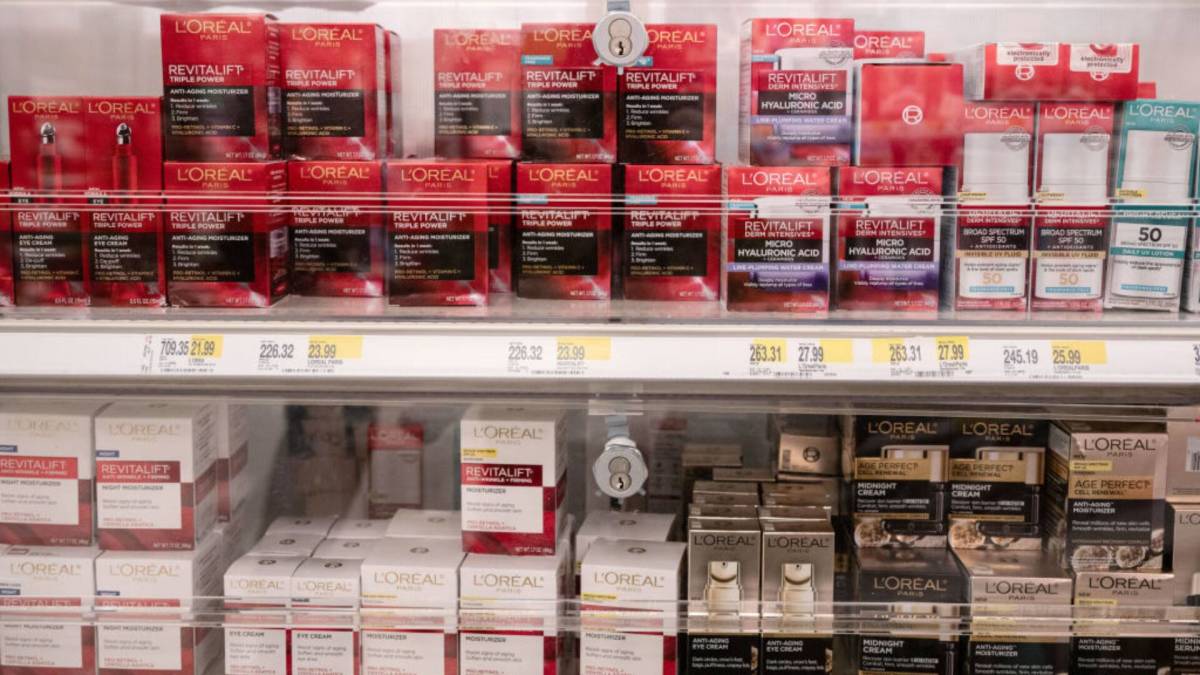 Beauty chain Bodycare, founded in 1970, sells major beauty and personal care brands, including L’Oréal, Nivea, Elizabeth Arden, and Olay.
Image source: Blue/Bloomberg via Getty Images
Bodycare to close another 30 stores
British high street beauty chain Bodycare confirmed it will close an additional 30 stores on September 16 and September 18. These closings will impact about 235 employees.
The chain, which entered administration on September 5, will continue to operate 85 stores after this latest round of closures, according to a report by Britain’s News Channel.
“Administration typically occurs when a business is in significant debt, with the Insolvency Practitioners coming in to assess whether the company is salvageable, or whether it will have to be liquidated,” according to HudsonWeir.
Related: Ralph Lauren and Microsoft launch unlikely partnership
Bodycare was founded in 1970 by Graham and Margaret Blackledge on a market stall in Lancashire. Over time, it has expanded to 147 stores across the UK and 1,500 employees.
The popular brand sells major beauty and personal care brands, including L’Oréal, Nivea, Elizabeth Arden, and Olay. It offers a wide range of products across skin care, cosmetics, fragrances, wellness, and hair care.
Locations of Bodycare stores closing on Sept. 16:
- Bolton, Greater Manchester
- Bromsgrove, Worcestershire
- Castleford, West Yorkshire
- Chesterfield, Derbyshire
- Doncaster, South Yorkshire
- Greenock, Scotland
- Mansfield, Nottinghamshire
- Salford, Greater Manchester
- Skipton, North Yorkshire
- Stevenage, Hertfordshire
- Sutton-in-Ashfield, Nottinghamshire
- Thornaby, North Yorkshire
- Ulverston, Cumbria
- Whitehaven, Cumbria
Locations of Bodycare stores closing on Sept. 18:
- Dudley, West Midlands
- Dunfermline, Scotland
- Hanley, Staffordshire
- Hull, East Riding of Yorkshire
- Hyde, Greater Manchester
- Ilford, Greater London
- Ipswich, Suffolk
- Morpeth, Northumberland
- Newark, Nottinghamshire
- Northallerton, North Yorkshire
- Ormskirk, Lancashire
- Redcar, North Yorkshire
- Rochdale, Greater Manchester
- Shrewsbury, Shropshire
- St Helens, Merseyside
- Workington, Cumbria
These are challenging times for all kinds of retailers, and the beauty sector is no exception.
In a report called “State of Beauty 2025: Solving a Shifting Growth Puzzle,” McKinsey & Company writes, ”All beauty players will need to recalibrate by reorienting themselves toward high-growth markets, reconsidering the value they bring to their products, and refreshing their commercial functions.”
The report further suggests that beauty brands should concentrate on skeptical consumers, adapt across various markets, and prove their “worth beyond the hype.”
Bodycare’s financial difficulties, administration
Bodycare was profitable prior to the Covid pandemic but faced financial difficulties later on due to high operating expenses and high inflation, according to a report by BeautyMatter.
These economic challenges led to strained supplier relationships, resulting in product availability problems.
On September 5, Bodycare fell into administration, and immediately shut 32 of its 147 stores, causing 450 people to lose their jobs.
When a business goes into administration, it suggests that it can’t pay its debts and needs a licensed insolvency practitioner (administrator) to try to rescue it or get the best results for creditors.
Related: Americans are worried about the economy; spending anyway
Bodycare appointed administrators from Interpath Advisory, who are looking at a potential sale of the business and its assets.
Nick Holloway, joint administrator and Managing Director at Interpath, stressed that these are difficult times for high-street retailers due to rising expenses and reduced consumer spending.
“Unfortunately for Bodycare, which was also contending with a significant funding gap and increasing creditor pressure, these challenges proved too difficult to overcome,” Holloway said.
The administrator further expressed gratitude to hundreds of Bodycare employees, and confirmed the company would continue operations at 85 stores while considering its possible sale.
“We will continue to trade the remaining 85 stores while we remain in discussions with interested parties with the aim of preserving as much of the business as possible,” Holloway said.
Related: Coca-Cola surprisingly brings back fan-favorite soda flavor