
Warren Buffett will step down as CEO of Berkshire Hathaway at 95 years old at the end of 2025. He bought the fledgling textile company in 1965 and transformed it into a massively successful holding company that owns insurers, railroad operators, furniture makers, candy and ice cream makers, and—in the past 20 years—technology-related companies.
Buffett invests in businesses he knows about, and his investment philosophy is widely followed by the public. Nevertheless, he has had missteps in his more than 80-year investment career.
💵💰 Don’t miss the move: Subscribe to TheStreet’s free daily newsletter 💵💰
While he’s made billions of dollars, and the value of Berkshire’s stock has multiplied many times over since he took the company’s helm in 1965, he’s also recorded hundreds of millions of dollars in investment losses. Interestingly, these capital losses likely pale in comparison to the potentially hundreds of billions lost via opportunities he missed over the decades.
Warren Buffett’s 3 biggest investment missteps
The following are three of the biggest mistakes Buffett has made while serving as CEO of Berkshire Hathaway.
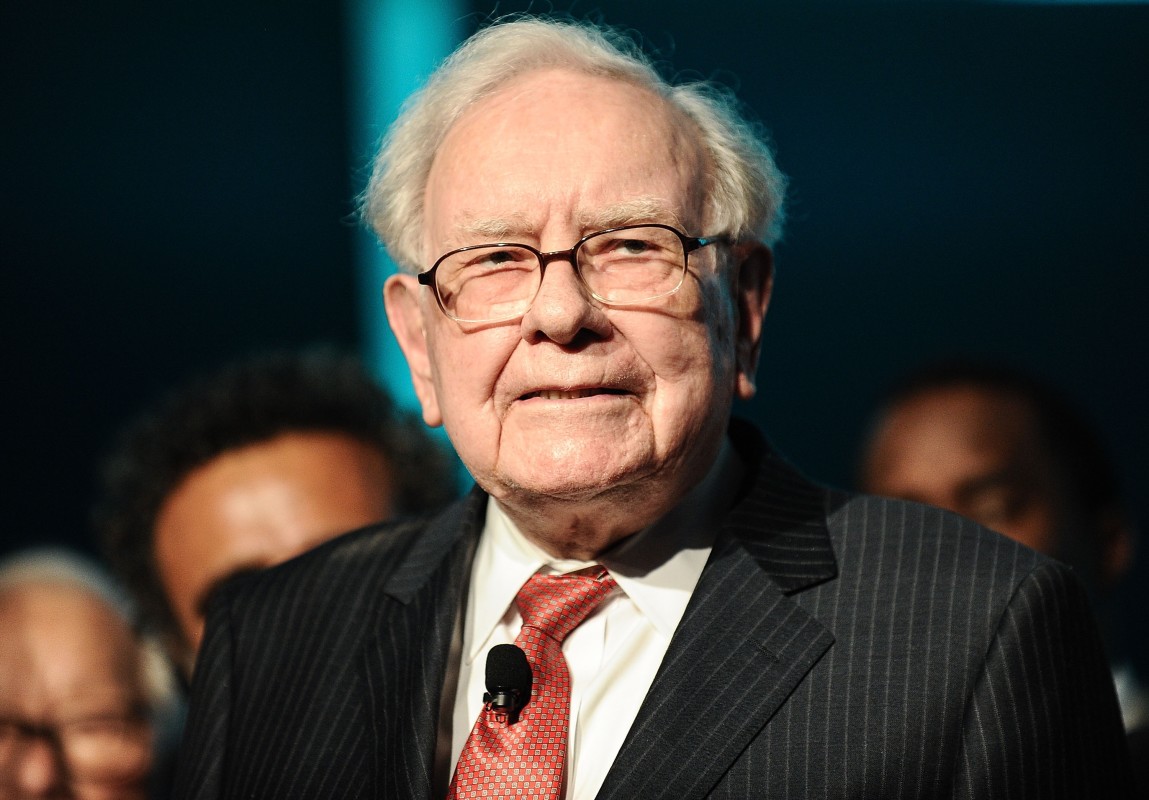 Warren Buffett, shown here at a Forbes event in 2017, will step down as CEO of Berkshire Hathaway at the end of 2025.
Daniel Zuchnik/Getty Images
Purchasing Dexter Shoe in 1993
Buffett considers Berkshire’s acquisition of the Dexter Shoe company to be the biggest mistake of his investment career. Berkshire purchased Maine-based Dexter from the shoemaker’s CEO, Harold Alfond, and his nephew, Peter Lunder, for $433 million in 1993.
At the time, Dexter was viewed as a sound purchase because it complemented Berkshire’s purchases of other American shoe manufacturers: H.H. Brown in 1991 and Lowell Shoe in 1992.
Buffett praised Dexter for being a major shoe producer, with 7.5 million pairs manufactured at its main factory in Maine and a smaller portion in Puerto Rico. In Berkshire’s 1993 annual report, he quipped that he would sing “There’s No Business Like Shoe Business” on his drive to work.
Related: This plush toy is making Warren Buffett even richer
“At Berkshire, we have no view of the future that dictates what businesses or industries we will enter,” Buffett wrote. “Indeed, we think it’s usually poison for a corporate giant’s shareholders if it embarks upon new ventures pursuant to some grand vision. We prefer instead to focus on the economic characteristics of businesses that we wish to own and the personal characteristics of managers with whom we wish to associate—and then to hope we get lucky in finding the two in combination. At Dexter, we did.”
Unfortunately for Buffett and Berkshire’s other shareholders, foreign competition eroded Dexter’s business, and Buffett said in the 2014 annual report that he “simply didn’t see that coming.” He also remarked that, “as a financial disaster, this one deserves a spot in the Guinness Book of World Records.”
Dexter’s value promptly went to zero. In 1999, Berkshire charged off all the remaining accounting goodwill that was attributable to the Dexter transaction. Within a decade of buying Dexter, its Maine factory was shuttered, and Dexter was folded into H.H. Brown.
“To date, Dexter is the worst deal that I’ve made. But I’ll make more mistakes in the future—you can bet on that,” Buffett said in the 2008 annual report.
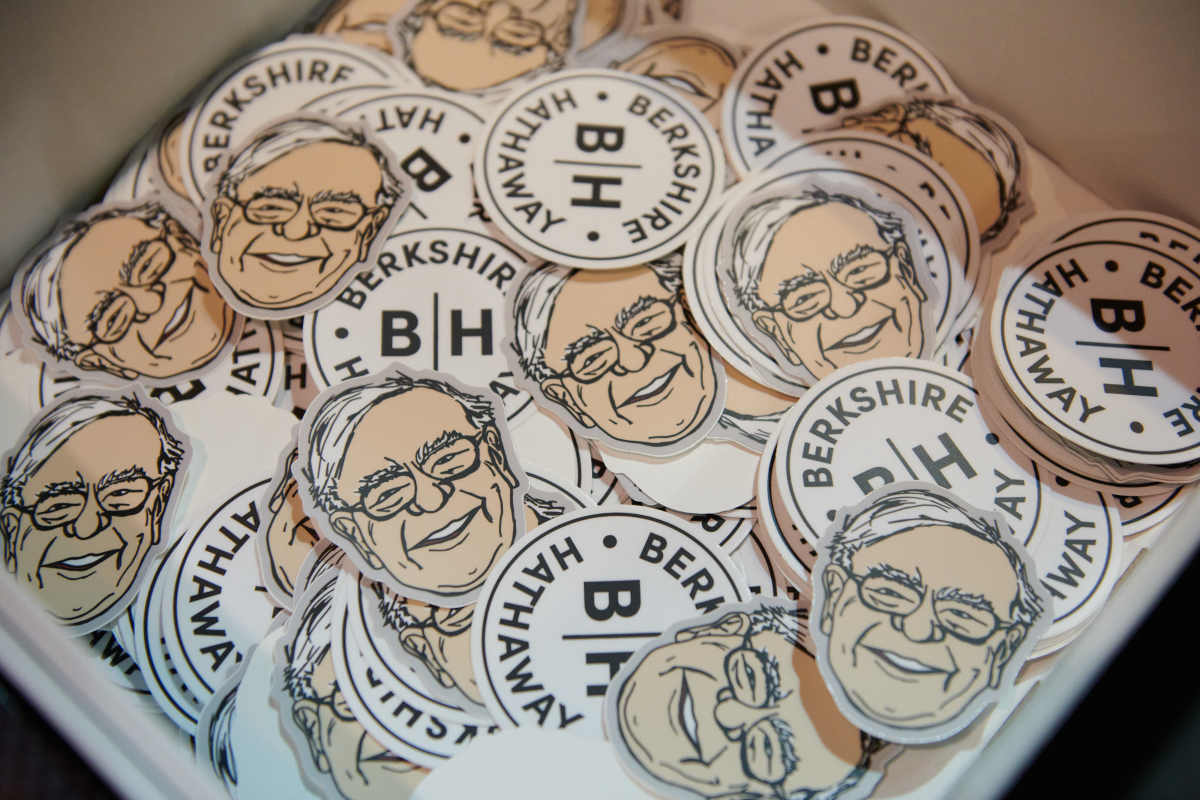 Warren Buffett regretted using Berkshire stock to fund large acquisitions in the 1990s.
Issuing shares for acquisitions
Companies typically use a combination of stock and cash, or sometimes all stock, for acquisitions, and Berkshire is no exception. However, Buffett has expressed regret for using Berkshire’s stock to fund purchases that didn’t work out in the holding company’s favor.
In 1993, Berkshire paid 25,203 Class A shares—then valued at $433 million—for Dexter. At the time, those shares were equivalent to 1.6% of Berkshire’s outstanding shares. When Dexter eventually became worthless, Buffett deemed it an egregious mistake to have purchased the company with shares rather than cash, since those shares, if held, would have increased dramatically in value, offsetting the impact of the cash lost in the purchase.
“Several of my subsequent errors also involved the use of Berkshire shares to purchase businesses whose earnings were destined to simply limp along,” Buffett said in the 2014 report. “Mistakes of that kind are deadly. Trading shares of a wonderful business—which Berkshire most certainly is—for ownership of a so-so business irreparably destroys value.”
While it was a losing proposition for Berkshire, it was a boon for the heirs of Dexter owner Harold Alfond, who passed along those shares, now worth billions of dollars, to his heirs.
Had Berkshire held all of the shares used for the transaction, they would have been valued at about $23 billion by September 2025.
Buffett also expressed regret for using Berkshire stock for the $22 billion purchase of General Reinsurance in 1998, despite it being a prized insurance operation. In the 2016 annual report, he said that “it was, nevertheless, a terrible mistake on my part” to increase Berkshire’s outstanding shares by 21.8% when it issued 272,200 Berkshire shares to buy General Re.
“My error caused Berkshire shareholders to give far more than they received (a practice that—despite the Biblical endorsement—is far from blessed when you are buying businesses),” Buffett wrote.
Those shares, as of September 2025, would be valued at more than $200 billion.
After such questionable transactions, Berkshire nowadays tends to use cash rather than stock to pay for acquisitions. Buffett lamented that such transactions were akin to Berkshire selling pieces of the company at prices lower than their future value.
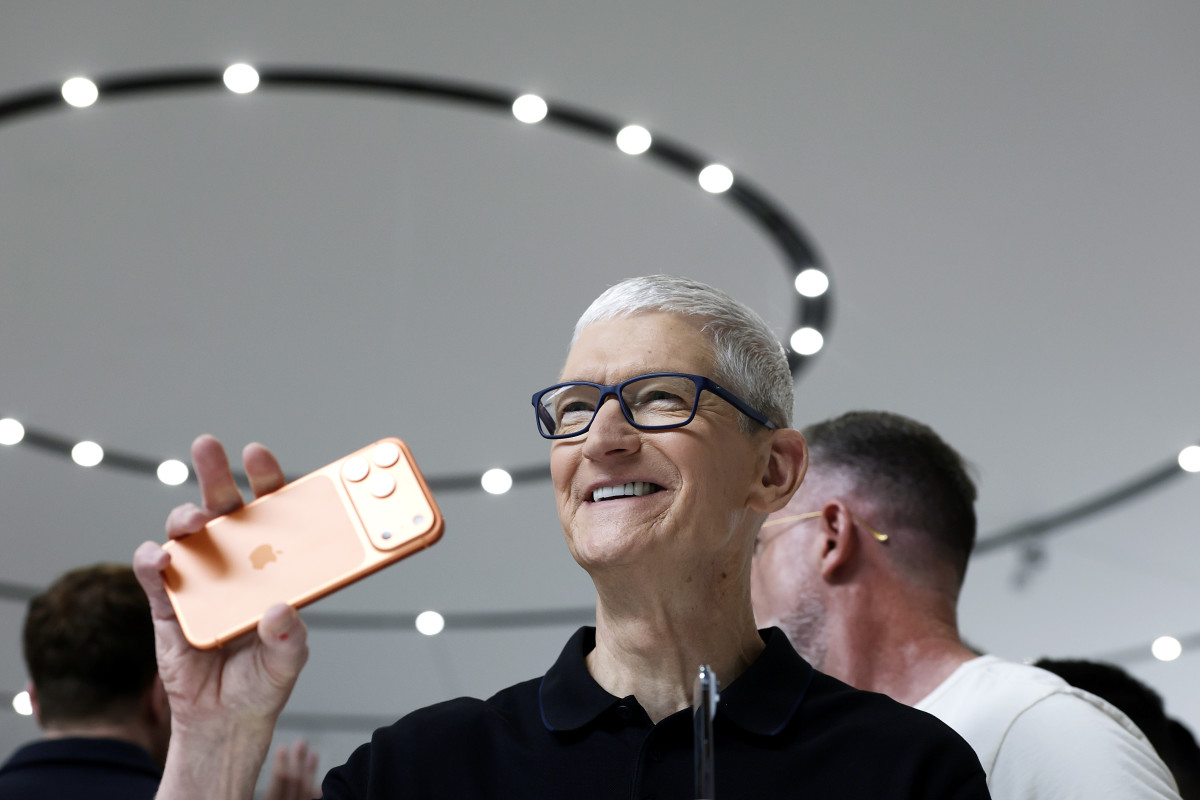 Berkshire only started buying into technology companies in the 2010s.
Justin Sullivan/Getty Images
Not investing in technology early
Buffett’s basic company evaluation process includes looking into what kind of business it is, the economic characteristics of its competitors, and what its management is like.
While Berkshire’s major investments over its first 50 years focused on insurance, banks, and consumer product makers such as The Coca-Cola Company, Buffett did not make significant investments in technology-related companies.
Buffett missed out on the opportunities of investing in Microsoft and Apple early in the 1980s, when both companies were revolutionizing the personal computer market and selling millions of PC units. Even later, he remained risk-averse on tech in the 1990s and probably grew even more skeptical in the late 1990s and early 2000s with the boom-and-bust run of internet-related stocks.
Related: What was the dot-com bubble and why did it burst?
Buffett relented in the 2010s, though it was mainly his managers who pushed for investment in the sector. Berkshire started adding a sizable stake in International Business Machines (5.5% of the company, valued at $12 billion) in 2011 because of its business model. Berkshire increased its stake in IBM to as much as 8.5% in 2016 but sold all of its holdings in 2018.
More on wealthy executives:
- Larry Ellison’s net worth: Inching toward the world’s richest person
- Elon Musk’s net worth: Setbacks on the road to trillionaire status
- Jeff Bezos’ net worth: How Amazon’s founder spends his billions
Berkshire then focused on Apple, recognizing it as a consumer products company that fit into its portfolio of companies. Its initial investment in Apple in 2016 amounted to 1.1%, valued at $7 billion. In 2021, Berkshire owned as much as a 5.6% stake valued at $161 billion in Apple, but has since pared it down. Still, as of its fiscal second quarter of 2025, Apple remained among Berkshire’s five biggest holdings.
Buffett has expressed regret in not investing earlier in other big-name technology companies, including Amazon, which has a leading market share in online commerce in the U.S., and Google’s parent company, Alphabet, which has dominated online search and expanded into consumer products and services.
Buffett brought in Bill Gates, co-founder of Microsoft, as a director of Berkshire from 2004 to 2020, though Berkshire hadn’t invested in Microsoft, whose operating system runs the majority of desktop and laptop computers worldwide.
Looking forward
With Buffett stepping aside at the end of 2025, a younger generation of executives may have the opportunity to apply Buffett’s common-sense investment philosophy toward newer sectors in the technology industry and beyond. His successor, Greg Abel, will assume the role of Berkshire Hathaway CEO on January 1, 2026.
Related: Jensen Huang’s 2025 net worth as Nvidia market cap tops $4 trillion