
There’s no need to worry about fancy features and AI-powered bells and whistles. Apple’s (AAPL) greatest edge in the iPhone 17 cycle may not even be in the phone itself.
For months, pundits have argued over whether Apple will catch up in AI. However, something far less futuristic and much more useful is quietly accelerating its update cycle.
It’s not coming from Cupertino. Instead, take a look at your wireless bill.
What happened? Sales of iPhones are going through the roof, service income is at an all-time high, and even Wall Street critics are starting to change their minds.
Several well-known analysts, including Evercore ISI and Melius Research, have increased their price targets for Apple over the last three months. They attribute this to surprisingly strong hardware sales and users who are reluctant to leave.
The Bank of America research note, however, is at the core of it all and is perhaps the most vital piece of information to emerge during the news cycle.
It may be the clearest explanation yet: Aggressive, under-the-radar carrier marketing is making iPhones enticing in a way that product enhancements alone could not.
U.S. carriers have become quiet engines of Apple’s success by offering better trade-in deals, longer payment plans, and less strict condition criteria.
The move is not just boosting unit sales; it is also changing how Apple generates revenue: by employing partners, not just products, to expedite updates and retain users within its ecosystem.
And even if the AI race is still ongoing, Apple may have just gained an advantage in a different type of innovation — one that involves pricing strategies rather than silicon processors.
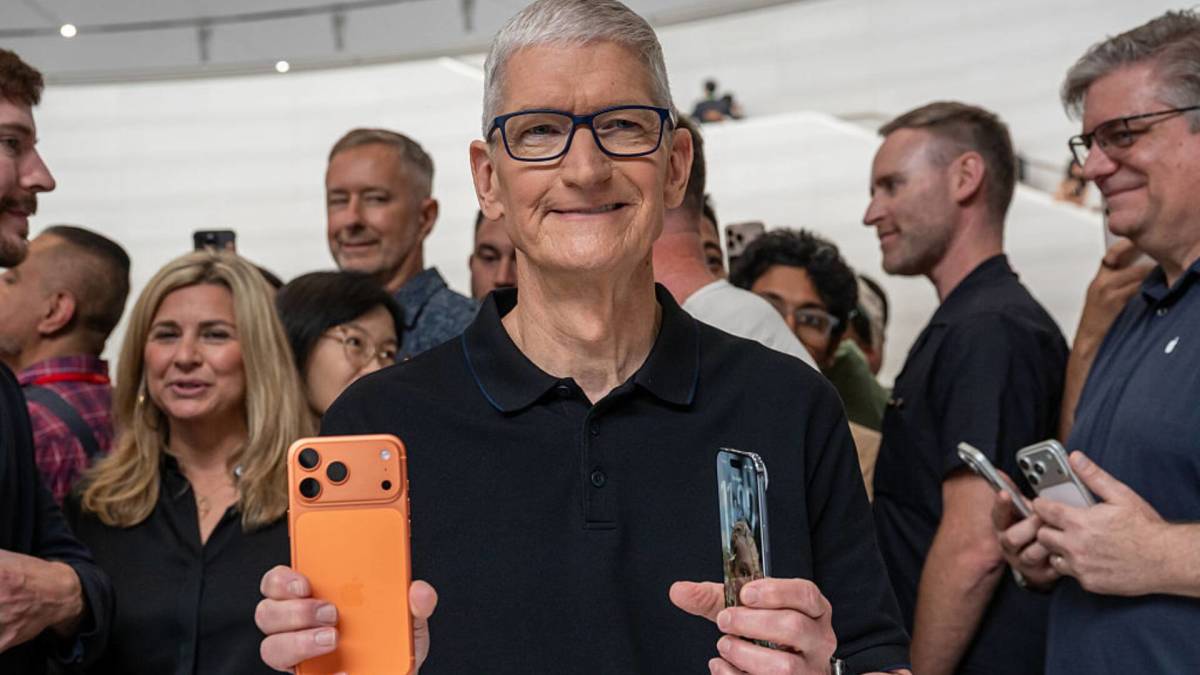 Apple’s iPhone 17 cycle is off to a stronger-than-expected start — and the reason may surprise you.
Image source: Morris/Bloomberg via Getty Images
Apple’s iPhone boom may have less to do with features than you think
Wamsi Mohan, an analyst at Bank of America, wrote a research note that didn’t make front-page news, but should have.
Mohan gave Apple shares a “buy” recommendation again and cited U.S. carrier incentives as one of the key reasons for the iPhone 17 cycle’s rise. This is something that isn’t often discussed in earnings calls.
The research says that telecom companies like Verizon (VZ) , T-Mobile (TMUS) , and AT&T (T) are paying for the upgrade cycle in ways that go well beyond the customary bundling.
The statistics support it:
- iPhone subsidies are up $100 over last year’s launch.
- Trade-in values can hit $1,100 — even for broken phones.
- Activation data from T-Mobile shows double-digit growth year over year.
With these deals, a lot of buyers may get an iPhone 17 for less than $250 up front, even the Pro Max variant.
All you need to do is sign up for a particular unlimited data package and agree to pay for it over the course of 24 to 36 months. The psychology is strong: Apple makes a big sale, the carrier gets a high-value client, and the customer hardly feels the expense.
Related: T-Mobile CEO sends major Apple iPhone message
Mohan puts it simply:
Carrier promotions seem to be helping to drive higher iPhone upgrades.
Apple didn’t have to lower pricing. It didn’t have to make new hardware. Instead, it let its partners handle the financial engineering. The outcome is one of the biggest early-cycle upgrade signals since the iPhone X.
And that signal is also showing up in Apple’s own figures. The corporation made $44.6 billion from iPhones in the most recent quarter (Q3 FY2025), which is 13% more than the same time last year.
More significantly, Services revenue reached an all-time high of $27.4 billion. This shows that people who purchase iPhones are sticking around and paying more.
Apple’s numbers reveal the hidden strength behind the iPhone 17 cycle
Apple’s financials illustrate that carrier promotions have a subtle but important influence.
Apple made $94 billion in sales in its most recent quarter (Q3 FY2025), a 10% increase from the previous year and a record for the June quarter. Sales of iPhones brought in $44.6 billion, a 13% increase from the previous year. This pace astonished even the most optimistic forecasters.
The benefits kept coming. Services revenue rose 13% to $27.4 billion, another all-time record. This was thanks to sales from the App Store, Apple Music subscriptions, and iCloud.
More Tech Stocks:
- Is Oklo a high-risk, high-reward investment?
- Nvidia’s deal with OpenAI ‘looks a lot like financial theater’
- Quantum computing companies looking to finance the future
That part of Apple’s company now makes up over a third of it, and it has the type of high-margin growth that investors love. Gross margins were up to 46.5%, showing that Apple can be profitable, even when it has to spend more on hardware and rely more on sales.
People on Wall Street have noticed. Analysts have been increasingly positive over the previous three months:
- Evercore ISI lifted its target to $290, citing a stronger-than-expected iPhone cycle.
- Melius Research echoed that move, pointing to Services growth and Apple’s ability to monetize its installed base.
- Even longtime skeptics, including Jefferies and MoffettNathanson, upgraded Apple from bearish ratings, signaling that downside fears may be fading.
These calls together show that analysts will see Apple differently in late 2025: not as a business trying to stay up with AI competition, but as a cash generator that knows how to keep its upgrade engine going.
Apple’s next test may come from rivals, regulators, and its own AI delay
The iPhone 17 cycle may be stronger than Apple thought, but the company still faces some problems.
One problem is its competitors. To compete with Apple’s launch momentum, Samsung has started cutting prices on the Galaxy S25 Ultra by up to $700.
This is a reminder that the subsidy arms race hurts both sides. A lot of Android producers are using pricing to get users, which might hurt Apple’s high-end image.
Then there are the expectations for AI. Apple’s implementation of “Apple Intelligence” has been slow, and Wall Street is not happy that Siri hasn’t been made more useful with AI yet.
Related: Apple makes key pricing changes consumers won’t like
Analysts at Citi have said that some purchasers may wait until next year if there aren’t any noteworthy AI capabilities. Even Apple CEO Tim Cook has admitted that there is a gap and that Apple is “open to” buying AI companies to catch up.
Geopolitics make things even more unpredictable. Apple has promised to spend $100 billion in the U.S. as part of a $600 billion domestic vow to protect its supply chain against tariffs.
Apple is also fighting against Europe’s Digital Markets Act, saying that following the rules might affect its goods and services.
Apple is still doing well in the latter few months of 2025, despite all of these challenges. For now, it has an unexpected friend in U.S. carriers.
This year, the firm may not have impressed with new technology or AI, but its partners’ financial engineering has given it what it needs most: momentum.
Apple’s hidden ally may be its most powerful advantage this year
There has been a lot of talk about Apple’s product strategy, but the true story of 2025 may be how outside partners changed the iPhone cycle. Apple avoided worries about increased base pricing and delayed AI features by asking carriers to pay more of the expense.
The plan didn’t originate from engineers in Cupertino; it came from the billing offices of Verizon, T-Mobile, and AT&T.
That’s why the September letter from Bank of America is so critical. It didn’t simply validate what was going on at the time; it changed the story. There are reasons for Apple’s success this year other than iPhones flying off the shelves.
It’s about how the business is using its ecosystem, leverage, and partners to convert possible problems into opportunities.
The lesson for investors is apparent. Apple may not always win with cool features or AI breakthroughs, but no one else can control pricing, negotiate with carriers, and get value from its ecosystem like it can.
Apple has discovered a simpler, quieter method to keep going in a year when its competitors are trying to outspend it on AI. For now, Wall Street is praising it.
People may remember the iPhone 17 cycle more for what Apple added to the playbook than for what it did to the device. It serves as a reminder that at the world’s most valuable firm, the most potent innovation is often financial, not technological.
