
Alexa+ is now available for early access on certain Echo devices. It will also be included in future Fire TV devices and Ring products, which is a big move.
Amazon (AMZN) is adding generative AI to daily usage as a basic, permanent layer. This won’t just improve voice queries. The bigger goal is turning consumer endpoints into AI gateways, creating a need for more computing, data, and network resources.
Alexa+ is free for Prime members; non-members pay $19.99/month. It was originally accessible to anyone with the Echo Show 8, 10, 15, and 21.
Amazon says it has already signed up over a million users and that almost 90% of the services it promised to provide have now been made available.
On the other side, Amazon’s fall 2025 hardware upgrade shows even more integration, with new Echo and Fire TV models boasting better silicon compatible with Alexa+.
This is more than just a better version of the features. It is a structural plan to get people to embrace AI in their homes while simultaneously putting more strain on the backend.
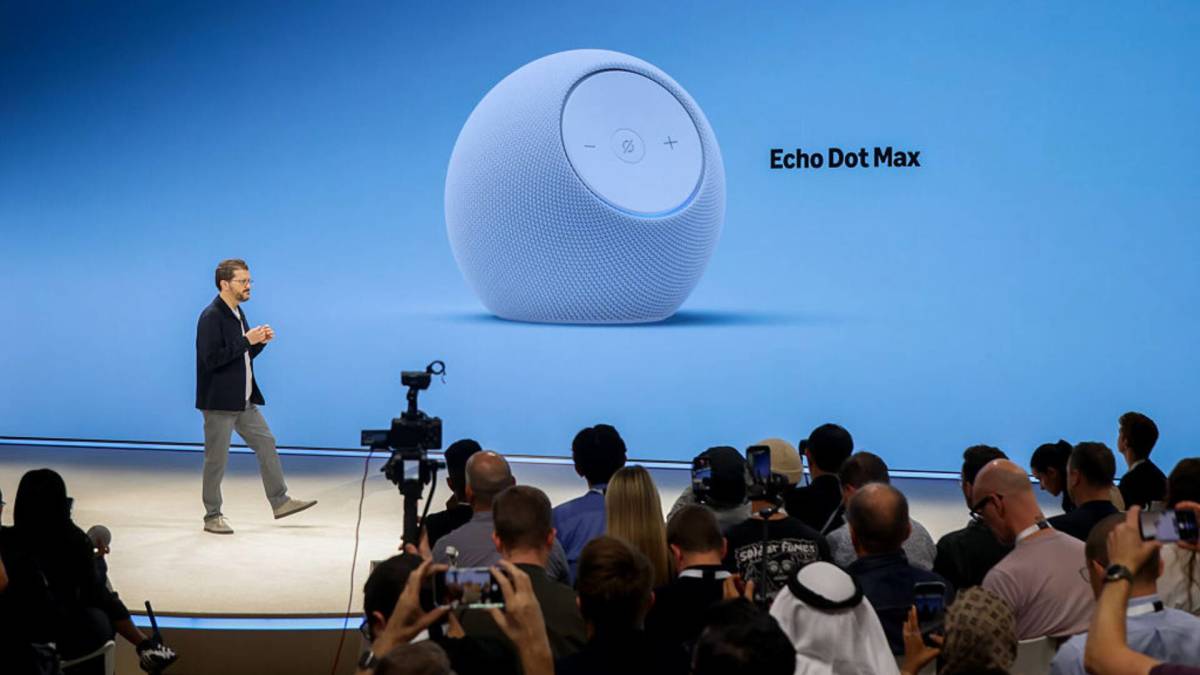 Amazon’s revamped Echo lineup puts Alexa+ front and center.
Image source: Nagle/Bloomberg via Getty Images
Alexa+ rollout puts more than just convenience on display
Amazon first spoke about Alexa+ back in February, stating it would be a conversational assistant of the next generation that could do more difficult, multi-step tasks. It contains features like remembering, following up on things in context, and more authentic discussions.
At the Amazon event 2025, the tech conglomerate showed off a variety of new gear that all worked with Alexa+. The latest Echo models have their own silicon and sensor fusion, which makes them more responsive in the home.
Related: Massive Amazon spend could have unexpected effect on retail giant
Fire TVs will have Alexa+, and Ring will use it for things like “Search Party,” which leverages camera data from a lot of people in the neighborhood to find lost pets.
These aren’t just tricks. They let AI permeate the home further, creating new challenges and opportunities.
Amazon’s generative push with Alexa+ could strain cloud and data center resources
Every time you use Alexa+, Amazon has to do some backend processing. That means caching, looking up vectors, getting data from memory, and making model inferences in real time. When you scale that by millions of homes, the infrastructure quickly overloads.
As a result, Amazon is releasing next-generation computing services in AWS. The new GPU instances that employ Nvidia’s Blackwell are helpful for testing and training models.
Amazon’s own chips, Trainium and Inferentia, are supposed to make the corporation less reliant on chips from other companies. However, these processors still need fast connections, memory, and other tools to function.
This is where companies such as Nvidia (NVDA) and Marvell (MRVL) come in.
Amazon Alexa+ upgrade is surprising win for Marvell, Nvidia
Chris Versace, a veteran fund manager at TheStreet Pro, says Alexa+ may look like a helpful assistant — but it actually drives more demand for the infrastructure behind it.
The way we think about Amazon’s hardware products is that they are gateways that help remove transaction friction for consumers and help foster the consumption of other Amazon products and services.
As this new array of Alexa+ products is purchased and utilized, they will help drive AI usage, which in turn will drive network and data center capacity utilization higher, driving incremental spending on data center and other aspects of digital infrastructure, including networking.
Every piece of tech becomes an AI endpoint. And that makes demand travel up the stack, from silicon to cloud computing to connection.
Marvell supports the fundamental fabric, and Nvidia addresses the top layer.
More Nvidia:
- Analysts revamp Nvidia stock outlook on its investment in Intel
- Nvidia suffers a major blow from China
- Nvidia spending billions to spread its AI dominance
Nvidia’s graphics cards are still the best for AI work.
Amazon produces its own hardware, but AWS still uses Nvidia-powered instances, such as new P6e clusters. Nvidia’s software ecosystem, training tools, and hardware advantage are hard to beat.
Marvell, on the other hand, works in the supporting layers, which include EDA tools, chiplet interconnect, custom SRAM, and networking infrastructure. It recently worked more closely with AWS and showed off a new set of interconnects built for AI workloads.
Recent financial results show AI leaders best positioned
In the second quarter of FY 2026, Nvidia produced $46.7 billion in revenue. This was 56% more than the same period of the previous year.
The Data Center segment brought in $41.1 billion. Even if exports are down and the company has had to write down certain assets, its primary AI engine is still firing on all cylinders.
Nvidia announced in the first quarter of FY 2026 that it produced $44.1 billion in total revenue, with $39.1 billion coming from Data Center.
Clearly, there is still a lot of demand for AI and business.
Related: Amazon’s Prime Video changes course for surprising reason
Significant growth was also seen in Marvell’s Q2 FY 2026 figures. The company’s total sales were $2.01 billion, which is 58% more than the year before.
The data center business generated $1.49 billion, a 69% increase. Other industries, such as corporate networking and carrier infrastructure, also saw growth of more than 10%.
Marvell’s stock hasn’t done as well as Nvidia’s this year, but its AI and cloud business are improving.
These developments represent a big opportunity, alongside some notable concerns.
AI players see major opportunity, and risks
Amazon is planning a broader rollout for Alexa+ in late 2025, and many features are still being developed.
Amazon hasn’t yet shared all the data on how people use the platform or how it plans to make money. And although its own silicon push helps keep prices down, it might ultimately drive certain manufacturers out of the stack.
Still, the demand signal is obvious now: AI at the edge implies that the cloud requires new infrastructure. Alexa+ could be marketed as a better assistant, but it’s a small part of a much larger tale about infrastructure expansion.
And if that tale goes as planned, Nvidia and Marvell might remain important players behind the scenes.
Related: Former Amazon boss shares huge mistake online giant keeps making
