
The world is watching the Federal Reserve like a hawk, hoping for more interest rate cuts following September’s quarter-point reduction.
Whether we get additional cuts or not hinges heavily on the jobs market. The Federal Reserve’s dual mandate is to set monetary policy at levels that keep inflation and unemployment low — a tough ask given that those are often competing goals.
When the Fed increases rates, it slows inflation but causes unemployment. When rates fall, unemployment declines, but inflation rises. This year, the Trump administration’s tariff policy makes the Fed’s job even more challenging, given that rising import costs push inflation higher.
As a result, the Fed has hesitated to lower its Federal Funds Rate, instead waiting to see how jobs and inflation data pan out.
In September, a particularly worrisome unemployment rate forced Federal Reserve Chairman Jerome Powell to take action. However, whether that cut indicates a new wave of dovish policy is unclear, partly because the Washington shutdown has delayed the Bureau of Labor Statistics’ September unemployment report.
U.S. Unemployment rate in 2025 by month:
- August: 4.3%
- July: 4.2%
- June: 4.1%
- May: 4.2%
- April: 4.2%
- March: 4.2%
- February: 4.1%
- January: 4%
Source: Bureau of Labor Statistics.
If the Fed doesn’t receive the BLS’s unemployment data in time, it will likely use other sources to fill in the gaps.
For instance, a recent update by Bank of America on hiring may provide key insight on what’s next for interest rate policy when the Fed’s policy-making Federal Open Market Committee meets again on Oct. 29.
Is the Fed behind the curve?
Inflation has retreated from its sky-high levels above 8% in 2022, but the problem with inflation is that it’s cumulative. The Consumer Price Index pegged inflation at 2.9% in August — an improvement from three years ago but still painful given that it’s stacked on top of past price increases.
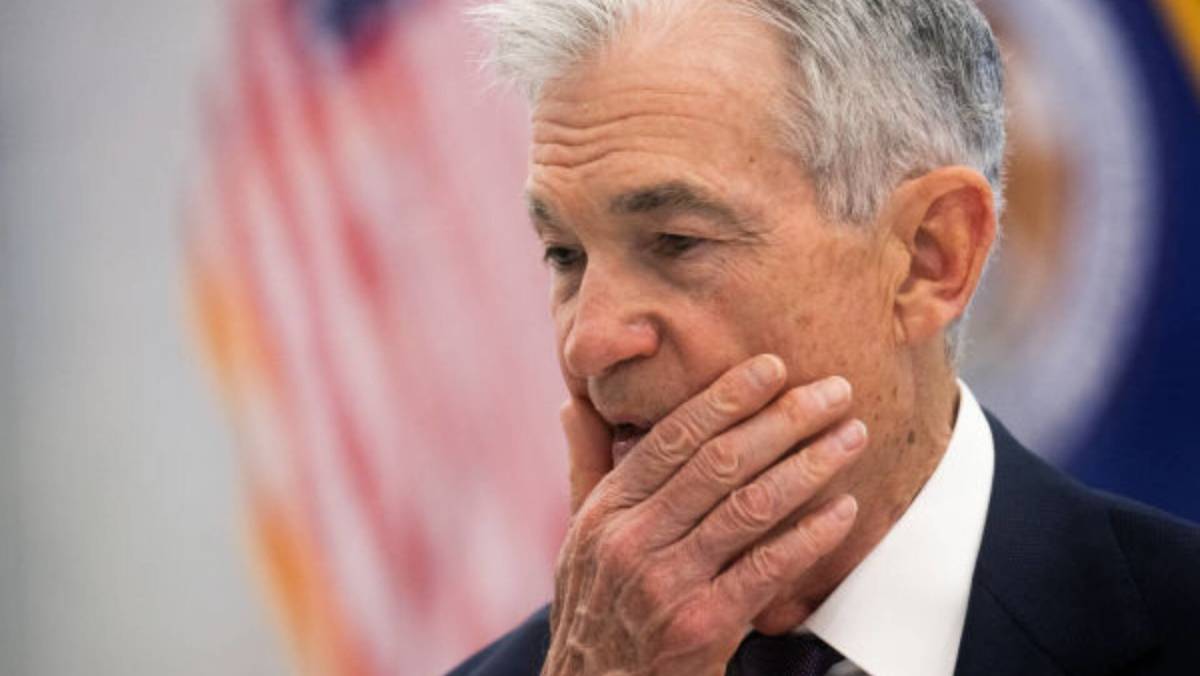 Federal Reserve Chairman Jerome Powell cut interest rates by 0.25 percentage point in September. More cuts hinge on jobs data.
More concerning is that the trend is going the wrong way. Inflation had retreated until earlier this year, reaching 2.3% in April before President Trump’s tariffs kicked in. According to Yale Budget Lab, those tariffs have increased the effective tariff rate on imports to 17.9% from 2.4% in January. In turn, that’s led many companies from Levi’s to AutoZone to raise consumer prices.
The inflation bump shifted the Fed to the sidelines after it cut rates by 1 percentage point in 2024, and that delay could mean that the Fed has fallen behind the curve on lowering rates to stimulate the economy, including hiring.
Bank of America releases latest small business hiring data
Odds are high that the Fed will cut rates by another quarter-point when it meets later this month, providing welcome support for borrowers, including would-be homeowners hoping for lower mortgage rates. According to CME’s FedWatch tool, the odds of a 25-basis-point cut on Oct. 29 are 97%.
More retail:
- Major office supply retailer sold after it closed 1,000 stores
- Mall retailer makes comeback after closing 100s of stores
- Iconic retail chain closed 80% of its stores
Bank of America’s latest small business hiring data further strengthen the case that the Fed cuts this month. The data point to small businesses tapping the brakes and holding off on adding workers.
“There are further signs of a slowdown in the small business labor market. Our proprietary alternative hiring indicator based on Bank of America small business payments data was down 7% in September,” wrote the analysts.
“This is consistent with the narrative of hiring deceleration presented in the Job Openings and Labor Turnover Survey [Jolts] August reading.”
The monthly Jolts survey showed 7.2 million open and unfilled positions in August, down from 7.6 million one year ago and a peak of more than 12 million in 2022.
Small businesses appear most cautious and hardest hit by uncertainty.
For small services firms, hiring was down 12.9% quarter-over-quarter.
Bank of America analysts.
The data follow another Bank of America jobs report earlier this month, showing that continuing unemployment claims grew in September while payrolls declined.
It’s not just hiring languishing
Employers aren’t only hesitant about increasing their workforces. They’re also slashing jobs at a faster rate.
According to payroll processor ADP, the U.S. economy lost 32,000 jobs in September. Wall Street economists had predicted it would create 45,000 or more jobs.
Related: Fed Chair Powell’s surprising words may cause mortgage rate tumble
Furthermore, according to Challenger, Gray and Christmas, layoffs have surged in the U.S. over the past year. In 2025 through September, layoffs had been the highest since the Covid-19 shutdowns of 2020, while hiring had been the lowest since the exit from the Great Recession in 2009.
U.S. employers cut 54,064 jobs in September and 202,118 jobs in the third quarter, up 16% year over year. So far in 2025, employers have laid off 946,426 workers, up 55% from a yearlier.
The crucial takeaway? Bank of America’s small business hiring data suggest that the economy isn’t as healthy as it seems, increasing the likelihood that the Fed will again lower the Federal Funds Rate this month.