
With the baseball season officially in the rearview mirror following the end of the World Series, and Americans fully ensconced in fall sweater weather, many are turning their attention to the winter holidays.
Thanksgiving is only weeks away, and Christmas is coming right after, so for a lot of us, November can get a little hectic.
Largest private U.S. employers:
- Walmart: 1.6 million employees
- Amazon: 1.1 million employees
- UPS: 443,000 employees
- Target: 427,346 employees
- Home Depot: 418,000 employees Source: Ringover
For tens of thousands of workers, this season won’t be very jolly, however, as the wave of layoffs that has swallowed U.S. employees all year is rising in the fourth quarter.
Amazon, UPS, and Target, three of the largest employers in the country, have already announced plans to layoff tens of thousands of workers in the coming weeks.
Major layoffs announced in the past month
- Target revealed plans in late October to eliminate 1,800 corporate jobs, marking its second-largest corporate downsizing ever.
- Amazon announced another round of layoffs just before the holidays. The cuts affected 14,000 corporate employees across multiple departments to reduce bureaucracy, “removing layers and shifting resources” to better serve its investments and customers.
- UPS has cut about 48,000 jobs so far this year, including 34,000 positions through its Network Reconfiguration and Efficiency Reimagined program.
Although numerous other layoffs, especially in the tech industry, have been confirmed, it sometimes takes weeks or even months for them to actually take effect.
On Monday, Nov. 3, 2025, a couple of big tech companies began laying off thousands of employees.
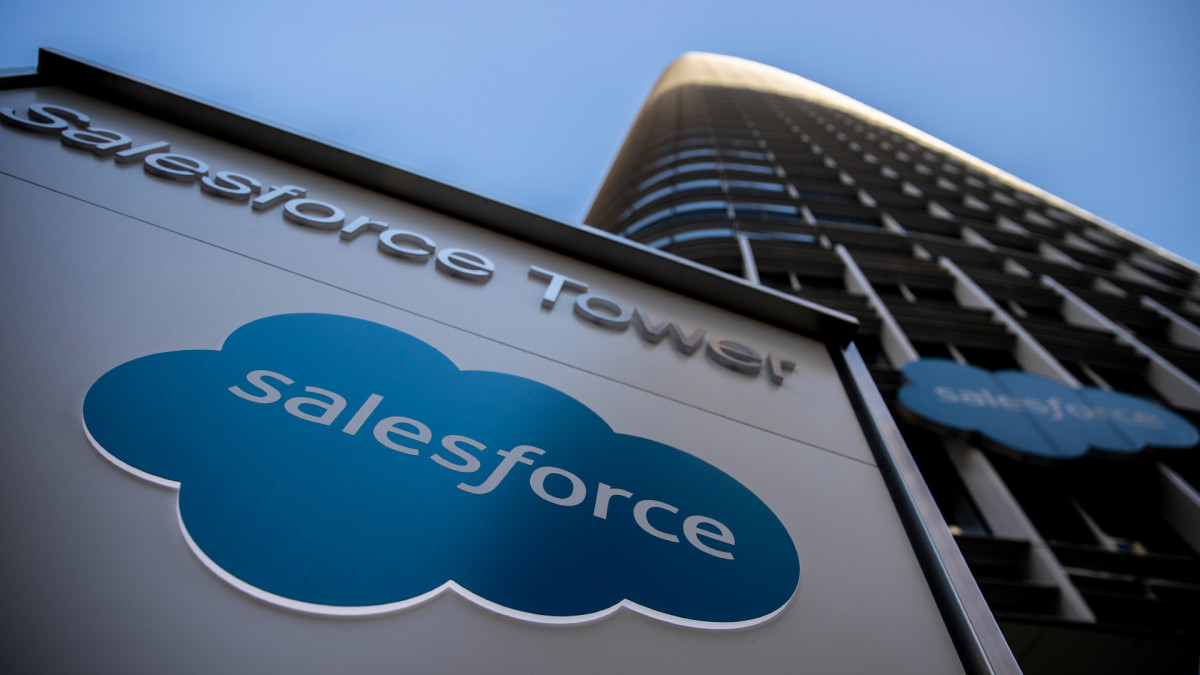 Salesforce is in the midst of nearly halving its customer support headcount to 5,000 from 9,000 employees.
Image source: Lam/Stringer via Getty Images
Salesforce, Oracle commence layoffs
On Monday, AI-driven customer relationship management platform Salesforce and cloud applications platform Oracle Corp. both started the next round of ongoing layoffs.
Oracle already laid off thousands of employees as part of its $1.6 billion restructuring plan. However, the company said it had only spent $451 million of that amount as of Aug. 31, meaning another 10,000 could still be on the chopping block.
Related: White-collar workers should worry about this concerning trend
On Nov. 3, Oracle is expected to lay off up to 260 employees in Washington state, according to WARNTracker.com. The tracker covers the federal Worker Adjustment and Retraining Notification program, which mandates that companies with 100 or more employees provide at least 60 days’ advance written notice of a plant closing or mass layoff affecting 50 or more workers.
Salesforce also issued a WARN notice for Nov. 3, as it will also lay off between 51 and 100 employees in the state as part of its plan to cut 2,501 to 5,000 more jobs.
In September, the company confirmed that it is reducing its customer support team to 5,000 from 9,000 employees. As Salesforce CEO Marc Benioff put it, the company made the move because “I need less heads…” due to the “benefits and efficiencies” of its new AI model.
This is a trend white-collar U.S. workers will continue to face in the future.
The AI job revolution is already hurting white-collar workers
Amazon, Target, Salesforce, and Oracle aren’t alone when it comes to reducing headcount ahead of the holidays.
GM is cutting hundreds of jobs at its Georgia IT center. And Molson Coors eliminated 400 salaried jobs across its Americas business, representing about 9% of its white-collar workforce.
Related: Ubisoft ‘soft layoffs’ expected after latest announcement
Companies, especially in the tech sector, view the AI revolution as a way to reduce redundancies in their managerial ranks.
Some actually say that they think they’ll do better with smaller organizations. Meta sent a memo sent last week in which the company’s AI chief actually said that by reducing the size of its team, fewer conversations will be required to make decisions and that each person will be “more load-bearing and have more scope,” Chip Cutter, jobs reporter for the Wall Street Journal, recently said on a podcast.
According to tech market intelligence firm UnearthInsight, as many as 500,000 white-collar software workers could be laid off over the next two to three years, and about 70% of those layoffs would impact workers with four to 12 years of experience.
But some critics say these companies are simply blaming AI for the job cuts, when the real issue was overhiring during the pandemic.
“I’m really skeptical whether the layoffs that we see currently are really due to true efficiency gains. It’s rather really a projection into AI in the sense of ‘We can use AI to make good excuses,’” Fabian Stephany, assistant professor of AI and work at the Oxford Internet Institute, told CNBC.
“It’s to some extent firing people that for whom there had not been a sustainable long-term perspective, and instead of saying ‘We miscalculated this two, three years ago,’ they can now come to the scapegoating, and that is saying, ‘It’s because of AI, though.’”
Related: Veteran analyst says Meta stock is stuck in ‘near-term purgatory’
