
Once Americans’ favorite snack and beverage producer, known for owning the brands of kids’ preferred chips and sodas that filled lunch boxes and fueled childhood nostalgia, PepsiCo now finds itself facing mounting challenges in its U.S. market
Shifting consumer preferences have slowed sales, forcing the company to undertake a restructuring plan. In response, Pepsi has begun consolidating operations to boost production efficiency and cut excess costs, moves that have led to widespread plant closures and job losses across the country.
Over the past two years, Pepsi’s restructuring efforts have shuttered multiple manufacturing facilities, leaving hundreds of workers unemployed amid a climate of persistent inflation and economic uncertainty.
Although Pepsi’s net revenues increased 2.6% during the third quarter of fiscal 2025, its North American Food division declined 3%, primarily due to a 4% decline in volume.
“Our top priorities are to accelerate growth and aggressively optimize our cost structure,” Pepsi CEO Ramon Laguarta said in the earnings report. “To accomplish this, we are introducing a strong pipeline of innovation to accelerate portfolio transformation, continuously sharpening our price pack architecture to provide good value to consumers, and right-sizing our entire cost base to help fund our activities.”
Pepsi is closing two Orlando Frito-Lay Facilities
Pepsi (PEP) is closing two Frito-Lay manufacturing facilities in Orlando, Florida, affecting 500 employees, according to a WARN notice filed on November 4. Operations at both plants are set to cease on May 9, 2026.
The WARN notice did not specify whether Pepsi would offer job opportunities to the affected employees at nearby facilities. However, it stated the company intends to work with state and local agencies to support those impacted by the layoffs. The workers are not represented by a union and do not have bumping rights.
More job cuts:
- Target announces a major change affecting its entire business
- Walmart puts a freeze on one kind of hiring (blame the White House)
- Verizon reportedly planning major store closures and layoffs
During the company’s latest earnings call, Laguarta said that Pepsi is working to streamline operations by eliminating “unnecessary nodes” and integrating certain food operations within its beverage business, changes he claims have already improved productivity and reduced costs at Frito-Lay.
“The demand signal we had in ’23 is different from the demand signal we have in ’25,” said Lauguarta in an earnings call. “There’s some adjustment we’re making to both the assets and the headcount in the business to make sure that we have the right cost structure to navigate the coming quarter.”
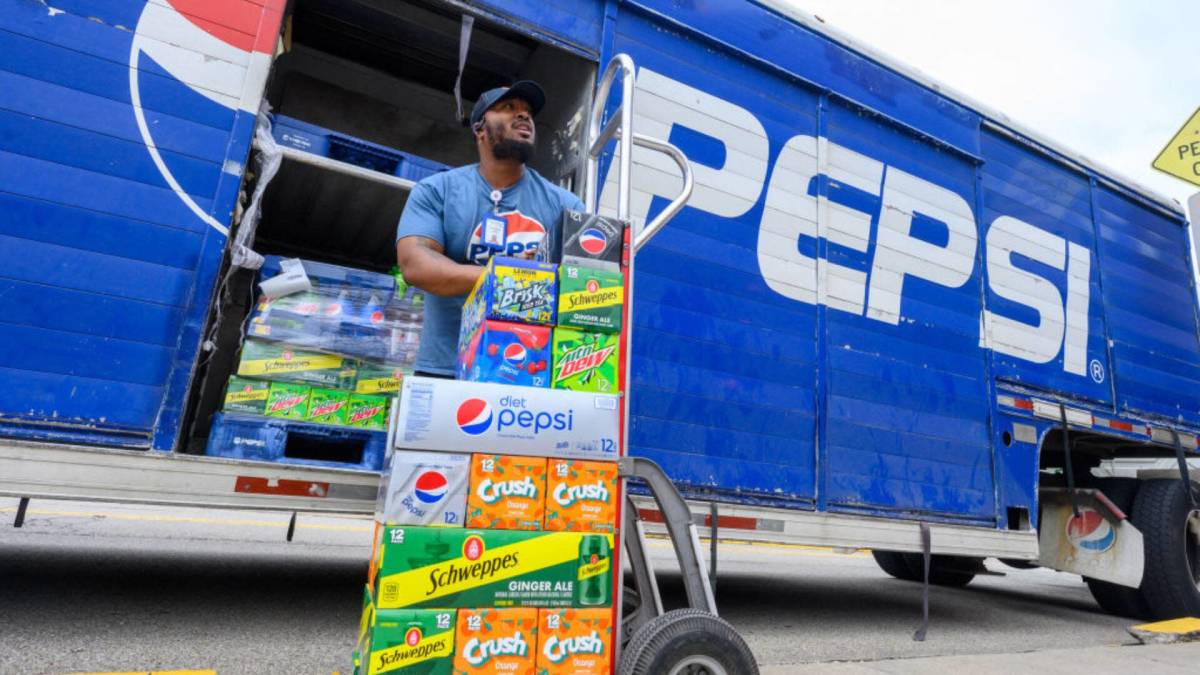 Pepsi is closing two Frito-Lay manufacturing facilities in Orlando, Florida, affecting 500 employees.
Image source: Merriman/Getty Images for Pepsi
Pepsi’s Orlando closures follows a series of nationwide facility shutdowns
The Orlando manufacturing plant closures are the latest in a series of shutdowns in recent years, as Pepsi works to rebalance its production network.
Recent Pepsi facility closures
- Liberty, New York: Frito-Lay facility closed June 2025, impacting 287 employees.
- Rancho Cucamonga, California: Frito-Lay plant shut down in June 2025, resulting in 480 job cuts.
- Detroit, Michigan:Partial closure of the manufacturing facility in September 2025, halting production, maintenance, and transportation operations, affecting 83 employees.
- Ohio, Pennsylvania, Illinois, and Georgia: Closure of four bottling plants in 2024, leading to over 400 employee layoffs.
While Pepsi has invested heavily in expanding its Frito-Lay capacity over the past few years, softening demand has forced the company to “take intentional and active actions” to protect profit margins and position the company for long-term growth.
Food and beverage rivals face industry-wide struggles
Pepsi is not alone in facing these persistent challenges. Food and beverage competitors are also cost-cutting amid weakening demand and rising expenses.
General Mills (GIS) is closing three manufacturing plants in Missouri by the end of fiscal 2028 as part of a multi-year global transformation plan expected to generate $100 million in annual savings.
Related: Coca-Cola and Pepsi rival Dr. Pepper kills 4 soda flavors
Post Holdings (POST) is shutting down two cereal manufacturing plants, one in Sparks, Nevada, and another in Cobourg, Ontario. Both are expected to cease operations by the end of December, affecting around 300 employees.
Del Monte Foods has also closed a fruit processing facility and two warehouses in Yakima, Washington, impacting 500 workers following its Chapter 11 bankruptcy in July 2025.
Pepsi layoffs are a signal of a concerning national trend
The wave of mass layoffs comes amid a weakened labor market, where inflation, rising costs, and economic uncertainty have made it increasingly difficult for unemployed workers to find new roles, only adding to their financial pressures.
According to the U.S. Bureau of Labor Statistics‘ Employment Situation update, 911,000 fewer jobs than expected were added in the 12 months through March 2025, signaling a notable slowdown.
In August, only 22,000 new non-farm payrolls were recorded, while the unemployment rate rose to 4.3%, the highest level in nearly four years.
“Although we are not seeing extensive layoffs, the hiring rate is quite low, so those who lose jobs or new entrants to the job market are having quite a tough time finding new positions. This will result in a higher unemployment rate over the course of the next year,” said The Mortgage Bankers Association Chief Economist Mike Fratantoni in a statement.
Research from Harvard Business School notes that relying on layoffs to mitigate temporary economic shifts is often unsuccessful and has hidden costs that make companies less profitable, innovative, and productive over time.
“While layoffs may provide immediate financial relief, they often incur significant long-term costs that can undermine the very stability and performance they aim to protect,” said Headhunter & Talent Strategist Bryan Blair.
Related: American Airlines makes deeper cuts amid flight cancellations
