
A thunderous shot was fired in the burger wars when national restaurant chain Chili’s launched a value-priced burger meal that directly targeted fast-food chains, including McDonald’s and Wendy’s.
Chili’s plan: win away customers who frequent stores more often.
While the burger wars continue, that battle appears won. Chili’s has seen a surge in customers at its restaurants, including those who typically visit fast-food rivals. Meanwhile, McDonald’s and Wendy’s have seen declining foot traffic, forcing them to return to their roots, and in Wendy’s case, to close hundreds of stores.
Chili’s at-a-glance:
- Year Founded: 1975 (Dallas, TX)
- Locations (worldwide): 1,579, including 1,208 in the U.S.
- Employees: ~70,000
- Fiscal year sales (2025): $4.9 billion. Source: Brinker International SEC filings; 10-Qs & 10-Ks.
The stakes are undeniably big. Burgers are the most popular menu item sold by restaurants, with total sales of $173.6 billion expected this year, accounting for about 40% of fast food sales, according to IBISworld.
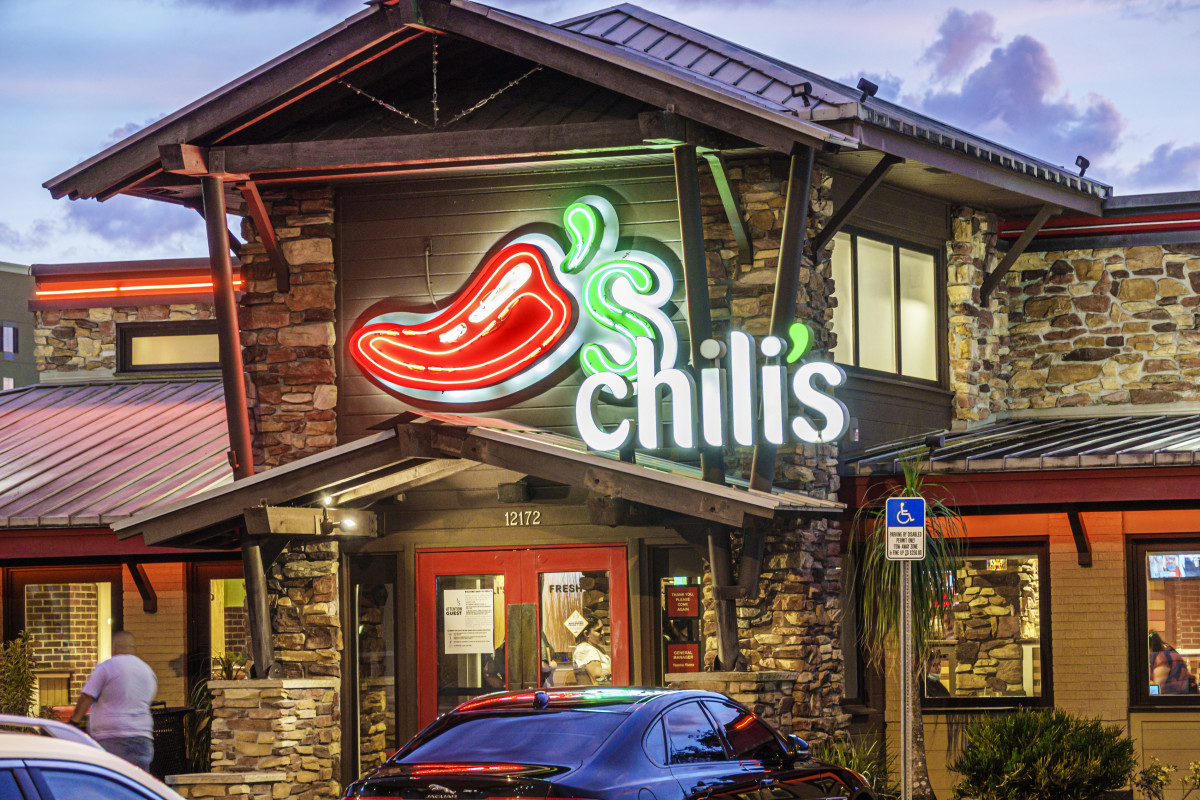 Chili’s is winning the burger wars against fast-food rivals.
Jeff Greenberg/Getty Images
Chili’s sales surge as McDonald’s and Wendy’s hit headwinds
Given the money at stake, it’s not surprising that Chili’s wanted to plant a flag. In April 2024, it added its Big Smasher to its “3 for Me” menu. This $10.99 burger deal included bottomless chips and salsa, a bottomless beverage, the burger, and fries priced in the same ballpark as McDonald’s and Wendy’s value meals.
“We know diners are experiencing sticker shock from the rising cost of fast food, with little change to the actual quantity or quality of fast food combo meals,” said George Felix, Chili’s Chief Marketing Officer, at the time. “We believe that Chili’s 3 For Me offers better value than you’ll find in any drive-thru.”
More Restaurants
- Scandals force fast-food chain to close dozens of restaurants
- 30-year-old pizza chain closes all restaurants except one
- Texas Roadhouse rival shuts down several restaurant locations
The move came at a critical time for the casual dining chain. Chili’s owner, Brinker International, had missed Wall Street revenue forecasts in three of the preceding four quarters, and its quarterly sales growth had decelerated over the preceding three quarters.
The decision to target fast-food burger chains was deliberate. During Brinker’s March 2024 earnings call, CEO Kevin Hochman said:
Hochman went on to explain why he felt that the burger deal would resonate, pointing out that while fast food and casual dining are different, delivering waitstaff-level, dine-in service “at a more attractive price point with superior value and better food, that gets very exciting for the guests.”
He was right. While fast-food chains struggle with declining foot traffic and lackluster same-store sales, Chili’s has experienced a surge in visits and revenue growth.
Last quarter, its foot traffic increased by a double-digit percentage, and sales rose 21% from the same period a year ago —a notable accomplishment, given that increasing unemployment and inflation have led many consumers to retrench, particularly lower-income households.
Overall foot traffic growth:
- Chili’s
Q3 2025: 15.4%
Q2 2025: 19.3%
- McDonald’s
Q3 2025: -3.5%
Q2 2025: 0.9%
- Wendy’s
Q3 2025: -6.5%
Q2 2025: -2.9%
Source: Placer.ai
Consumers’ budget-tightening has been particularly problematic for quick-service restaurants, or QSRs, including McDonald’s and Wendy’s, which have both acknowledged softness among lower-income customers who most frequently visit their locations.
“In the U.S., we continue to see a bifurcated consumer base with QSR traffic from lower income consumers declining nearly double digits in the third quarter, a trend that’s persisted for nearly 2 years, conceded McDonald’s CEO Chris Kempczinski in its earnings call on Nov. 5.
McDonald’s sales at stores open at least one year grew by 2.4% in America last quarter — far less than Chili’s, which saw same-store sales climb 21.4%. It’s been worse for Wendy’s, which saw a 4.7% drop in U.S. same-restaurant sales last quarter.
The fast-food industry’s pain has clearly been Chili’s gain, and Chili’s expects the $10.99 burger deal to continue positioning it for success, given that many are struggling financially.
Visits from lower-income customers to McDonald’s and Wendy’s have declined, but that hasn’t been the case at Chili’s.
“Our cohort growing the fastest is actually now households with income under $60,000,” said Hochman. “We are gaining market share with low-income households while others are reporting softness with that group.”
Fast-food chains hit reset to win back customers
A casual dining experience at Chili’s is arguably a more relaxing treat, and if Chili’s can maintain its pricing, it may be able to keep its edge against rivals.
McDonald’s and Wendy’s are hardly out of the fight, though, and neither is going to give up that market share easily.
For example, McDonald’s has responded by expanding its value meal lineup and reintroducing its popular $2.99 Snack Wraps.
“In early September, we brought extra value meals back to the menu to ensure fans can find everyday affordable pricing across our menu boards,” said McDonald’s CFO Ian Borden on its conference call.
Wendy’s plan, called “Project Fresh,” aims to restore consumers’ perception of its core quality food roots via marketing and improved restaurant experiences. It’s also closing about 300 underperforming locations to boost traffic at other places, while also launching new menu items, including “Tendys,” its take on chicken tenders.
“The first pillar of Project Fresh is revitalizing the Wendy’s brand. This is about positioning Wendy’s as the freshest and highest quality choice in QSR by celebrating what makes us stand out from the competition, said Wendy’s CEO Ken Cook.
“Closures of underperforming units are expected to boost sales and profitability at nearby locations.”
Whether those moves will be enough to win back customers from Chili’s remains to be seen.
Related: Chick-fil-A sidesteps troubling customer trend hurting Wendy’s