
Talk about penny dreadful.
After more than two centuries, the little brown coin that has filled so many jars for so many years is heading for that big mint in the sky, so if you want to put your two cents in, you’d better step on it.
The final penny was minted Nov. 12 in Philadelphia by U.S. Treasurer Brandon Beach.
“God bless America, and we’re going to save the taxpayers $56 million,” Beach said, referring to the current estimated annual cost of producing the coin, just before he hit a button to strike the last red cent.
The last time the United States discontinued a coin was the half cent in 1857, which had become too costly to produce and was largely considered obsolete.
“Today the Mint celebrates 232 years of penny manufacturing,” Kristie McNally, acting mint director, said in a statement.
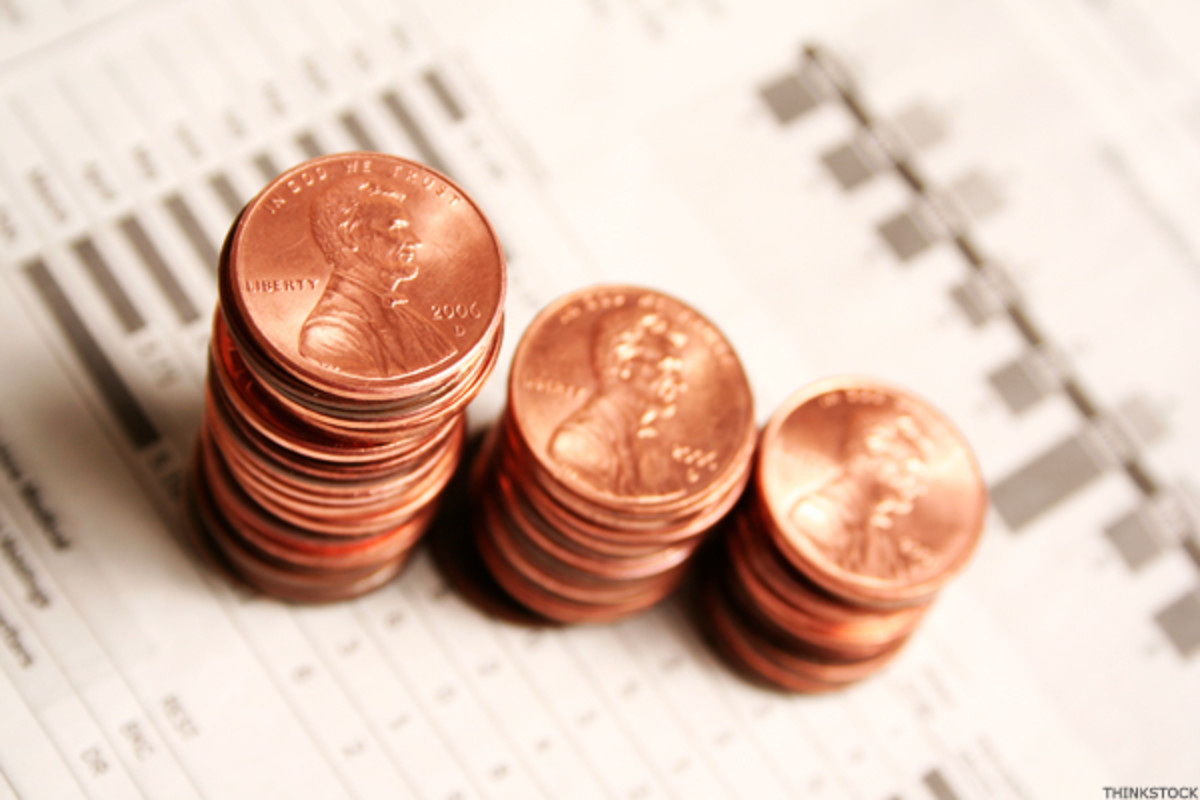
The U.S. Mint has discontinued the penny.
Trump calls penny production wasteful
“While general production concludes today, the penny’s legacy lives on,” she added. “As its usage in commerce continues to evolve, its significance in America’s story will endure.” There will be no more new pennies, from Heaven or anywhere else, for you and for me, but an estimated 300 billion of the zinc (97.5%) and copper coins are still in circulation, valued at about $3 billion, that can still be used.
More Economic Analysis:
- Fed official warns inflation is still too high for more rate cuts
- Fed decision could lower stagnant mortgage rates
- Redfin predicts major mortgage rate change coming soon
The penny, first authorized by the Coinage Act of 1792, has long played a role in daily American life — from the earliest days of the U.S. economy to the present, the U.S. Mint said.
Unfortunately, officials said, making them costs a pretty penny.
Economic and production factors, combined with evolving consumer behavior, have made its continued production unsustainable.
Yes, Ben Franklin told us that a penny saved is a penny earned, but prices have gone up. Over the past decade, the Mint said, the cost of producing each penny has more than doubled, to 3.69 cents from 1.42 cents.
Penny-production cost has been rising in recent years, up roughly 20% from 2023 to last year. Since 2000, the cost of a penny has more than quadrupled.
This centsless idea came from President Donald Trump, who announced via social media in February that he had instructed the Mint to stop making the once-popular coin.
“For far too long the United States has minted pennies which literally cost us more than 2 cents,” Trump wrote. “This is so wasteful!”
Meanwhile, Trump might be featured on a commemorative $1 coin issued by the United States Mint in honor of America’s 250th birthday in 2026, CNN reported last month.
So much for the lucky penny. But it’s had a quite a ride.
Survey says most Americans want penny
The country’s first form of pennies, copper coins called Fugio cents, first appeared in 1787 and were made from “the bands used to hold together powder kegs that the French government sent to the United States during the American Revolution,” according to the Federal Reserve Bank of Atlanta.
The first official one-cent piece, called the large cent, was minted by the U.S. government in 1793.
Related: AI plays expanding role in predicting natural disasters
The design of the official cent has changed over the years, with Abraham Lincoln’s face having been added to the coin in 1909.
During World War II, copper was needed for the war effort, so pennies were made from zinc-coated steel in 1943.
A limited number of copper cents were made by mistake, and they are now some of the rarest and most sought-after pennies.
In 1947, 16-year-old Don Lutes Jr. found one of these rare coins in his lunch change from the school cafeteria. Seventy-two years later, the penny sold at auction for $200,000.
Some retailers voiced concerns in recent weeks as supplies ran low and the end of production drew near, PBS reported.
“We have been advocating abolition of the penny for 30 years,” Jeff Lenard of the National Association of Convenience Stores said, quoted by the Associated Press. “But this is not the way we wanted it to go.”
And most Americans want to keep the penny handy, according to a 2019 survey by Americans for Common Cents, which found that more than two-thirds of the respondents said the copper was a keeper.
Frank Holt, an emeritus professor at the University of Houston who has studied the history of coins, laments the penny’s demise.
“We put mottos on them and self-identifiers, and we decide — in the case of the United States — which dead persons are most important to us and should be commemorated,” he told the Associated Press.
“They reflect our politics, our religion, our art, our sense of ourselves, our ideals, our aspirations.”