
Things are going to get better for travelers…eventually.
Between the recently ended government shutdown and the misery of the holiday travel season, weary travelers are probably dreading the very thought of walking into airports again.
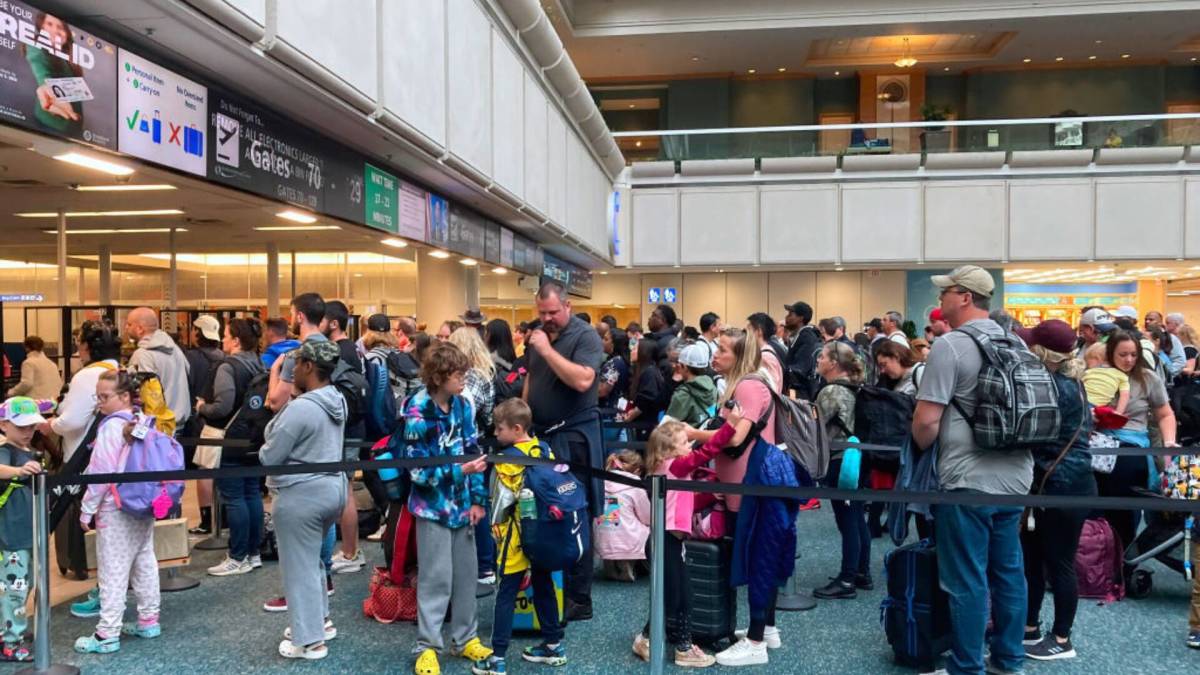
They’re fed up with inefficient baggage handling, long lines for security and check-in, and confusing layouts.
And if you think overcrowding is a problem now, well, brace yourself because for now it’s going to get worse.
“Passenger numbers will double over the next 20 years, but airports simply can’t expand at that rate,” according to a report from SITA, an air transport information technology company. “So, they will have to do more with what they already have, reducing friction optimizing operations and speeding up the passenger journey.”
While today’s airports can look sleek and modern, with convenient self-check-in kiosks and eye-catching digital signage, a McKinsey study found that “traveler-facing technology doesn’t always tell the whole story.”
Hennessy/SOPA Images/LightRocket via Getty Images
Passengers won’t have to deal with lines in the airports of the future.
Biometrics will eliminate lines
“Behind the scenes, airport infrastructure technology (infratech) is often outdated,” the consulting firm said. “It might be hampered by legacy software systems, scattered data, and stalled infratech projects that seem forever stuck in pilot mode.”
McKinsey said improved infratech, powered by artificial-intelligence algorithms that rely on comprehensive datasets, in real time can execute reallocate check-in counters, gates and workforces based on passenger flows, thus minimizing delays and making travelers a lot happier.
More Travel:
- Southwest Airlines’ latest change means some can’t fly anymore
- TSA wait times over 60 minutes at these airports
- Popular amusement park closes for good
Airports were the topic of discussion during a recent edition of McKinsey’s “The Next Normal” multimedia series.
“The airport of the future will fix the biggest problem of today, which is anxiety,” said Vik Krishnan, a senior partner in McKinsey’s Bay Area office. “Most people go to an airport and they’re anxious.”
Many people feel their stress levels climbing as they approach the airport. Krishnan says this will change.
“Imagine walking into an airport and not waiting in line for anything,” he said. “Your bags, to the extent that you have to check them, will be picked up by automated devices that can seamlessly deliver them to the aircraft or the baggage-handling system.”
Kelly Ungerman, a senior partner in the Dallas office, said security lines were the biggest bottleneck in airports and one of the biggest friction points in the end-to-end airport journey.
In the future, however, it might not be necessary to stop at all.
“Biometrics will mean that your face is your new ID,” she said, referring to the science of identifying people by physical or behavioral traits such as fingerprints or voice recognition. “No more physical documents like boarding passes or passports. That is true for check-in, security and boarding.”
Airports signs will get personal
A survey by the International Air Transport Association found that half of travelers used biometric identification at airports this year, up from 46% in 2024. The satisfaction level with biometric use reached 86%.
And the departure signs of the future are going to have a personal touch, she added.
Related: Penny gets pinched as the Mint tosses a coin
“The signage will be completely personalized,” Ungerman explained. “The departure screen will know it’s you. Signs that know exactly where you’re going will point you in the right direction — whether to a restaurant, a club or the gate.”
Robert Carsouw also has an eye on the future.
Carsouw, chief financial officer of the 109-year-old Amsterdam Airport Schiphol in the Netherlands, told McKinsey that the facility needed to rebuild its infrastructure and electrify it to become more sustainable “because our old infrastructure is reaching the end of its technical lifetime.”
“I would expect that a lot of operations will be robotized and automated in the future,” he said. “The concept of an autonomous airport that runs like a machine is something that we’re moving toward.”
“We’re collecting more data in an effort to further automate airport operations,” he added. “There are thousands and thousands of sensors and cameras in our buildings. That culminates in massive data pools that we’re analyzing and using to steer the airport.”
Carsouw said Schiphol was investing more than a billion euros ($1.16 billion) a year for the next decade and beyond and it will have “a very different look and feel in the future compared to today.”
“In the future, technology will be more important,” he said. “And passenger behavior could be different. But the fundamentals will stay the same. Even in 20 years, the essence of what the airport is doing will not change. “
Related: AI plays expanding role in predicting natural disasters