
- Higher-income Americans have been resilient when it comes to spending.
- Even that group, however, has become somewhat more cautious on discretionary spending.
- There are signs of a meaningful pullback happening in this area.
When the economy cools, people focus their spending on things they need over indulgent items. Still, luxury spending has been one of the more resilient parts of the economy.
That appears to be wavering.
“Luxury consumers’ intent to spend on luxury hit its lowest level since tracking began in April 2023, with 47% planning to spend the same or more on luxury in the next three months. That represents a decline of 11 percentage points since the previous survey,” Fashion Dive reported.
That’s relative weakness, but it also shows that higher-income consumers have not been hit as hard by the current economic downturn.
“We also know that the luxury consumer is resilient — they are typically the last in and first out of these moments of uncertainty — and we believe they will embrace luxury shopping as economic conditions improve,” Saks Global President Emily Essner said.
Data shows, however, that global luxury spending has slowed.
“Worldwide luxury spending, historically sensitive to uncertainty, is coming under intensified pressure as luxury consumers’ confidence is eroded by current economic upheavals, geopolitical and trade tensions, currency fluctuations, and financial market volatility, today’s report warns. This is despite a relatively upbeat end to 2024 for the luxury sector, bolstered by a double-digit rise in tax-free spending in Europe, as well as decreased U.S. market volatility at the time,” according to a report from Bain & Company.
The slowing luxury market has claimed a new victim as Lugano Diamonds & Jewelry, a designer, manufacturer, and retailer of high-end jewelry, has filed for Chapter 11 bankruptcy protection.
Lugano Diamonds & Jewelry files for Chapter 11 bankruptcy
Lugano Diamonds & Jewelry has entered bankruptcy with a plan to sell the company.
The chain continues to operate in the ordinary course of business at this time and “remains focused on continuing to provide exceptional service to its valued clients and the communities in which it operates,” according to a press release.
Lugano has filed a motion seeking court approval to start a sale process for substantially all of its assets under Section 363 of the U.S. Bankruptcy Code.
“To support this process, the company has reached an agreement with Enhanced Retail Funding, a well-capitalized investment firm focused on acquiring assets with over a century of direct experience in the jewelry sector. Under the proposed terms, Enhanced Retail Funding will immediately begin working with the company to support the smooth continuation of retail sales and operations through the court-supervised sale process, as well as serve as the stalking horse bidder,” it shared.
Related: Another mall anchor joins Macy’s, JCPenney in closing stores
The proposed transaction remains subject to higher and better offers and other customary conditions, and the company is actively soliciting additional qualified bids. Should such bids be received during the court-supervised sale process, the company expects to conduct an auction, with the stalking horse bid establishing the baseline for competing offers.
“As this process is underway and we approach the holiday season, we look forward to continuing to provide our valued clients with unique, timeless pieces for themselves and their loved ones,” CEO Josh Gaynor said in the press release.
Lugano Diamonds & Jewelry Chapter 11 bankruptcy details
- Lugano Diamonds & Jewelry filed for Chapter 11 bankruptcy protection on November 16, 2025.
- The filing was made in the U.S. Bankruptcy Court for the District of Delaware (Case No. 1:25-bk-12055). Source: Inforuptcy
- The bankruptcy is being used to facilitate a sale of substantially all its assets, via a 363-process to maximize value. Source: Business Wire
- Enhanced Retail Funding, a well-capitalized investment firm with jewelry‑sector experience, has agreed to act as the “stalking horse” bidder in the auction.
- Lugano is seeking $12 million in debtor-in-possession (DIP) financing, of which approximately $10 million is expected to be new liquidity to fund operations during the restructuring.
- Compass Diversified (CODI), Lugano’s parent/major backer, supports the bankruptcy filing: It said the Chapter 11 process is “the best path to maximize value” for Lugano’s assets. Source: GlobeNewswire
- CODI will no longer consolidate Lugano’s financial results beginning Q4 2025 due to the bankruptcy process. Source: GlobeNewswire
- In parallel with the bankruptcy, Lugano has several “first‑day” motions pending: to continue paying wages, maintain customer loyalty programs, and continue supplier payments post‑petition. Source: Inforuptcy
- At least one contract dispute was filed by Luminaire LLC in a U.S. District Court against Lugano earlier in 2025. Source: Justia Dockets & Filings
“We support the Lugano board’s decision to file for Chapter 11 as the best choice for maximizing value from Lugano’s assets,” CODI CEO Elias Sabo said in a press release.
“The filing does not involve our other eight subsidiaries, which collectively continue to generate strong cash flow and perform well in their respective markets.”
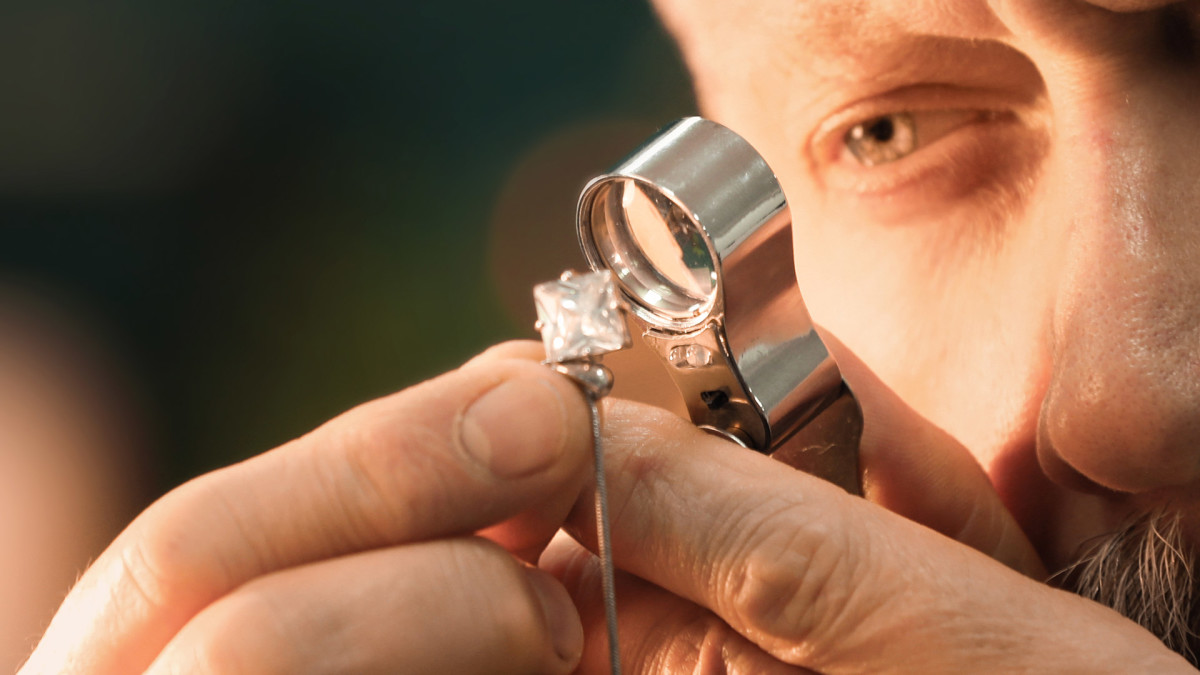 The luxury market has slowed down.
Shutterstock
The luxury market has struggled
- Bank of America found that U.S. luxury spending has declined year over year for 10 straight quarters, though there are signs of “early green shoots.” Source: Bank of America Institute
- According to their data, more luxury spending is shifting abroad; 13% of luxury purchases in 2024 were made outside the U.S. Source: Bank of America Institute
- In the KPMG Consumer Pulse survey (Summer 2025), discretionary spending is down, and many consumers are prioritizing essentials over luxury. Source: KPMG
- YouGov data shows that “consideration” for major luxury brands (like Gucci, Louis Vuitton, Dior) in the U.S. dropped nearly 25% between early 2024 and early 2025. Source: YouGov
- eMarketer reports that only 28% of U.S. luxury consumers felt optimistic about the economy in April 2025 (down from 45% in April 2024), and 26% said they’ve reduced luxury spending. Source: EMARKETER
- A vogue/GQ reader survey found consumers are increasingly turning to resale or value-priced luxury — quality concerns and price sensitivity are undercutting demand. Source: Vogue