
TJ Maxx and Marshalls are riding a big wave of demand as cash-strapped consumers shift gears from pricey department stores to off-price retailers. The shift toward value aligns directly with the brand’s mission to offer brand-name products at discounted prices.
The message is resonating despite TJ Maxx and Marshalls operating almost entirely through brick-and-mortar locations because their treasure hunt product assortment is particularly hard to replicate online.
TJX Companies at-a-glance:
- Year founded: First store opened in Auburn, MA, in 1977.
- Brands: TJ Maxx, Marshalls, Sierra, HomeGoods, HomeSense.
- Number of stores: 3,695 in the U.S., plus 1,390 internationally.
- Employees: 364,000
- Annual revenue: $56.4 billion (2024) Source: SEC filings; 10-K annual report.
The discount chains’ strength is particularly intriguing because it bucks a more widespread decline in store foot traffic industry-wide, positioning TJX Companies, the parent company of TJ Maxx and Marshalls, for revenue and profit growth even as many retailers struggle to offset higher tariffs on apparel and housewares.
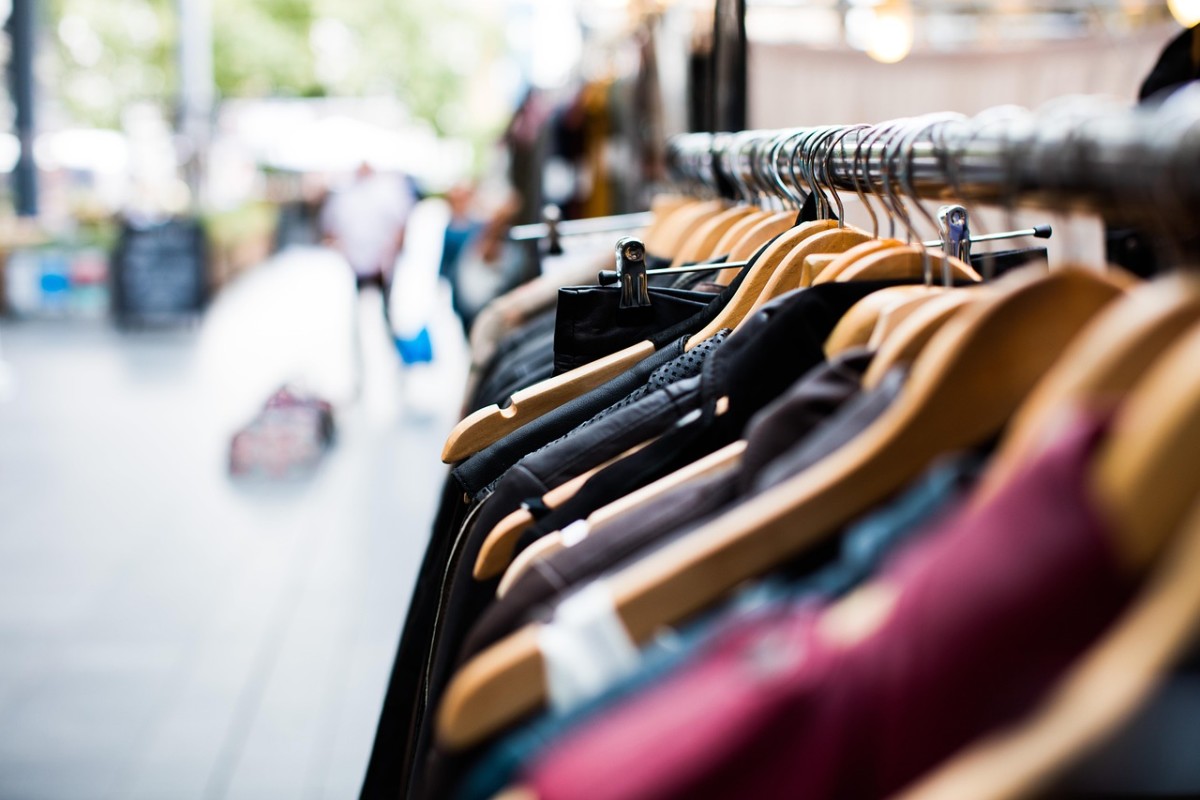 TJ Maxx and Marshalls are winning over customers with their discount brand-name apparel and housewares.

Shoppers take a hit as economy wavers
A seismic shift is happening within retail. While the US economy appears healthy on the surface, cracks have emerged in the job market that are fueling uncertainty, even as CPI inflation increases due to import taxes.
The dynamic is playing out particularly harshly within the apparel and furnishings markets, which have historically relied on younger, well-heeled, and fashion-conscious shoppers. Apparel and housewares products are particularly exposed to tariffs, with most retailers’ shelves filled by imported items, primarily from China and Vietnam.
More Retail:
- Trump’s tariff cuts may make popular luxury items cheaper
- Google makes holiday shopping easier than ever
- Best Buy warns holiday shoppers of updated return policy
- Major retailers have jacked up prices due to tariffs
- US shoppers give retailers an early holiday present
“Over 98% of clothing sold in the U.S. is imported from abroad. U.S. fashion apparel companies are likely to be among the hardest hit by the tariff increase, particularly since Mexico and China are two of the leading apparel-sourcing destinations for the country,” according to the United States Fashion Industry Association.
As a result, prices on apparel and home goods have increased more broadly than other items on shoppers’ wish lists. According to Harvard’s Pricing Lab, clothing prices are running 8.9% higher, and prices for furniture and furnishings at major retailers are 6.5% higher than they’d be without tariffs.
That’s making it increasingly harder on consumers, particularly since layoffs have increased and wages are stalling. In October, US employers laid off 153,074 workers, up 175% from last year, according to Challenger, Gray & Christmas.
And companies are hiring less, according to ADP. Over the past three months, job growth has been essentially flat, a sharp contrast to the first quarter of 2025, when over 100,000 jobs were consistently being added to the economy every month.
“Those laid off now are finding it harder to quickly secure new roles, which could further loosen the labor market,” said Andy Challenger, workplace expert and chief revenue officer for Challenger, Gray & Christmas.
The job losses and declining hiring have made it harder to secure pay raises as well. According to the Bank of America, middle- and lower-income households saw a 2% and 1% pay bump, respectively, year over year in October. That didn’t keep up with inflation, which rose 3%, according to the Consumer Price Index.
Customers flock to TJ Maxx and Marshalls for deals
The result is that consumers’ discretionary spending has taken a big hit, forcing them to be more cost-conscious and value-conscious, especially since fast fashion import prices have surged, making that apparel less appealing.
Shoppers are shifting away from department stores and increasingly turning toward off-price retailers like TJ Maxx and Marshalls—a boon to TJX Companies (TJX).
In October, foot traffic to TJX’s TJ Maxx, Marshalls, and Sierra branded stores (Marmaxx) rose 10.8% year over year, according to Placer.ai. In Q3, traffic increased 8.1% from the same period last year, representing an acceleration from the 7.1% growth observed in the second quarter.
TJ Maxx/Marshalls/Sierra brand foot traffic growth by month (2025):
- October: 10.8%
- September: 6.3%
- August: 9.5%
- July: 8.3% Source: Placer.ai.
It wasn’t just TJX’s Marmaxx stores that saw a lift, either. Traffic also rose to its HomeGoods and HomeSense stores, increasing 9.6% year-over-year in the third quarter, followed by a 12% gain in October.
The performance sharply contrasts with department stores and big-box rival Target, which historically gets a larger share of its sales from apparel and housewares than Walmart. Target’s foot traffic sank 2.7% in the third quarter.
Bank of America’s spending data showed that its cardholders’ spending at department stores was flat in October, after falling 6.1% in September, marking the sixth consecutive month of decline. Spending at discount retailers like TJ Maxx and Marshalls rose 3.3% in October and declined just 2.5%.
The TJX Companies will report its official third-quarter financial results during an earnings call with investors on November 19. Analysts expect sales of $14.86 billion and EPS of $1.22.
Assuming the substantial foot traffic allows TJX to beat those Wall Street forecasts, most will shift focus to the earnings call, where management will provide an update on how traffic translates into actual revenue and profit growth, and offer guidance on how it expects customer behavior to evolve through the holidays.