
Over the past 20 years, Walmart has faced stiff challenges from e-commerce (Amazon) and big-box brick-and-mortar retailers (Target). At times, its retail dominance has been questioned, leading to investors selling shares. Recently, however, doubts have quieted, and Walmart’s stock price has soared.
One reason is the company’s reputation as the low-priced leader at a time when consumers are increasingly cash-strapped. Another is Walmart’s decision to take a page out of Amazon’s book, investing heavily in e-commerce to create a robust delivery system and third-party marketplace.
Those moves are fueling significant growth, including during the second quarter, according to CEO Doug McMillion.
Arguably, Walmart has never done a better job at leveraging its scale to win the omnichannel crown.
Investors will find out if the company’s progress continues when it reports its latest quarterly earnings results on Nov. 20.
Walmart sees customer trade down as economy stutters
Walmart (WMT) gets about 60% of its sales from essentials like groceries, and that puts it in perfect position to capture consumer spending as it shifts from discretionary to non-discretionary purchases because of a weaker economy.
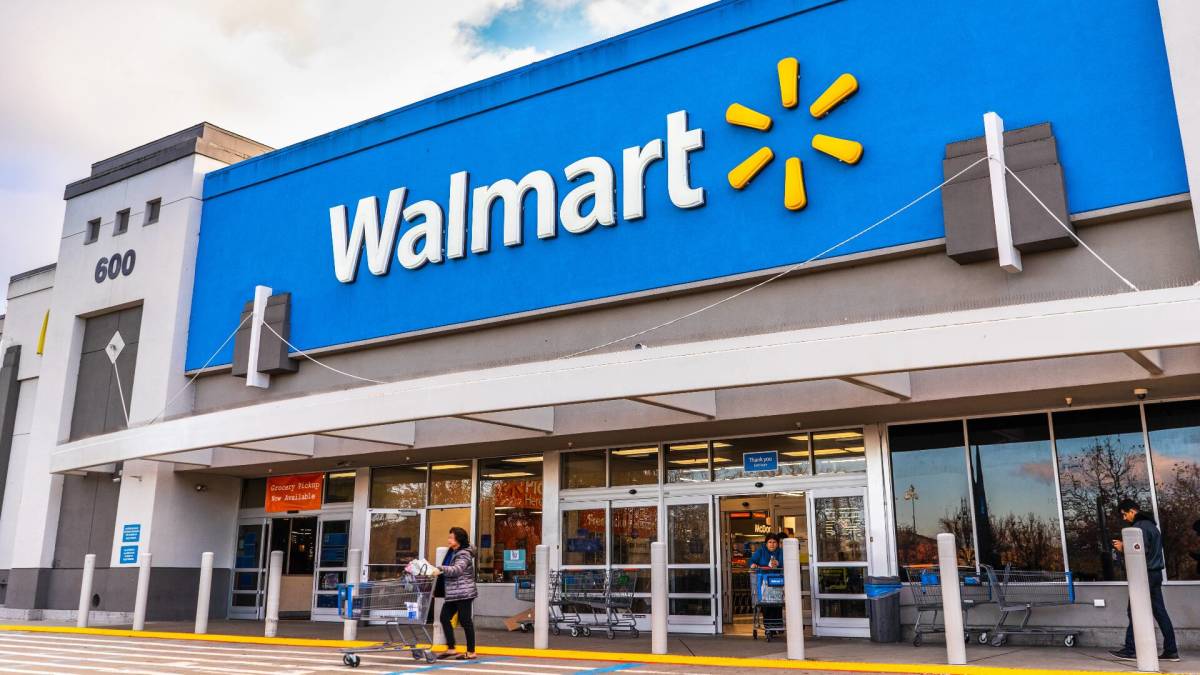 Walmart’s low-price reputation is winning over customers in 2025.
Shutterstock
While GDP growth remains robust, economic activity is primarily driven by the massive buildout of AI infrastructure, rather than increased household spending.
Job hiring has decelerated from 2024, according to payroll processing giant ADP. Layoffs are surging, and unemployment is the highest since 2021.
Challenger, Gray, & Christmas reports that layoffs totaled 1.1 million workers in 2025 through October, up 44% year over year. Meanwhile, Bank of America says worker wage growth has slowed, with lower- and middle-income pay raises now trailing inflation.
Four out of 10 companies laid off workers in 2025, and 60% expect to cut workers in 2026, according to Resume.com.
Worker wage growth by income level (October 2025):
- High income: 3.7%
- Middle income: 2%
- Lower income: 1%
- CPI inflation: 3% Source: Bank of America
And speaking of inflation, the Consumer Price Index, or CPI, showed it clocked in at 3% in September, up from 2.3% in April before most tariffs kicked in. The effective tariff rate is now 18%, up from 2.4% in January, according to Yale Budget Lab.
Unsurprisingly, tariffs have had a significant impact on retail spending, given that a substantial portion of the goods we purchase (clothing, tools, auto parts, tools, toys, etc.) are imported from overseas, including China.
More Retail Stocks:
- Costco CFO makes rare pricing promise
- Home Depot faces growing consumer boycott calls ahead of holidays
- Target’s efforts to make amends with customers hit a snag
- Amazon lawsuit could be a warning to other employers
While many companies are absorbing some of the extra cost, most are passing along at least some of the burden. According to the Harvard Price Lab, the average imported item sold at major retailers is 6.14% higher than it would be without tariffs.
The dynamic has consumers rethinking their spending, including where to shop. That’s good news for Walmart, given its reputation for holding the line on prices.
Walmart earnings to shed more light on customer behavior
Department stores have seen a slowdown in spending, but consumers trading down has also impacted Walmart’s core rival Target, which, according to Placer.ai, saw foot traffic at its stores tumble 2.7% in the third quarter.
Related: Walmart quietly shrinks generous offer for holiday shoppers
Some of those shoppers have turned to discount retail chains like TJMaxx and Burlington Stores, but many have also swapped from Target’s red to Walmart’s iconic blue bags.
Placer.ai’s data shows that third-quarter foot traffic at Walmart inched up 0.4% — not great, but far better than Target. Walmart’s Costco rival, Sam’s Club, saw its traffic jump 3.2%.
Walmart/Sam’s Club foot traffic by month:
- October: 3.5%, 5%
- September: -0.5%, 1.2%
- August: 1.9%, 5.2%
- July: -0.2%, 3.2% Source: Placer.ai
We’ll find out how that traffic uptick translated into sales when Walmart reports its third-quarter earnings results on Nov. 20.
Bank of America expects more foot traffic and tariff-fueled higher prices will mean growth in comparable same-store sales at stores open at least one year.
The bank’s analysts project same-store sales growth in the U.S. will be reported as up 3%, slightly lower than Wall Street’s consensus of 3.8%.
And it’s not just because of lower-income shoppers. Walmart is increasingly capturing market share for higher-income earners as they shift their focus toward value.
Bank of America also believes that Walmart’s heavy investments in e-commerce and delivery, including same-day delivery, is separating it from the pack.
“We see continued gross margin support from growth in higher margin ancillary businesses (which supported WMT achieving US ecommerce profitability as of F1Q), esp. digital advertising and 3P marketplace fees,” wrote the analysts. “In any macro backdrop, we believe WMT’s scale and unique position in omni-channel position it to continue growing digital ad dollars, as does continued growth in marketplace sellers.”
Bank of America feels like Walmart is firing on all cylinders, so management’s guidance would need to significantly derail its thesis regarding increased market share up and down households across all incomes, or its ability to profit from its growing third-party sellers business.
The analysts currently rate Walmart a buy, with a price target of $125.