
Flight delays related to the recent government shutdown are just the latest factor making air travel difficult.
Thousands of flights were cancelled at 40 of the country’s busiest airports, and chaos ensued.
Even though the FAA lifted restrictions related to the shutdown on November 17, and flight operations are mostly back to normal just in time for the busiest travel season of the year, the Transportation Security Administration is adding another layer to the Real ID Act.
The Real ID program itself, which was implemented in May, has faced pushback since its inception, but with deadlines now in force and TSA tightening ID verification procedures, travelers in the U.S. must meet the new federal ID standards.
Passengers who don’t have a Real ID may soon be forced to pay a fee in order to board a flight.
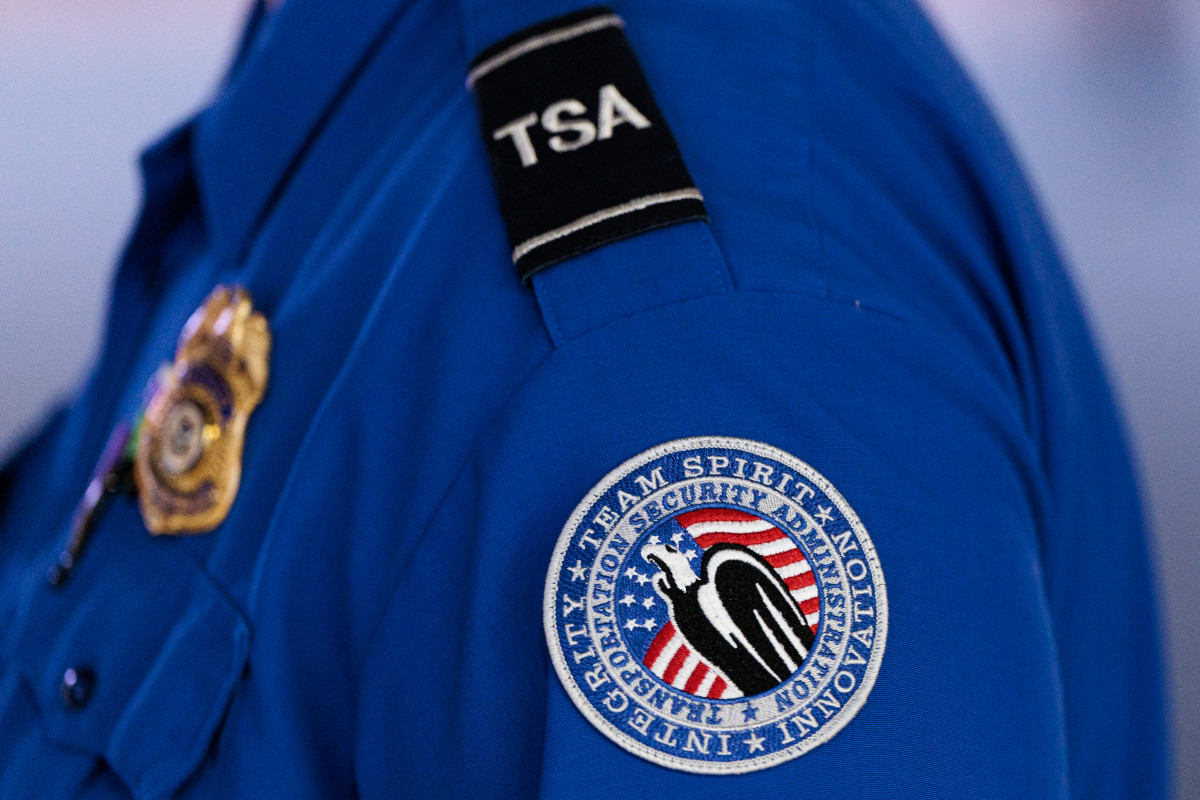 TSA is proposing a controversial plan for passengers who don’t have a Real ID.
Photo by Andrew Wevers on Getty Images
TSA proposing fee for passengers who don’t have Real ID
In May, the Real ID Act went into effect, requiring passengers to show a driver’s license or state ID card that has enhanced security features including a bar code and a gold star that makes the ID difficult to counterfeit.
Now the TSA has unveiled a new proposal that could dramatically affect the air-travel experience for millions of Americans.
Under the new plan, published on the Federal Register on November 20, 2025, “TSA is replacing the prior alternative identity verification process with a modernized alternative identity verification program that offers technology-enabled alternative for individuals who do not have an AFOID available to present at the TDC.
If an individual chooses to use the program and submit the required information, TSA will use the individual’s biographic and/or biometric information to verify identity and match the individual to their Secure Flight watch list result.”
The proposal follows the Real ID Act which went into effect in May 2025.
Previously, passengers without a compliant Real ID would face additional screening at airport security checkpoints that could cause delays for them, but did not cost anything.
What is a Real ID?
- Real is a federal standard (in the U.S.) for state‑issued driver’s licenses and identification cards intended to improve security and identity verification.
- It was passed in 2005 (as part of the Real ID Act) following the September 11 attacks to bolster documents used to access federal facilities, board federally regulated commercial aircraft, and enter certain nuclear power plants or other restricted areas.
- A Real ID‑compliant card has a marking (often a star in the upper right corner) indicating that it meets the DHS standards.
- Document requirements for getting a Real include: proof of identity (such as a valid U.S. passport or birth certificate), proof of Social Security number (or proof of ineligibility for one), proof of lawful status or legal presence, proof of address, and often verification of the documents with issuing authorities. Source: Transportation Security Administration
- Beginning May 7, 2025, travelers flying domestically in the U.S. will generally need a Real‑compliant identification (or acceptable alternative) to board. Source: Travel Manager
Acceptable Real ID substitutes and alternatives
- If you either don’t have a Ral or you choose not to get one, there are other documents you can use. According to the Transportation Security Administration (TSA) and Department of Homeland Security (DHS):
- A valid U.S. passport or U.S. passport card.
- A state‑issued Enhanced Driver’s License (EDL) (in states that issue them) which meets certain border‑crossing or federal verification standards.
- A trusted traveler card (e.g., from programs like Global Entry, NEXUS, etc.), depending on the context.
- A U.S. military ID or other federal credential in some contexts (depending on purpose). Source: Department of Homeland Security
TSA’s new Modernized Alternative Identity Verification
Now TSA plans to introduce the new system, which it is calling a “modernized alternative identity verification program.” The program utilizes a kiosk that confirms a person’s identity using biometric data (such as facial recognition) and personal information.
To offset the cost of the kiosks, and other resources it will take to implement the new program, travelers will be required to pay an $18 nonrefundable fee.
Related: TSA quietly cracks down on popular travel essential
The fee will give a passenger 10 days of access.
“This notice serves as a next step in the process in REAL ID compliance, which was signed into law more than 20 years ago and finally implemented by Secretary [Kristi] Noem as of May 2025. TSA is working with stakeholders and partners to ensure both security and efficiency at our checkpoints. Additional guidance will be announced in the coming days,” a TSA spokesperson told ABC News:
TSA changes in 2025
- May 7, 2025: All domestic travelers must present a Real ID or alternative (e.g., passport or military ID) to fly.
- July 2025: “Shoes-off“ rule lifted.
- July 2025:Families on the Fly program launched, allowing family screening lanes.
- August 2025: New ban on hair tools introduced.
The proposed fee system is part of the TSA’s to strengthen airport security post-9/11 while using technology to enhance efficiency. It is also a departure from previous leniency around identification enforcement and could pave the way for more user-paid security measures in the future.
“Ultimately, it will be much more efficient to go through TSA screening with the new biometric system. It is modernization in the industry, and will streamline the process for those that do not have the proper documents to go through TSA screening,” Senior Vice President of Partner Relations at CheapOair Tom Spagnola told TheStreet. “Eventually, everyone will have to follow the new guidelines, so not having to pay a fee will encourage people to get their REAL ID,” Spagnola said.
Related: Airline to cancel all flights to country over geopolitical instability
“TSA anticipates that this modernized program will increase efficiency for each individual by streamlining steps taken to verify an individual’s identity and substantially increase the number of individuals for whom TSA can provide alternative identity verification by leveraging technology to significantly expand program capacity,” according to the statement.
It’s unclear when the new fee structure for Real ID will be implemented.
“The policy will be the burden of leisure travelers that rarely travel, or do not travel more once a year,” said CheapOair’s Spagnola. “They just simply will be unaware of the new fee come January. It’s a matter of messaging from TSA to inform Americans as much as possible about the upcoming fee, and what steps travelers can take to avoid the fee.”
Related: TSA says this common snack is banned from flights you take