
The Toyota RAV4 may have ended the Ford F-Series’ 47-year run as the top-selling vehicle in the U.S. in 2024, according to SupercarBlondie.
But it looks like the king is coming back to reclaim its crown in 2025.
By the end of the third quarter, Ford sold 597,546 F-Series trucks, a 13% increase from a year ago, according to Car and Driver. The lineup was helped by 40% higher sales of the electric F-150 Lightning.
The RAV4 has fallen to third place with 358,134 units sold.
Ford total U.S. sales by year:
- 2024: 2.08 million vehicles sold, +4.2%
- 2023: 1.99 million vehicles sold, +7.1%
- 2022: 1.77 million vehicles sold, -2.2%
- 2021: 1.9 million vehicles sold, -6.8% Source: Car Sales Statistics
The company sold 765,649 F-Series trucks in 2024, a 2% year-over-year increase.
To build and sell that many trucks a year, Ford relies heavily on its aluminum supplier in Oswego, New York.
Unfortunately for the Blue Oval, a late-night fire in September destroyed a key part of the Novelis aluminum plant. Novelis supplies approximately 40% of the aluminum sheet used by the U.S. auto industry, according to The Wall Street Journal, and Ford is its biggest customer.
Ford gets the aluminum for its F-150 pickup from the plant. The fire was big enough for CEO Jim Farley to address it during the company’s third-quarter earnings call.
Farley said the company was on track to raise its full-year 2025 EBIT guidance “if it weren’t for the impact of the Novelis fire in Oswego, New York.”
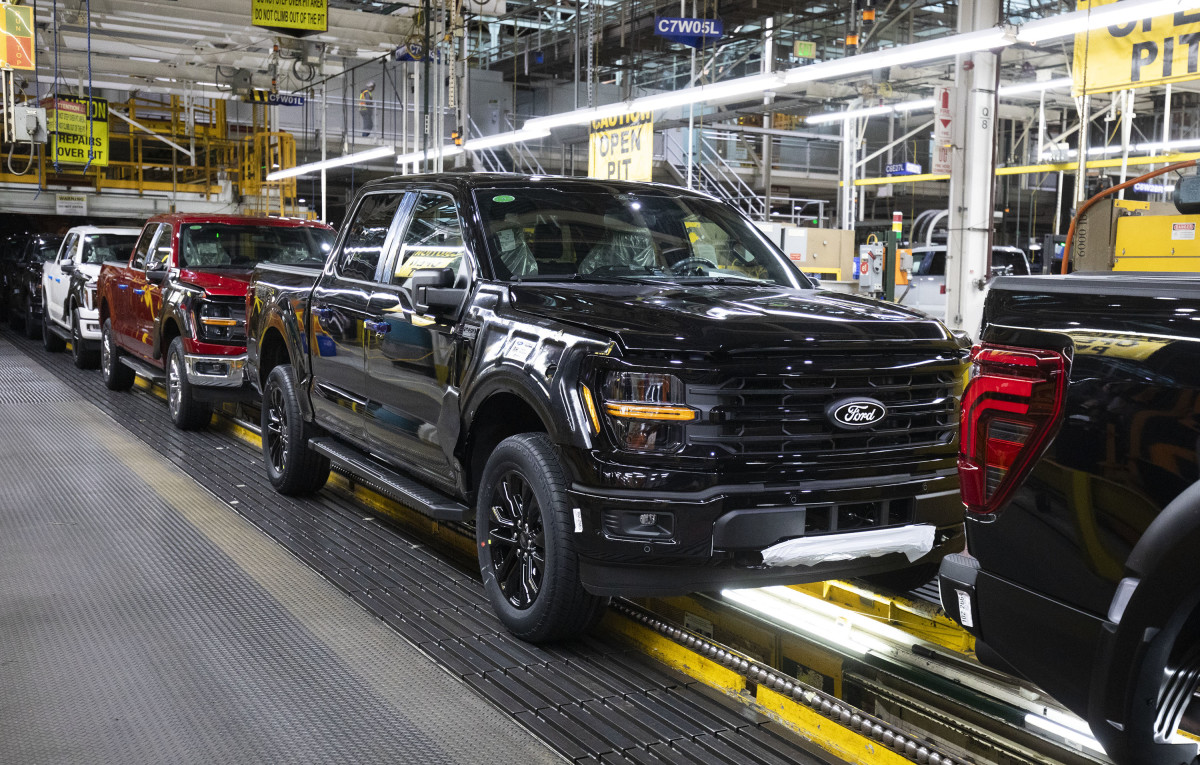 Ford is adding a third shift at its Dearborn plant to mitigate the impact of the Oswego fire.
Ford supplier Novelis suffers another fire at aluminum plant
Ford CEO Jim Farley visited the Novelis site following the September 16 fire that brought down part of the factory’s roof.
The blaze was so intense that about 175 firefighters from 26 different area fire departments had to respond to extinguish it.
Related: Ford CEO Jim Farley raises alarm, says ‘we’re in trouble as a country’
“We immediately mobilized a dedicated crisis team, worked around the clock with Novelis to secure alternative aluminum sources for our operational lines and accelerate a plant’s recovery,” Farley said.
Despite the quick pivot, Ford expected an EBIT headwind between $1.5 billion – $2 billion in the fourth quarter, with a cash headwind of $1 billion or less between this year and next.
That was before a second large fire broke out at the plant on Nov. 20.
A fire started in the section of the plant with the rolling mill, where heated aluminum slabs are flattened into long, thin sheets before they are processed further in a different part of the plant.
Novartis had previously stated that the rolling mill would restart by the end of the year.
Ford is the plant’s biggest customer. In 2025, Ford decided to replace the steel bodies of its large trucks and SUVs with aluminum to reduce weight and improve fuel economy.
Ford details $2 billion pivot away from Novelis
While Ford has not commented on the most recent fire, the company spent a significant amount of time addressing the blaze during its most recent earnings call.
The company said it has “line of sight to recover at least $1 billion related to Novelis,” based on conversations with the company. However, that estimate was based on the timeline that the “hot mill, which is down now, will be operational in late November, early December.
It’ll then go through a quick ramp-up in December, according to Kumar Galhorta, Ford’s chief operating officer.
Ford expected to lose between 90,000 and 100,000 vehicles to the production delay in the fourth quarter, and it expected to make up about half of that production by adding a third shift at its Dearborn Truck Plant and increasing the line speed at its Kentucky plant.
But the latest fire undoubtedly places that timeline and the effectiveness of those plans in jeopardy.
Related: Ford CEO Jim Farley shares ‘shocking’ lesson he learned from Tesla