
Amazon, the largest online retailer in the world, is currently benefiting from growing demand, despite increasing economic concerns among consumers nationwide.
During the third quarter of this year, Amazon’s net sales in the U.S. increased by 11% year-over-year, according to its latest earnings report. It also generated about $21 billion in net income, which is higher than the $15.3 billion it earned during the same quarter in 2024.
The boost in sales comes during a time when Amazon is expanding its same-day and next-day delivery to over 4,000 smaller cities, towns, and rural communities across the country, an initiative it plans to complete by the end of this year.
“In the third quarter, our sharp pricing, broad selection and fast delivery speeds continue to resonate with customers,” said Amazon Chief Financial Officer Brian Olsavsky during an earnings call on Oct. 31. “Customers appreciate the ability to quickly receive items essential for their daily needs, including perishable groceries and have them delivered in the same day.”
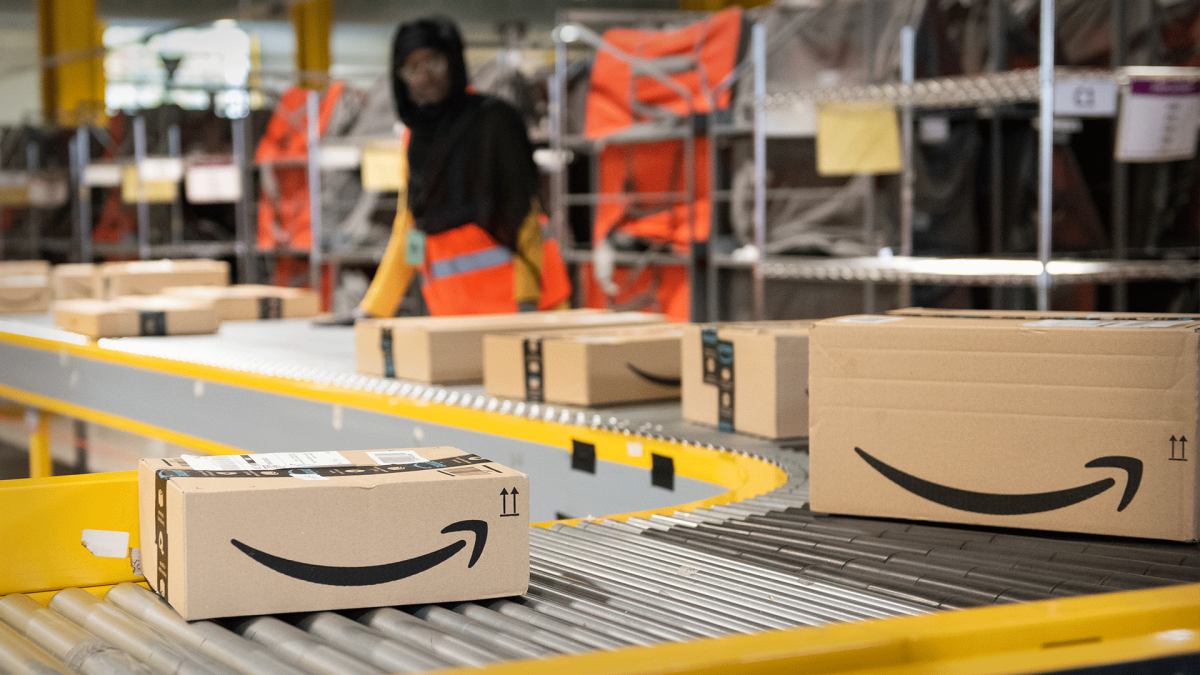 Amazon’s third-quarter sales increased year over year.
Shutterstock
Amazon’s holiday sales may be in trouble
Amazon is betting big on the holiday season, which Olsavsky claims is the company’s “peak season,” to shore up even more consumer demand; however, a growing boycott effort may soon put a dent in its sales growth during the most critical time of the year in retail.
Between Nov. 27 and Dec. 1, Amazon will face the “We Ain’t Buying It” boycott, which is organized by grassroots organizations Black Voters Matter, Indivisible and Until Freedom.
The boycott is encouraging consumers to “hit pause on shopping from major corporations” during Thanksgiving weekend, specifically targeting Amazon, Home Depot and Target, according to the campaign’s website.
The boycott’s organizers are specifically targeting Amazon due to its dominance in retail, controversy over how it treats workers and its donation to the Trump administration.
Related: Home Depot faces growing consumer boycott calls ahead of holidays
“Amazon holds a monopolistic position in the market, contributes to dangerous working conditions for its employees and drivers, and (former) CEO Jeff Bezos has donated over $1 million to this administration,” said the group on its website.
Emarketer estimates that Amazon controls more than 40% of the U.S. e-commerce market, despite growing competition. Amid its growth, the retail giant has recently suffered controversy over the working conditions of its warehouse workers.
A Senate committee investigation last year found that over the past seven years, Amazon workers were almost twice as likely to be injured on the job compared to workers at other warehouses in the industry.
The report also revealed that in 2023, Amazon warehouses recorded 30% more injuries than the warehousing industry average.
Amazon also faced a complaint from the Federal Trade Commission for allegedly subsidizing its labor costs by seizing tips its delivery drivers received from customers. In February, Amazon agreed to pay almost $4 million to settle that lawsuit.
The boycott comes amid a critical time of the holiday season
The “We Ain’t Buying It” boycott encourages consumers to shop at small or local businesses as they avoid making Amazon purchases.
“Thanksgiving retail week is a crucial period for big retailers; nearly 20% of annual sales happen between Black Friday and Cyber Monday,” reads the campaign’s website. “If we coordinate even a small drop in these numbers, we send a powerful message: we want to see them stand up and stop enabling harm for profit.”
The boycott threat looms just as a record number of economically stressed consumers are expected to shop on Black Friday and Cyber Monday to take advantage of discounted prices.
How many U.S. consumers plan to shop during Thanksgiving weekend 2025:
- About 58% of consumers have already started their holiday shopping.
- Approximately 186.9 million people plan to shop from Thanksgiving Day through Cyber Monday this year, marking the largest number of shoppers on record.
- Specifically, 70% of consumers plan to shop on Black Friday, while 40% plan to shop on Cyber Monday and 36% will potentially shop on the Saturday after Thanksgiving. Source: National Retail Federation
“Many Americans consider shopping to be an important part of their Thanksgiving holiday and one of the best ways to get deals on gifts,” said Prosper Executive Vice President of Strategy Phil Rist in a press release. “Of those planning to take advantage of sales, over half say it’s because the deals are too good to pass up. Others point to the tradition or simply say they like to start their holiday shopping during the long weekend.”
This is not the only boycott Amazon faced this year. In March, The People’s Union USA organized a weeklong Amazon boycott due to the company allegedly exploiting its workers, harming small businesses, firing employees for organizing unions, monopolizing industries, using loopholes to dodge paying taxes and violating the privacy of its customers.
More Retail:
- Marshalls makes bold change to return policy ahead of holidays
- Walmart quietly shrinks generous offer for holiday shoppers
- BJ’s Wholesale announces free offer for customers amid struggles
The group later organized another weeklong Amazon boycott in May, after Bezos made an agreement with President Donald Trump not to list tariff costs next to item prices on Amazon’s website.
For the entire month of July, The People’s Union USA encouraged consumers to boycott Amazon once again, this time due to the retailer’s treatment of its workers on Amazon Prime Day and its founder’s alleged minimal tax payments.
Boycotts are becoming a growing problem for retailers
More Americans have recently opted to boycott companies amid heightened political tensions. For example, companies such as Target, Walmart and Lowe’s have faced boycotts from consumers this year for their policies and business practices.
Where Americans stand on boycotting companies in 2025:
- Before purchasing from a business, 45% of Americans occasionally research the company’s values or beliefs.
- Also, 31% of Americans have boycotted a business due to reasons such as the company’s endorsement of discrimination, its political donations, affiliations, religious messaging or practices.
- Additionally, 37% would more likely boycott a large corporation, while 7% would boycott a small business and 28% would boycott both. Source: LendingTree
“Any company that attempts to downplay the importance of politics in their customers’ shopping choices does so at its own peril,” said Matt Schulz, LendingTree chief consumer finance analyst, in the survey. “Your potential customers are listening closely to what your business says, whether you like it or not.”
Related: Consumers boycott Target, Amazon, Home Depot, here’s why