
Inventing new medicines to address illnesses and diseases that lack good treatment options only solves part of the problem. Drug companies still need to find a viable way to deliver that medicine.
To put it in very simple terms, our elderly cat has a thyroid condition that caused her to lose weight. The treatment works best as a topical absorbed through her skin, but cats don’t know not to lick the medicine off, so it has to be applied to her ears, a spot she can’t reach with her tongue.
The medication, however, does not know where it’s being applied or by whom, so the human administering the drug must wear a glove, or else they, too, will absorb it.
Creating ways to get the human body to absorb needed drugs is actually one of the bigger challenges in the medical field.
Solubility, along with permeability, are the two most important factors affecting oral drug absorption and underlying the Biopharmaceutics Classification System (BCS) and Developability Classification System (DCS),” Julien Meissonnier (vice-president, Science and Technology) and Ronak Savla (scientific affairs manager), both from Catalent Pharma Solutions, shared with Pharmtech.com.
More Bankruptcy:
- Luxury retail chain files Chapter 11 bankruptcy
- Airline cancels all flights in bankruptcy, passengers stranded
- Popular fashion retailer files for Chapter 11 bankruptcy
- Major sports gambling company files for Chapter 11 bankruptcy
BCS and DCS are classification systems used to predict what will impact the in-vivo performance of drugs (how the drug impacts the human body).
SoluScience, a leader in the field of drug solubility, had been working to solve that problem, but it has now filed for Chapter 11 bankruptcy protection.
SoluScience was trying to solve a medical challenge
“Solubility, the phenomenon of dissolution of solute in solvent to give a homogenous system, is one of the important parameters to achieve desired concentration of drug in systemic circulation for desired (anticipated) pharmacological response,” according to the National Library of Medicine.
It’s not a small problem:
- Low aqueous solubility is the major problem encountered with formulation development of new chemical entities as well as for the generic development.
- More than 40% NCEs (new chemical entities) developed in the pharmaceutical industry are practically insoluble in water.
- Solubility is a major challenge for formulation scientists.
SoluScience has been working on solving the solubility problems.
“The majority of the failures in new drug development have been attributed to poor water solubility. About 40% of drugs with market approval have limited water solubility. With the advent of various insoluble drug delivery technologies, the opportunity to formulate enhanced water-soluble transport carriers is significant,” the company shared on its website.
The company sells its services to drugmakers by emphasizing how it can make their discoveries work more effectively.
“Recent studies have revealed that discovery and development of new drugs alone are not sufficient to achieve therapeutic excellence and capture market economies. Therefore, modified formulations of existing drugs are gaining more importance. The improved formulation of existing drugs is turning out to be lucrative business for the pharmaceutical industry,” SoluScience shared.
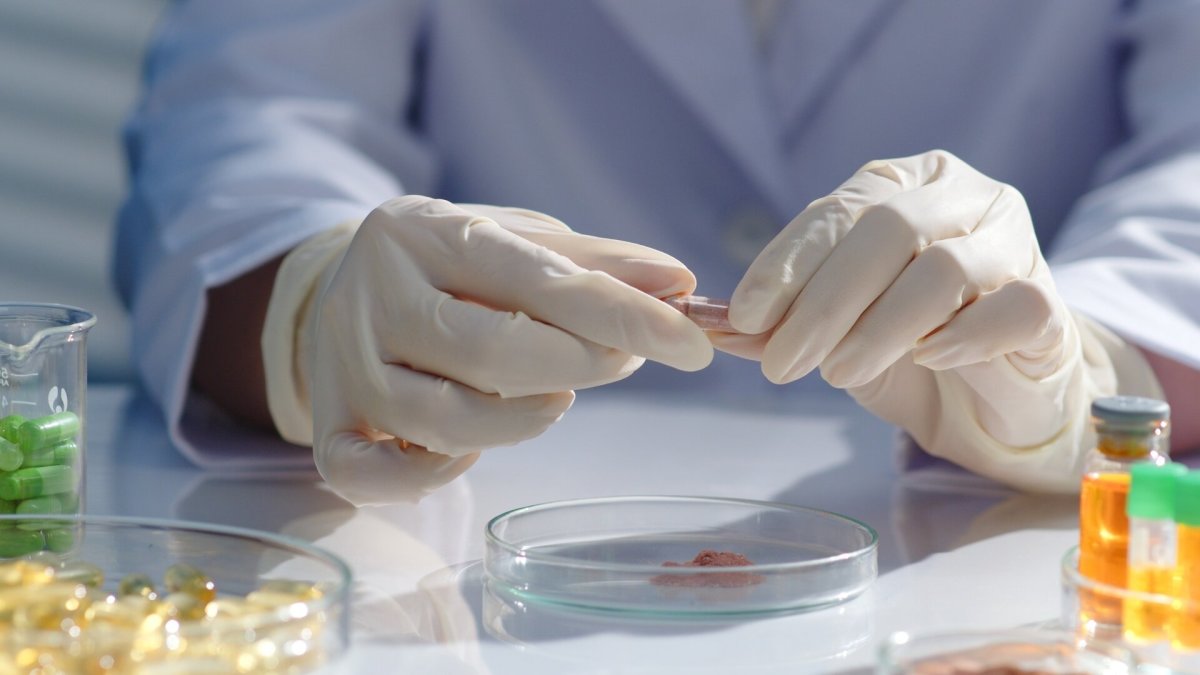 Solubility is key when it comes to the effectiveness of drugs.
Shutterstock
SoluScience Inc, Chapter 11 bankruptcy facts:
- Filing date & court: SoluScience Inc filed for bankruptcy on November 26, 2025, in the U.S. Bankruptcy Court for the District of Colorado (Denver), under case number 25‑17816‑JGR.
- Chapter & procedure type: The petition is a voluntary Chapter 11 filing under the “Subchapter V” small‑business track of Chapter 11.
- Debtor info: SoluScience’s listed address is 1370 Miners Drive, Lafayette, CO, 80026.
- Plan filed immediately: Along with the petition, Soluscience filed a Plan of Reorganization the same day.
- Creditor matrix: The filing lists a “creditors matrix”. The initial version notes seven creditors added/uploaded.
- Claims deadline (government): The deadline for governmental proofs of claim is set for May 26, 2026. Source: Inforuptcy
Drug companies struggle to get approvals
- For compounds entering clinical trials, the overall likelihood of reaching market approval remains low. Of nearly 4,000 drugs analyzed across U.S., EU, and Japan, only 12.8% received marketing approval. Source: PubMed
- A recent large‑scale study (2006-2022) of major pharma firms found the first‑approval success rate (from Phase I to first FDA approval) averaged 14.3% (with a range between 8% and 23%). Source: PubMed
- Across the industry broadly, roughly 90% of drug candidates fail during clinical trials, and many never make it to market due to lack of efficacy, safety issues, or poor pharmacokinetics. Source: ASBMB
- Historic NIH/academic‑sourced drug‑discovery pipelines have shown a higher “phase‑by‑phase” attrition rate, but among those that advance to Phase I, academic drug‑discovery projects had about a 19.3% chance of eventual approval (from Phase I to NDA/BLA). Source: PubMed Central
- For “self‑originated” compounds developed by large pharma firms during 1993‑2004, clinical‑approval success rates ranged 16-19% (for self-originated drugs vs all drugs combined) depending on the time period. Source: PubMed
- Because of these low success probabilities, many biotech startups fail. Some industry‑targeted analyses estimate that as many as 60% of biotech start‑ups fail within the first 5 years, and up to 90% eventually fail (i.e., they don’t survive to become sustainable companies). Source: TRACER
- That said, when they do succeed, the upside is large. Approved drugs can grant market exclusivity (3-7 years) beyond patent protection, giving the firm monopoly rents — and offering the potential for strong returns if commercialization and market uptake go well. Source: NBER
Related: Award-winning beer brand files Chapter 7 bankruptcy liquidation
