
Here’s some good news: luxury is making a comeback.
The high-end goods and services category had been experiencing a slowdown as consumers cut back on discretionary spending over concerns about inflation, tariffs, and other persistent headwinds.
Sixty percent of U.S. and European respondents to a JP Morgan survey conducted in September reported using resale platforms to purchase second-hand luxury goods.
However, the bank said, green shoots started to emerge, due to new creative leadership at fashion houses and positive third-quarter earnings from companies including French luxury conglomerate LVMH, owner of such brands as Louis Vuitton, Dior, Givenchy, and Sephora.
Overall, consumer demand in the U.S. has held up despite prevailing economic uncertainty—and the trend looks set to continue.
“We expect North America to once again be the bright spot of this reporting season, with consistent evidence throughout the summer of healthy spending among Americans across income groups, supported by strong equity markets and wealth creation,” Chiara Battistini, J.P. Morgan’s head of European Luxury and Sporting Goods, said in a statement.
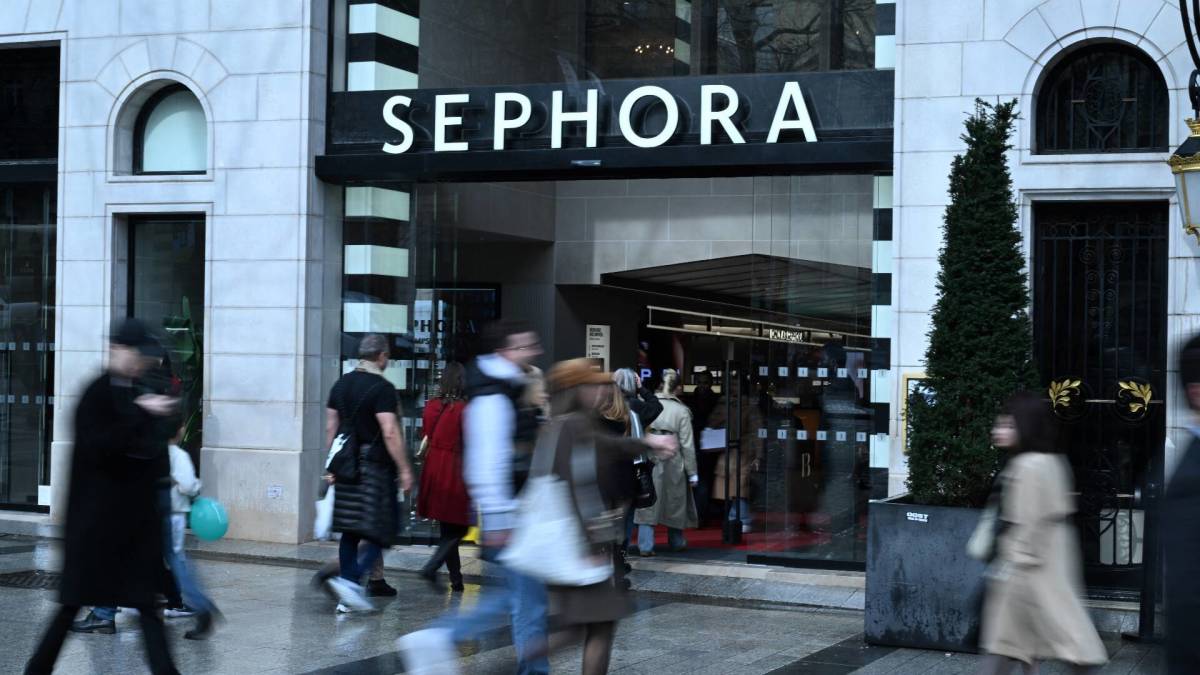 Analysts say positive earnings from Sephora owner LVMH and others bode well for the luxury market.
MIGUEL MEDINA/AFP via Getty Images
Analyst hopeful worst is over
Chinese shoppers account for more than a quarter of annual luxury sales, and their purchases are projected to grow by about 6% in 2026, a sharp turnaround from the 5% decline recorded this year, analysis by UBS revealed
“We are entering 2026 hopeful that the worst is over,” UBS Group AG analyst Zuzanna Pusz told Bloomberg.
More Economic Analysis:
- Next Fed interest-rate cut could slide into 2026
- Ex-Fed official faced ethics probe on illegal stock trades
- Fed official sends strong signal on December interest-rate cut
“Although the recovery is still at an early stage, there are reasons to be more hopeful amid recovering Chinese demand and an increased level of creativity in the industry, which could bring consumers back to stores.”
Deutsche Bank analysts said that they see 2026 as “a year of converging growth trends in Luxury across regions, product categories and companies.”
“With most consumer sectors still facing various headwinds, we see Luxury as well positioned for accelerating growth throughout,” the firm said.
Deutsche retained LVMH and British luxury fashion house Burberry on its most preferred list, and added Swiss-based luxury holding company Richemont to the list after the owner of such brands as Cartier and Montblanc reported stronger-than-expected sales growth.
So-called aspirational luxury consumers, who desire high-end brands and lifestyles but lack the deep pockets, still face some headwinds, Deutsche said, “but we see tailwinds from new creative designers, new store formats, and marketing campaigns to help reignite growth.”
Bain & Co. analysts said big spenders are looking beyond just buying things.
The firm described a “tectonic shift” toward luxury experiences such as hospitality, cruises, and fine dining, and away from more traditional luxury goods, including luxury automobiles.
This move is bolstering the growth of the overall luxury market and reshaping the industry across segments.
“After the shopping spree era, experiences and emotions have become the true engine of luxury growth,” said Claudia D’Arpizio, leader of the firm’s global Fashion & Luxury practice, and lead author of the study.
“The market remains resilient but not immune to macro-economic complexities, navigating a fragile global balance.”
The number of billionaires is increasing
Luxury companies are also seeing a larger customer base.
UBS said the total number of billionaires across the globe reached new heights in 2025, driven in part by skyrocketing tech company valuations and rising stock markets.
Related: Longtime fund manager offers 2-word stock market prediction for 2026
The number of billionaires rose by 8.8% from the previous year, increasing from 2,682 to nearly 3,000, UBS said. Unlike the post-pandemic asset-driven surge of 2021, “this growth was driven by bold business creation and entrepreneurial success.”
The wealth transfer is also accelerating, the firm said, with 91 heirs inheriting a record $297.8 billion in 2025, up 36% from 2024, despite fewer people inheriting overall.
“The billionaire community is more diverse, mobile, and forward-thinking than ever before,” said Benjamin Cavalli, head of strategic clients & global connectivity at UBS Global Wealth Management.
“The combination of entrepreneurial drive and the largest intergenerational wealth transfer in history is creating new opportunities and challenges for families and wealth managers alike.”
Meanwhile, on the other end of the spectrum, consumer confidence fell for a fourth straight month in November, dropping 6.8 points to 88.7 and marking the lowest level for the index in the past seven months.
In addition, nearly a quarter of all American households are estimated to live paycheck to paycheck, according to Bank of America.
Although the number of lower-income households—especially among the Millennial and Gen X groups—living paycheck to paycheck continues to rise, BofA said there is almost no increase in the number of higher- and middle-income households.