
It’s disheartening to see local restaurants shut down, but in recent years, even popular fast-food chains are closing locations.
Faced with rising costs, evolving consumer habits, and growing competition, many of these beloved quick-service brands are now fighting for survival. What once felt like permanent fixtures of American culture are quietly disappearing.
Wendy’s recently revealed plans to close approximately 300 restaurants nationwide, beginning in late 2025 and continuing into 2026. Burger King shuttered multiple locations after a major franchisee filed for bankruptcy in April, and Arby’s has closed at least 14 locations across eight states.
Now, another iconic fast-food giant is shrinking its nationwide footprint, and franchisee struggles are a significant factor in its decline.
CKE Restaurants operates over 3,800 restaurants across 44 states and 43 countries, under the Hardee’s and Carl’s Jr. brands, two classic American fast-food chains. The sister brands are recognized for their distinctive single-star logo and classic menus, which feature charbroiled burgers, chicken strips, and fries.
However, their locations have been closing at an alarming rate.
Hardee’s restaurant closures
- In 2023, former franchisee Summit Restaurants Holdings closed nearly 40 Hardee’s locations across multiple Midwestern and Southern states.
- Hardee’s has shuttered locations in at least seven cities in Illinois and has already made several closures in 2025 across various states.
- Sister brand Carl’s Jr. suffered a similar fate. Over the last couple of months, it has closed multiple locations, with over 20 restaurants in Australia last year and one in Georgetown, Texas.
Hardee’s sues franchisee for unpaid bills
Amid the restaurant closures, Hardee’s has filed a lawsuit with the U.S. District Court for the Middle District of Tennessee against ARC Burger, a 77-unit franchisee operating locations across Alabama, Florida, Georgia, Illinois, Kansas, Missouri, Montana, South Carolina, and Wyoming.
ARC Burger is owned by High Bluff Capital Partners, the same company behind many Church’s Chicken, Taco Del Mar, and Quiznos restaurants.
According to the lawsuit, Hardee’s accuses the operator of failing to meet payments and other obligations since December 2024. Despite issuing two notices of default and offering a repayment plan, the chain says ARC Burger refused the proposed terms.
While the franchisee made partial payments, Hardee’s claims the outstanding debt exceeds $6.5 million, including royalties, advertising contributions, technology and training fees, rent on 28 of the units, taxes, and accrued interest.
Complicating matters further, ARC Burger has a management consulting agreement that requires it to pay High Bluff Capital Partners at least $1 million or 5% of EBITDA annually, with Hardee’s claiming that those payments have also gone unfulfilled.
“ARC has failed and refused to remain current on its ongoing payment and other obligations to HR, despite all signs showing that ARC is profitably running the restaurants,” says Hardee’s in the lawsuit.
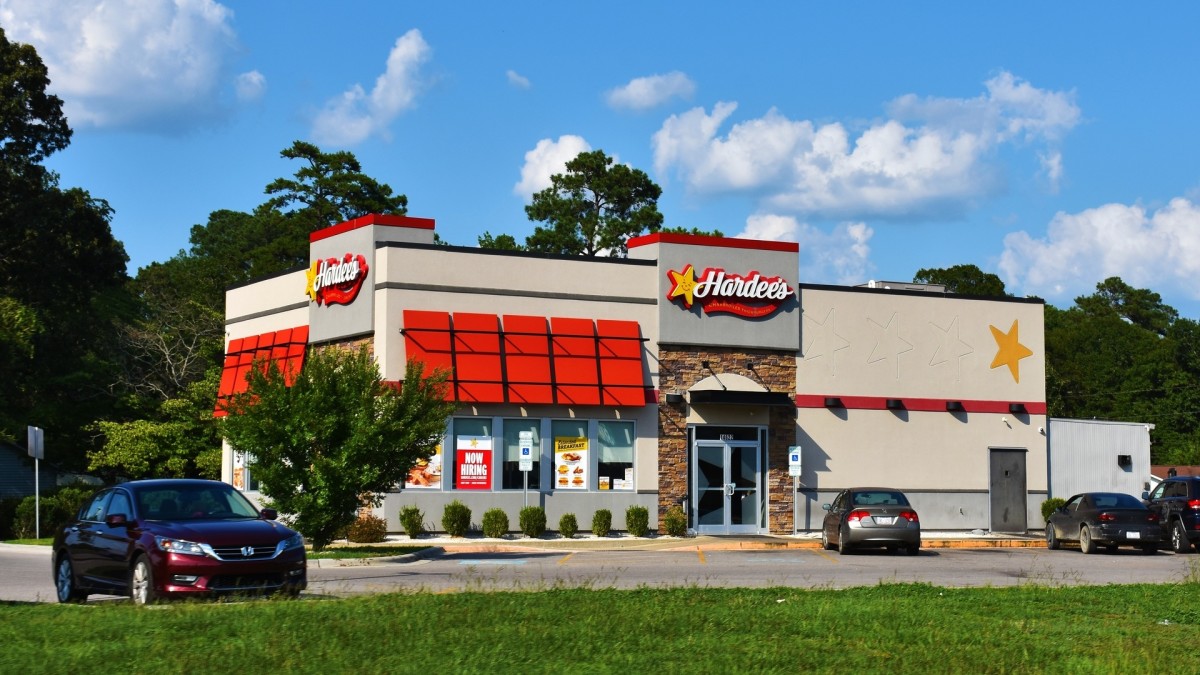 Hardee’s files a lawsuit against ARC Burger for failing to make franchise payments.
Hardee’s tumultuous history with franchisees
ARC Burger acquired 80 Hardee’s restaurants in August 2023 for $16.5 million from Summit Restaurant Holdings after it filed for Chapter 11 bankruptcy, Bloomberg Law reported.
In September 2025, Hardee’s terminated ARC Burger’s franchise agreement but allowed the franchisee to continue operating the locations temporarily while both parties sought a buyer, as long as the payments were made, according to the lawsuit.
More Food Business News:
- Chick-fil-A is making a major change to 425 restaurants nationwide
- 61-year-old fast-food chain quietly closes dozens of locations nationwide
- McDonald’s announces unexpected closure, sparking major backlash
However, this is not the first time Hardee’s has been entangled in franchise disputes. Earlier this year, Paradigm Investment Group, a long-time operator of 76 restaurants across Alabama, Florida, Mississippi, and Tennessee, sued the chain for damages, attorney’s fees, and an injunction against terminating the agreements.
The legal battle began when Paradigm refused to comply with new operational requirements that it claims were never part of the original agreement. Hardee’s then countersued to terminate Paradigm’s franchise rights.
The risks of U.S. franchising
Running a franchise, even under a major brand, can be risky. Data from the U.S. Bureau of Labor Statistics show that about 17% of new restaurants close within their first year.
Long-term survival is even more difficult, with approximately half of restaurants shutting down within five years and only 34.6% making it past the 10-year mark, according to Oysterlink.
Out of 33.2 million U.S. businesses in 2024, more than 821,589 were franchised, according to Statista. Veterans own around 14% of these establishments, contributing about $41 billion to the economy annually.
However, franchising comes with challenges.
“Labor experts say that franchised chains have higher rates of violations than corporate-run chains because theyare less invested in preserving a brand’s reputation,” wrote Lauren Kaori Gurley and Emmanuel Martinez for The Washington Post. “They are also under pressure to keep labor costs low to make up for steep operating costs, especially franchise fees.”
Those pressures have only intensified as fast-food prices soar. Between 2014 and 2024, menu prices increased 39% to 100%, outpacing the national inflation rate of 33% during the same period, according to Finance Buzz. Arby’s, Wendy’s, and Burger King have each raised their prices by roughly 55%.
“Consumers are saying, ‘We’re struggling, or we’re beginning to struggle or we’re thinking more carefully about what we spend,'” Harvard Business School Consultant and Lecturer on Restaurants Michael S. Kaufman told Investopedia.
“I don’t know that the ability to maintain the large fleets of traditional casual dining restaurants can continue.”
Related: McDonald’s and Burger King holiday promotions spark major backlash