
Many consumers have seen the outlier pictures of people paying $20 or more for a McDonald’s Value Meal. They’re spread on social media, and rarely have any context.
A McDonald’s in a remote location, for example, may have higher operating costs, as do ones located in a sports arena. In addition, airport McDonald’s face high rent and sometimes higher employee costs.
That did not make it any less shocking last year at Bradley International Airport in Connecticut, when my son told me that the $20 I gave him was not enough for a 10-piece Chicken McNugget meal. The airport was charging over double what the same meal cost at our local McDonald’s.
Currently, the McDonald’s closest to our house has the 10-piece Chicken McNugget Value meal for $8. That’s a limited-time promotion, and the meal normally sells for around $10, making the airport’s price far beyond a reasonable location-based markup.
McDonald’s operates on a franchised model, and store owners have the ability to adjust prices. That’s why when the chain advertises prices, it includes language about how price and participation may vary.
Now, however, as part of a broader effort to make sure its meals are broadly affordable, the chain has taken a major step to make sure its franchise operators don’t gouge customers.
McDonald’s cracks down on franchise operators
“Effective January 1, 2026, we are enhancing our global franchising standards across all Segments to reinforce accountability for value leadership,” Andrew Gregory, McDonald’s senior vice president of global franchising, development and delivery, wrote in a memo issued Dec. 8 and obtained by CNBC.
“With enhanced standards, we aim to provide greater clarity to the system to ensure every restaurant delivers consistent, reliable value across the full customer experience.”
McDonald’s won’t take a one-price-fits-all approach.
Instead, starting Jan. 1, 2026, Gregory said McDonald’s will “holistically assess” pricing decisions to determine how well operators offer value.
This won’t be a one-way street. Franchise operators will have an opportunity to share local market information with the chain to allow corporate to assess the value proposition in their restaurants.
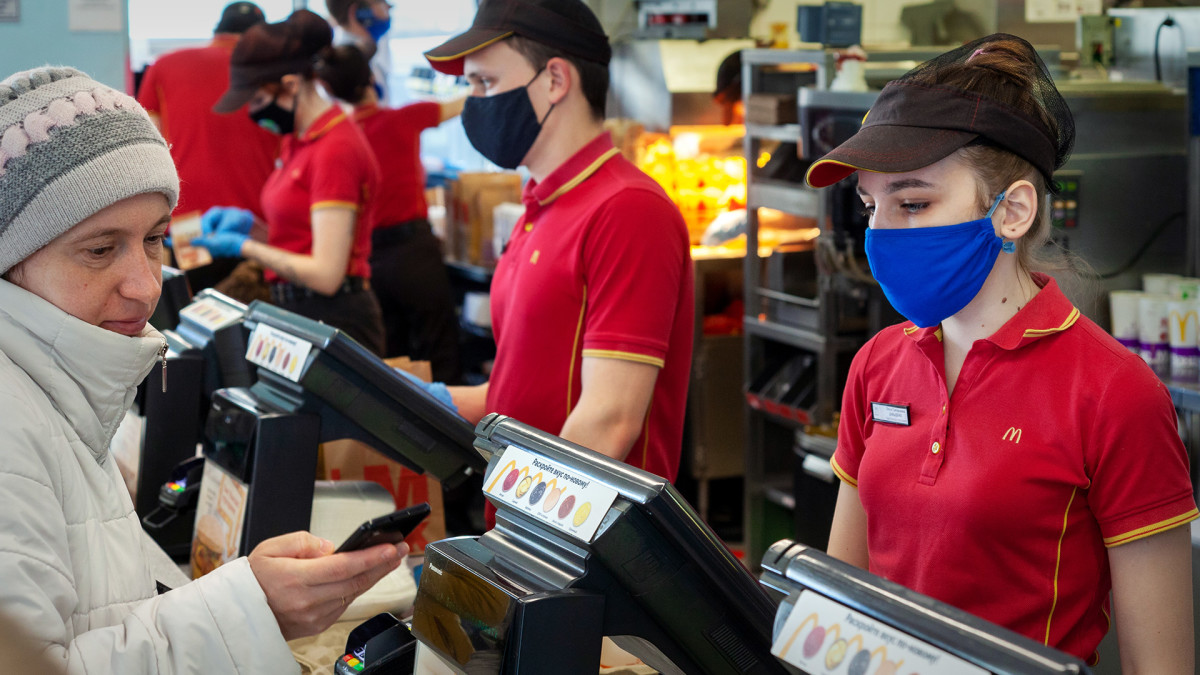 McDonald’s has been increasing its focus on value.
Shutterstock
McDonald’s is changing its approach
McDonald’s CEO Chris Kempczinski has been talking about value for years, and he addressed the topic during his chain’s first-quarter 2024 earnings call.
“We recognize that we’re in an environment where the consumer is being price discriminating. And again, that’s not just something that’s low income. I think all consumers are looking for good value for good affordability. And so we’re focused on that action,” he said.
The CEO also acknowledged that the chain needs the cooperation of franchise operators.
“In terms of franchisee buy-in, that’s a process that we work through in every single market to get alignment with our franchisees on what a national value program would look like,” he shared.
More Restaurants
- Popular pasta chain closing dozens of restaurants
- Major restaurant chain’s $10.99 burger deals McDonald’s, Wendy’s blow
- McDonald’s is following Wendy’s by closing restaurants
- Regional Mexican restaurant abruptly closes all locations
During the same call, CFO Ian Borden said the chain’s franchisees needed a “street fighting mentality.”
“There’s no reason why we shouldn’t have the most compelling, value and affordability positioning from the focus of a consumer. Ultimately, we’re going to measure our progress through are we taking share,” he added.
McDonald’s pushed back on prices
McDonald’s USA President Joe Erlinger shared an open letter with customers in May 2024. In the letter, he pushed back on some common pricing questions his company has faced.
- Recently, we have seen viral social posts and poorly sourced reports that McDonald’s has raised prices significantly beyond inflationary rates. This is inaccurate.
- I can tell you that it frustrates and worries me, and many of our franchisees, when I hear about an $18 Big Mac meal being sold — even if it was at one location in the U.S. out of more than 13,700. More worrying, though, is when people believe that this is the rule and not the exception, or when folks start to suggest that the prices of a Big Mac have risen 100% since 2019.
- The average price of a Big Mac in the U.S. was $4.39 in 2019. Despite a global pandemic and historic rises in supply chain costs, wages and other inflationary pressures in the years that followed, the average cost is now $5.29. That’s an increase of 21% (not 100%).
- Our franchisees (who own and operate more than 95% of all restaurants in the U.S.) set menu prices for their restaurants, which account for the increased costs of running their businesses. In doing so, they work hard to minimize the impact of price increases on our fans. This includes the everyday prices on our restaurant menu boards to special limited-time offers.
- That’s why prices for many of our menu items have risen less than the rate of inflation – and remain well within the range of other quick service restaurants. It’s also why more than 90% of U.S. franchisees are offering meal bundles for $4 or less.
McDonald’s has bet big on value
“Restaurant traffic remains challenged, and this really represents a line of thinking that value will continue to be important to the consumer for the foreseeable future,” Technomic Senior Principle David Henkes told CNN.
“Inflation remains elevated, and creating a more structured, long-term value platform tells me that McDonald’s really sees opportunity in doubling down in its focus on budget-oriented consumers.”
The chain’s focus on value appears to be working.
“TD Cowen notes that its proprietary survey data indicates trough value perceptions are behind McDonald’s, with value perception trends improving so far in 2025 among low-income consumers, presumably as the company prioritizes traffic over franchisee profitability,” Investing.com reported.
Goldman Sachs Analyst Christine Cho believes that the burger chain has made the right changes.
“Although stepped-up value competition across the industry may pressure same-store sales growth and margins in [the] near term, we believe [McDonald’s] will be able to out-comp its peers and move into an even stronger position within the fast-food industry,” Cho said in a research note. (“Out-comp its peers” refers to an outperformance in comparable-store sales, or sales of restaurants open more than a year, Marketwatch reported.)
Related: Pioneering national pizza chain files for Chapter 11 bankruptcy