
While the fast-casual chain has not entered the U.S. market, travelers who have spent any time in London or other city in the UK will have almost certainly noticed a chain called Leon.
Launched in 2004 as a place to grab healthier Mediterranean options such as wraps, salads, and rice boxes with halloumi and other sides, the chain underwent a period of rapid expansion both inside business districts of cities and at airports and railway stations in southern England.
As of 2025, the chain has approximately 44 company-owned restaurants and more than 20 franchises in the United Kingdom, as well as several franchised locations in Italy and the Netherlands.
Once omnipresent in London, Leon will close 20 stores and cut jobs
The number of Leon locations is about to drop dramatically, as co-founder John Vincent embarks on a downsizing mission after repurchasing the chain from British supermarket chain Asda in October 2025 for an unreleased price estimated to be between £30 and £50 million.
Indicating just how much the chain has dropped in valuation, its owners bought it for £100 million back in 2021.
Related: Airport closing all locations of iconic 107-year-old store
On Dec. 10, the company confirmed it was working on a restructuring plan that will see the closure of approximately 20 of its restaurants and cut a larger number of the 1,200 staff it currently employs.
The chain has not confirmed the exact number of restaurants or jobs it expects to trim, as Vincent cited what he classifies as “unsustainable taxes” as the reason for the cost-cutting.
Quantuma, the advisory company Leon hired to oversee the restructuring process, released an early statement saying the company needed to “reduce the number of loss-making restaurants.”
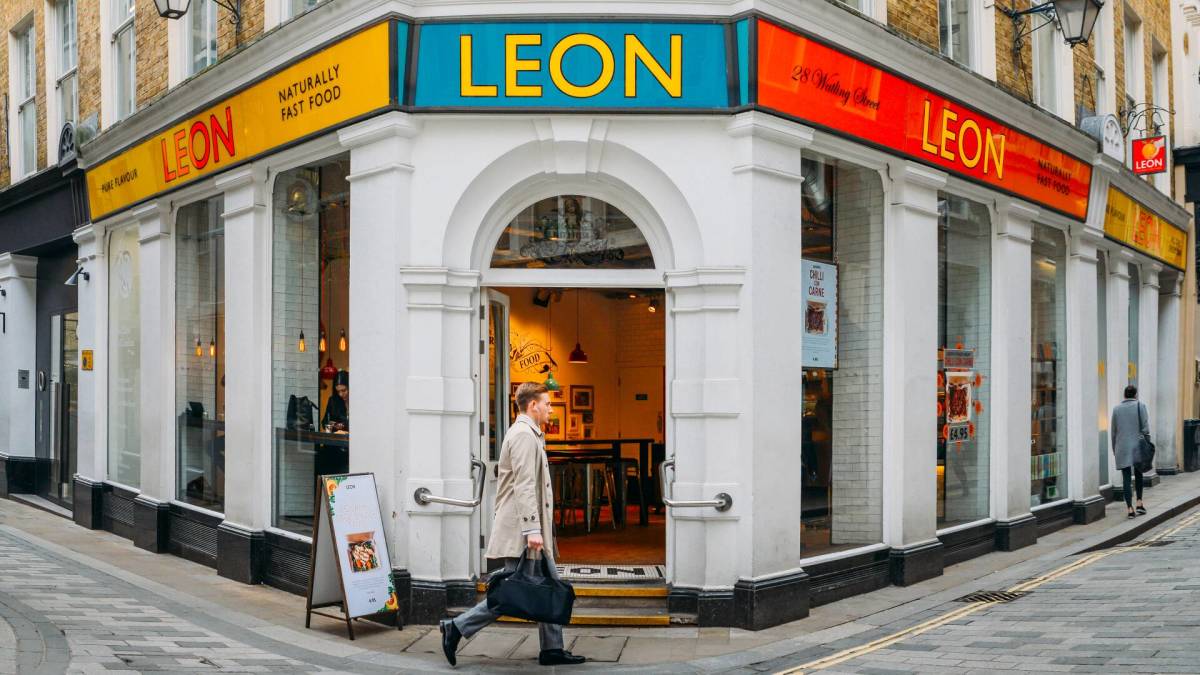 Leon is a British fast-food chain that expanded rapidly across London and southern England.
Shutterstock
Here’s the reason Leon struggled to keep up with changing UK fast-food market
Once almost omnipresent in many London business and tourist areas, Leon later struggled as new competitors entered the market and customer tastes evolved.
The company further spoke of “changing work patterns, brought on by the Covid-19 pandemic” that “combined placed further strain on the business and the wider hospitality industry in recent years.”
Several Londoners mentioned how cost-cutting enacted to combat these trends affected both the variety and quality of the food sold over the last few years.
More Travel News:
- Major airline launches surprising flight between Las Vegas and Paris
- United Airlines CEO gives stark warning on Olympic Games
- The highest rooftop in Barcelona is in a surprising place
- US government issues sudden warning on Switzerland travel
In particular, many felt that the chain had moved toward selling more premade sandwiches and wraps, instead of the fresh options for which it had initially been known.
“I used to love eating there but then it became a bad version of fast food,” Steph Bailey, a chief client officer of London public relations firm Woodrow, wrote on LinkedIn.
Without releasing any more details on the direction in which he plans to take the chain, Vincent shared his intent to make it leaner, while redirecting back to fresher food options that helped establish the original brand.
“My time away from Leon has given me new perspectives,” Vincent said of the restrucuring plans. “[…] There will likely be some big decisions ahead, but first we need to take a good look under the bonnet.”
Related: Tour company files for bankruptcy and cancels trips, travelers stranded