
This article is based on TheStreet’s Stock & Markets Podcast. Hosted by Chris Versace, the veteran Wall Street investor and lead portfolio manager for TheStreet Pro, the weekly podcasts are available early to members of TheStreetPro investing club.
In the immortal words of the Grateful Dead, where does the time go?
We’re down to the last page on the calendar, when people look back at the last 12 months and gear up for the coming new year.
Ed Maguire, director of research at Freedom Capital Markets, reviewed some of 2025’s top business news stories with Chris Versace, lead manager for TheStreet Pro Portfolio, during the Dec. 10 edition of the Stocks & Markets Podcast.
“I’d have to say I’ve been really surprised at how resilient this surge in artificial intelligence infrastructure has been,” Maguire said.
“When we looked at the beginning of the year, there were concerns that the sentiment might have been overdone. And in fact, it might have been underdone.”
But a review of earnings commentary, Maguire said, shows revenue and capex guidance was “just going up across the board.”
Worldwide spending on AI is forecast to total nearly $1.5 trillion in 2025, according to the research and advisory firm Gartner.
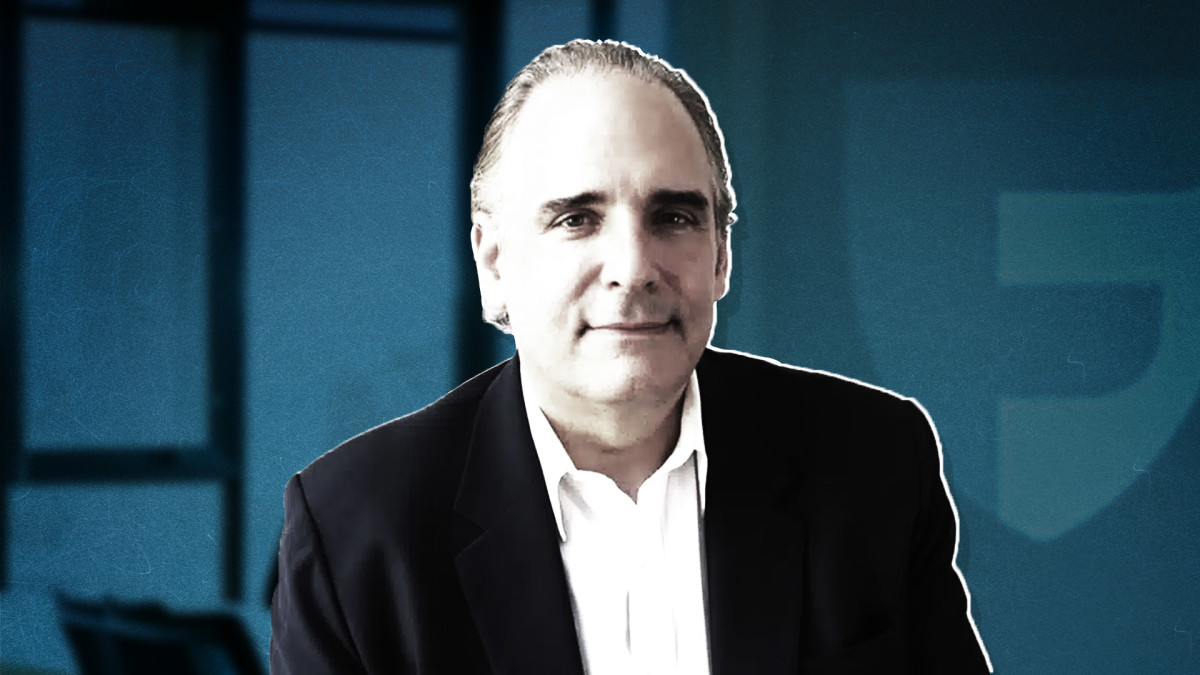 Ed Maguire, Freedom Capital Markets director of research, said 2025 is set up to be a pretty good year.
TheStreet/Freedom Capital Markets
AI spending projected to rise in 2026
Overall, global AI spending is forecast to exceed $2 trillion in 2026, the company said, driven largely by the integration of AI into products such as smartphones and PCs, as well as infrastructure.
“So, I think there’s a lot of credence to the argument that we may still be in very, very early innings of this long-term investment cycle,” he said.
More Economic Analysis:
- Next Fed interest-rate cut could slide into 2026
- Ex-Fed official faced ethics probe on illegal stock trades
- Fed official sends strong signal on December interest-rate cut
Maguire noted that chatbots such as Gemini, Grok, and ChatGPT appear to be replacing older search engines.
“Do you think that the holiday shopping season can really be a big catalyst to drive consumer AI adoption?” Versace asked.
“My view is it’s likely to be much more incremental,” Maguire said. “I wouldn’t necessarily call it a catalyst or an inflection point, but I do think you’ll see people using a lot more intelligent search functions and generative AI to come up with great ideas.”
He added that the technology is getting infused into every step in the value chain, from the producers and the manufacturers who want to make better products, to the consumers who are looking for the best product fit.
“We have so many of these connected products that we’re very accustomed to wearing, like smartwatches, sleep rings, and other sorts of connected devices,” Maguire said. “I think it’s certainly going to be a big Christmas for those types of products.”
He said that despite the shock of President Donald Trump’s April 2 Liberation Day tariff announcement, “2025 is set up to be a pretty good year,” and added that he is “pretty bullish” on the economic prospects—at least in the United States—next year.
Research director cites tax incentives
“We have some major tax changes coming that are going to allow for immediate depreciation of capital expenditures, not just of products and capital equipment, but also real estate that is to be used for manufacturing,” he said.
The recently enacted “One Big Beautiful Bill Act” permanently reinstates 100% bonus depreciation for qualifying property acquired and placed in service after January 19, 2025, reversing the prior law, which would have reduced the bonus depreciation rate to 20% in 2026.
Related: Stocks & Markets Podcast: Biotech CEO reveals the science of humane cancer treatment
Maguire said there are many incentives designed to encourage capital investment in U.S. businesses.
“I think that’s really bodes well,” he said. “We’ll see a lot of beneficiaries of this. So, I think that is not something that people have been focused on a lot, but I think it gives us a really good setup looking into 2026, and that the benefits are going to go across the board.”
Under the new law, businesses can generally deduct the entire cost of eligible new and used tangible personal property in the year it is placed in service.
“It’s not just going to be tech,” Maguire said. “It’s going to be any type of product or equipment that a business could use.”
“We’re already seeing utility capital spending move higher,” Versace said. “So, that pain point folks are concerned about could become even more of a greater one.”
“One of the interesting themes that I’ve been looking at this year, and could continue to look at next year, is the investment in data center capacity,” Maguire said, “not just for AI, but any type of use case you could think of.”
Companies that are focused on construction and automation are going to have “quite full dance cards over the next several months,” he added.
