
Veteran analyst Tom Lee has a reputation for calling turning points long before the rest of Wall Street catches on.
That said, with the big banks having weighed in, Lee just dropped his S&P 500 target, betting once again that the crowd is too cautious.
Given the current stock market setup, it’s a call that cuts directly against today’s “too far, too fast” narrative following years of oversized gains, but Lee feels the skepticism itself is part of the setup.
Additionally, with the Fed delivering 175 basis points of easing since September 2022, and tailwinds such as AI and on-shoring in play, Lee believes investors are still underestimating the fuel that remains in this bull market.
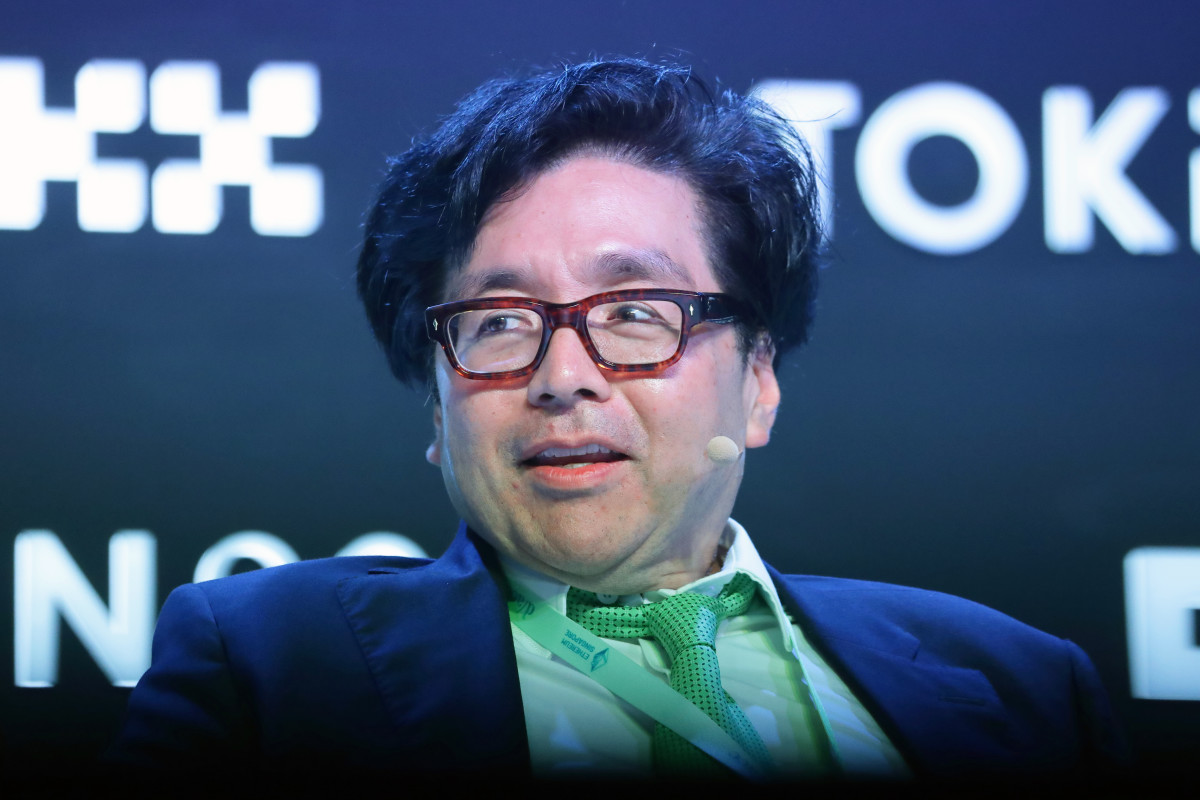 Tom Lee, who timed big rebounds in the past, sets a bold S&P target.
Photo by Bloomberg on Getty Images
Who is Fundstrat’s Tom Lee?
Tom Lee is one of the most followed voices on Wall Street, serving as the co-founder and head of research at Fundstrat Global Advisors.
His calls stand out because of his impeccable track record and his knack for nailing key turning points.
More Wall Street:
- Stanley Druckenmiller’s latest buys suggest shifting tech trend
- Goldman Sachs unveils stock market forecast through 2035
- Dalio’s Bridgewater quietly reshapes its portfolio amid bubble warnings
- Peter Thiel dumps top AI stock, stirring bubble fears
For instance, in March 2020, when markets tanked, Lee urged investors to scoop up stocks at the pandemic lows instead of reallocating to cash.
Then, heading into 2023, he felt the consensus was too bearish, telling clients to lean into a new bull market spearheaded by tech and AI, a view proving prescient as the S&P 500 jumped to record highs.
Lee thinks skeptics misjudge the market
Lee feels investors are misreading the market’s setup for 2026.
He lays claim to the fact that the market isn’t running on fumes, but rather on a policy backdrop that’s quietly adding fuel.
The Fed recently delivered its third consecutive 25 basis point cut, lowering interest rates to 3.50%–3.75%, its lowest in nearly three years.
Related: Jim Cramer issues blunt 5-word verdict on Nvidia stock
The stock market responded in kind, with a classic relief rally.
The Dow, S&P 500, and Nasdaq rose 1.1%, 0.7%, and 0.3% respectively, Investopedia reported, as small caps ripped to fresh highs.
However, the calm didn’t last everywhere. AI bellwether Oracle stock shed a whopping $80 billion, The Guardian indicated, following a 15% drop linked to fresh AI-capex fears.
Chair Jerome Powell says the Fed has pushed policy into a “broad range of neutral,” a stance Lee believes markets still aren’t pricing in at this point.
“There’s a wall of skepticism and a new Fed that gets us roughly to a 10% gain,” he said.
What investors are pricing in, though, is fatigue following three consecutive years of 20%+ returns.
Related: Bank of America makes a surprise call on Nvidia backed stock
Naturally, investors are feeling jittery, but history shows that since 1928, the fourth year has averaged a handsome 12% gain, hardly the drop skeptics were expecting.
A huge part of the rally’s sustainability, Lee argues, is the structural drivers.
Lee flags AI productivity, energy infrastructure, blockchain tokenization, and on-shoring as the core earnings engines for the upcoming year, and not hype cycles.
For crypto, he forecasts Bitcoin breaking its four-year down-cycle, noting the ISM and copper/gold signals that usually precede tops “aren’t even close.”
Where the rest of Wall Street lands for 2026
Once we stack the forecasts from major banks against the S&P 500 target for next year, a clear pattern begins to emerge.
Here are four of the biggest banks and their respective S&P 500 targets:
- Bank of America: 7,100, modest upside
- JPMorgan: 7,500, double-digit EPS expansion led by robust AI capex
- Morgan Stanley: 7,800, a “rolling” bull market where laggards catch up
- Deutsche Bank: 8,000, earnings strength, buybacks, and inflows
The next Fed chair could matter more than the next Fed cut
The third straight Fed cut is now in the bag, and the story now shifts from Powell to whoever comes next.
Stocks cheered the latest move, but the next leg could hinge on the data staying soft enough for more easing or a new Fed chair hitting the brakes.
Powell’s term is due to conclude in May, and President Donald Trump plans to name a successor early next year, Reuters reported.
Here are the main contenders investors are gaming out:
- Kevin Hassett – front-runner, clearly dovish: Trump’s top economic adviser and the current NEC chief, who has openly talked of “plenty of room” to cut rates even more.
- Christopher Waller – continuity candidate: Sitting Fed governor, generally considered hawkish but data-driven. So a Fed under Waller would mean gradual cuts at most.
- Kevin Warsh – market-savvy hawk: Former Fed governor with a rich history of skepticism on easy money and massive balance sheets.
- Rick Rieder – Wall Street pragmatist: BlackRock’s fixed-income chief, who has mostly been pragmatic and markets-friendly, will likely favor smoother, incremental cuts.
