
You did get another rate cut this week, but the bigger story is that the Fed is sounding like it may be done for a while.
At its December meeting, the Federal Open Market Committee approved a third straight 0.25‑percentage‑point cut, taking the federal funds range down to 3.5% to 3.75%, the lowest since 2022.
That move came with unusual division: Three officials dissented, a level of disagreement the Fed hasn’t seen since 2019. According to CNBC and Bloomberg coverage, some wanted a bigger cut to support a slowing labor market, while others wanted no cut at all because inflation is still running above target.
The official statement kept language that the committee will “carefully assess” incoming data when deciding any additional adjustments, central‑bank code for “no pre‑set path” and a strong hint that the default from here is to sit tight.
As Reuters noted, policymakers also signaled that the bar for taking rates lower from this level is now higher than it was at any point earlier in this cutting cycle.
Fed faces “very unusual” inflation problem
The reason the Fed is so cautious about more cuts is that inflation is proving stubborn in ways that make the next steps extremely tricky.
Headline inflation has come down from its 2022 peaks, but core measures still hover around the 3% area, and inflation “nowcasting” from regional Fed banks points to only gradual cooling.
Powell used the phrase “very unusual” to describe today’s economy, according to Fortune, and that matters for your wallet. In his press conference, he emphasized that much of the remaining inflation overshoot is tied to tariffs and goods prices, not an overheated labor market or runaway wage growth.
Powell’s view is that Trump‑era and new tariffs are doing most of the work in pushing prices above the Fed’s 2% goal, calling the impact largely a “one‑time price increase” as import costs flow through supply chains, Reuters reported.
The problem is that households don’t experience that as “one‑time” — they just feel higher prices on essentials that don’t go back down, which is why Powell keeps saying the Fed has to make sure those price jumps don’t morph into an ongoing inflation problem.
What the Fed’s new projections really say
When you look past the headlines, the Fed’s own projections — the so‑called “dot plot” — are sending a clear message: Don’t count on a rapid series of cuts from here.
Bloomberg and Business Insider both highlight that officials penciled in just one cut in 2026, leaving rates in the mid‑3s for a prolonged stretch.
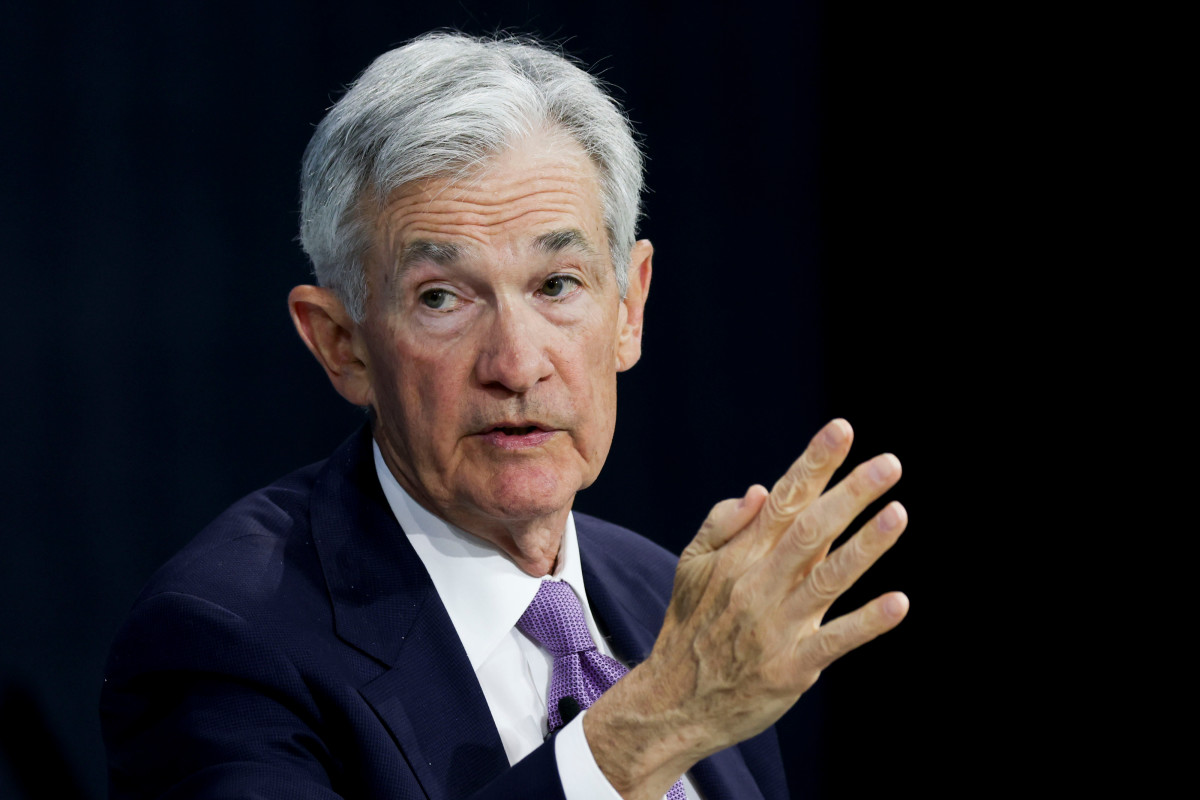 The Fed doesn’t seem to be planning many additional rate cuts in the near future.
Photo by Bloomberg on Getty Images
TradingEconomics’ summary of the Fed projections shows only very modest changes elsewhere: PCE inflation is seen at about 2.9% this year, 2.4% next year, and drifting back to 2% over time, while unemployment is expected to hold near the mid‑4s.
Growth forecasts for 2026 were actually revised higher — from around 1.8% to 2.3% — suggesting that the Fed thinks the economy can handle higher‑for‑longer rates without tipping immediately into recession.
More Federal Reserve:
- Next Fed interest-rate cut could slide into 2026
- Ex-Fed official faced ethics probe on illegal stock trades
- Fed official sends strong signal on December interest-rate cut
- Fed’s Miran pivots on interest-rate cut push for December
That’s a big shift from investor hopes. Going into the meeting, futures pricing tracked by CME’s FedWatch tool implied multiple cuts across 2026 as inflation cooled and growth slowed.
Experts at Morningstar, however, argue that markets still expect more easing over the 2026–2027 window than the Fed itself is signaling, setting up a potential clash between “what traders want” and what policymakers are willing to deliver.
Why the Fed is so hesitant to cut more
The hawkish undertone isn’t about punishing borrowers; it’s about risk management. Powell has repeatedly said there is “no risk‑free path” forward, Reuters reported. Cut too fast and inflation could re‑accelerate, but cut too slowly, and you risk choking off growth and jobs.
According to PIMCO’s post‑meeting analysis, the Fed is essentially moving “from cuts to caution,” content to hold rates in the current range well into 2026 unless either inflation falls faster than expected or the labor market weakens materially.
ING and other strategists note that with growth resilient, unemployment still relatively low, and stocks near highs, the Fed does not feel compelled to offer much more stimulus.
At the same time, policymakers are navigating in partial darkness. A recent government shutdown delayed jobs and inflation data, which Reuters indicates has left the Fed unusually reliant on incomplete indicators and private surveys. When your data is fuzzy and inflation is still above target, “slow down and watch” becomes the default setting.
What “no more rate cuts soon” means for you
For your day‑to‑day money, a Fed on pause after this cut has three main implications.
- Borrowing stays relatively expensive.
- Savers keep earning decent yields.
- Markets stay glued to every inflation report.
If you’re carrying variable‑rate credit‑card balances or a home‑equity line tied to the prime rate, you’ve seen some relief from the three cuts this year — but not the big drop you might have hoped for.
Because the Fed now expects to cut only slowly, lenders are unlikely to slash rates aggressively on mortgages, auto loans, or personal loans.
If you’ve been waiting for “much lower” mortgage rates to buy or refi, this Fed stance is a wake‑up call: Planning as if rates stay in this general neighborhood through 2026 is safer than betting everything on a quick slide back toward the ultra‑cheap money of the 2010s.
For savers, the news is better. Online banks and credit unions price savings accounts and short‑term CDs off expectations for the Fed funds rate, according to Bankrate.
With policymakers signaling a long plateau instead of a steep drop, those 4%‑plus savings yields and 5%‑ish CD offers may stick around longer than many expected. That gives you more incentive to keep your emergency fund and near‑term cash in truly high‑yield vehicles, instead of letting money sit in a low‑rate checking account.
How to adjust your debt management strategy now
You can’t control what the Fed does next, but you can control how exposed you are to a higher‑for‑longer world. Start by looking at your debt stack:
- Prioritize paying down high‑rate, variable‑interest debt like credit cards, personal loans, and some HELOCs, where even small rate changes have a big dollar impact on your monthly budget.
- Consider locking in fixed rates where it makes sense — on an auto refi or a personal consolidation loan — if you can secure terms that are better than what you’re paying now.
- If you’re a homeowner with a much older, ultra‑low mortgage, think carefully before trading it in; the Fed’s message suggests you may not see those pandemic‑era lows again for a long time.
On the investing side, a cautious Fed tends to reward discipline over drama. With inflation still above target and growth holding up, asset managers such as Morningstar expect a world in which high‑quality bonds gradually regain their role as a ballast, while equities remain driven by earnings, not just cheap money.
That argues for a diversified portfolio:
- Keep a mix of stocks, bonds, and cash that matches your time horizon rather than pivoting your entire strategy around rate‑cut predictions.
- Favor companies and funds with strong cash flows and manageable debt loads, which are better positioned if borrowing stays more expensive for longer.
- Use elevated cash and CD yields for short‑term goals (one to three years), so you’re not forced to sell investments at a bad time if the Fed or the economy surprises you.
All eyes on data: inflation, patience, and opportunity
Inflation worries have the Fed on high alert, and that’s likely to cap how many more cuts you see in the near term. Powell and his colleagues are signaling a long, cautious stretch where they watch the data and move only when they’re confident inflation is headed all the way back to 2%, even if that means keeping rates uncomfortably high for borrowers.
For you, that’s both a challenge and an opportunity. The challenge is managing debt and big‑ticket purchases in a world where money stays more expensive than it was for most of the last decade.
The opportunity is using today’s higher yields, plus a steadier long‑term inflation path, to build a more resilient savings and investment plan.
If you stay focused on your budget, your payoff timelines, and a diversified portfolio, you won’t need to guess the date of the next rate cut to keep moving toward financial stability and long‑term wealth.
Related: Mortgage rates tick lower as the Fed trims key rate
