
For Waymo, 2025 has been a year of one step forward and two steps back.
For now, it has leapt ahead of big money rivals like Tesla Robotaxi and Amazon-backed Zoox.
Waymo quick facts:
- Founded in 2009.
- Passed the first U.S. state self-driving test in Las Vegas, Nevada, in 2012. Source: IEEE Spectrum
- Spun out from Alphabet as a separate subsidiary in 2016.
- As of July 2025, Google indicates that Waymo One is available 24/7 to customers in Los Angeles, Phoenix, and the San Francisco Bay Area.
- The current Waymo fleet features over 1,500 vehicles. By 2026, the company expects to add 2,000 more.
Waymo began operating fully autonomous vehicles in Miami on Nov. 18 and said it will start operations in Dallas, Houston, San Antonio, and Orlando “over the coming weeks, ahead of opening our doors to riders next year.”
It is also “returning” to Las Vegas and regularly testing in Detroit during winter weather, and spreading its fleet of more than 200 vehicles to new locations seemingly every month.
But the Alphabet-backed company is also facing issues such as a National Highway Traffic Safety Administration probe into the autonomous vehicles for “traffic safety violations relating to stopping when encountering a school bus, particularly when the bus is boarding or offboarding students.”
But recently, some of Waymo’s biggest issues have arisen in the company’s home city of San Francisco.
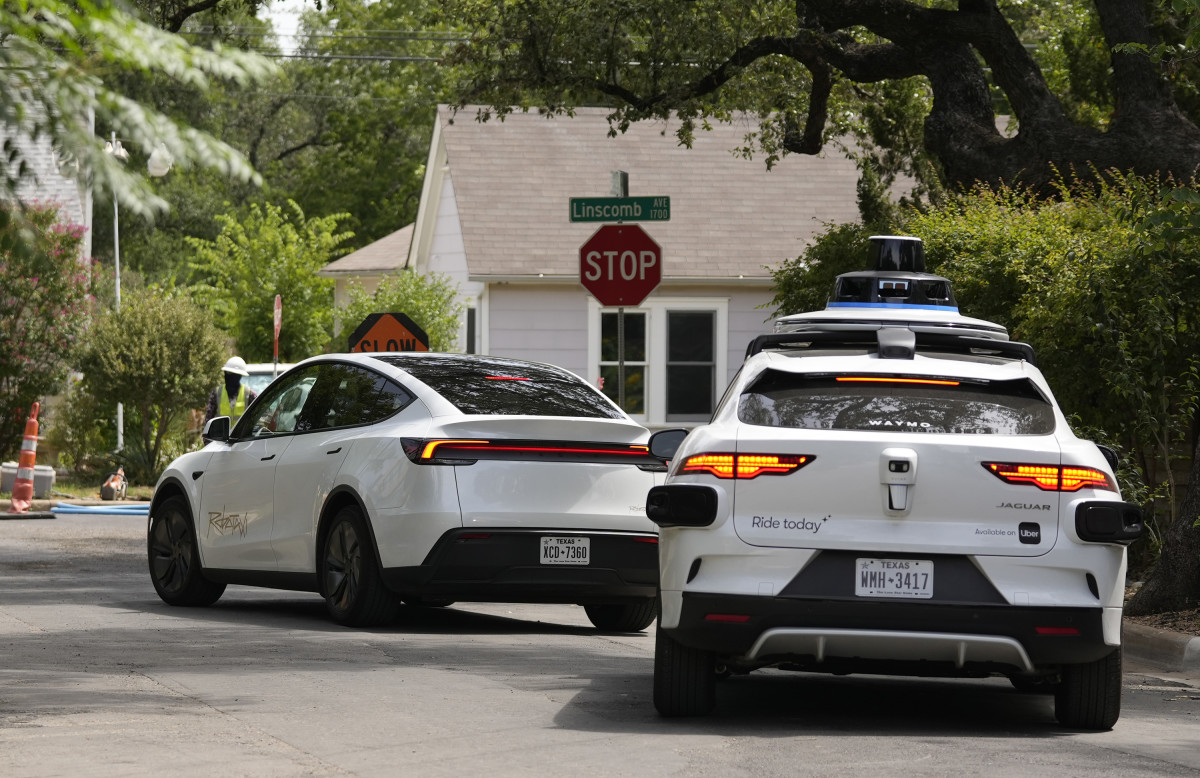 A power outage recently impacted Waymo’s San Francisco operations.
Photo by The Austin American-Statesman/Hearst Newspapers on Getty Images
San Francisco power outage temporarily stops Waymo autonomous vehicles
Waymo currently operates a fleet of approximately 2,000 vehicles on U.S. roads.
Approximately 800 of those autonomous vehicles are operating in the San Francisco Bay Area, according to data the company shared with the San Francisco Examiner in August, making the City by the Bay the company’s unofficial center of operations.
Related: Waymo customer swears off autonomous driving after close call
However, the company recently experienced a significant issue in its hometown.
In a viral video from No Safe Words on X (formerly Twitter), it looked like an endless line of Waymos had taken over one city street on Nov. 22. The company says the vehicles were all headed to a “mass hailing event” in the video, causing the bottleneck that was filmed.
This weekend, the company experienced an even more disruptive event after its San Francisco fleet was unable to navigate the terrain during a massive blackout in the city, which has a population of more than 800,000.
Waymo was forced to suspend service in San Francisco, as apparently its vehicles did not know the “four-way-stop” rule that applies to intersections with inoperable traffic lights.
The vehicles were filmed stuck at numerous intersections, unsure how to navigate the situation, causing even more turmoil on the roads as drivers slowly inch past electricity-less city blocks.
A fire caused the outage, which affected 130,000 citizens in the city.
“The sheer scale of the outage led to instances where vehicles remained stationary longer than usual to confirm the state of the affected intersections. This contributed to traffic friction during the height of the congestion,” Waymo said in a statement as it temporarily shut down operations in the city.
Waymo restores San Francisco service, but can it restore customer faith in the company?
While Waymo suspended the service on Saturday, Dec. 20, by 7 p.m. Sunday, Dec. 21, Waymo said it was resuming service in the region.
As for the passengers caught in the vehicles during the disruption, Waymo says “the majority of active trips were completed before vehicles returned to depots or pulled over,” so at least “the majority” of passengers weren’t left stranded.
Related: Waymo pulls ahead of Tesla Robotaxi, Amazon Zoox with latest move
Waymo says its vehicles represent a 91% reduction in serious injury or worse crashes, a 79% decrease in airbag deployment crashes, and an 80% decrease in injury-causing crashes.
Waymo is also safer for non-drivers, with 92% fewer pedestrian crashes resulting in injuries, 78% fewer cyclist crashes resulting in injuries, and 89% fewer motorcycle crashes resulting in injuries.
But good luck to Waymo convincing San Franciscans, and other Californians, about those numbers after the recent high-profile incidents in the city.
Nearly 80% of California voters support requiring a human safety operator in self-driving trucks and delivery vehicles, and just 33% of voters express a favorable general impression of autonomous vehicles.
“We are increasingly bringing AI from the digital world to the physical world, and it’s critically important that we do that in a very careful and considerate way,” Rowan Stone, CEO of AI data training company Sapien, told TheStreet.
Sapien currently works with Waymo rival Zoox.
“What we can do better as an entire industry is resist the urge to move quickly and break things, especially when you’re dealing with a hunk of metal that could potentially kill people,” he said.
Waymo issues extend beyond San Francisco
San Francisco isn’t the only city where Waymo has had to temporarily pause operations in recent weeks.
On Dec. 1, after Waymo received its 20th citation from the Austin Independent School District for the current school year, Austin ISD decided to release the video of the previous infractions to the public.
By Dec. 5, Waymo announced that it would file for a voluntary recall after videos of the company’s robotaxis committing traffic violations while operating in school bus zones went viral.
The Austin ISD had been in private contact with the company, but as the incidences of Waymos driving through school bus stop signs piled up (eventually averaging 1.5 per week), the Austin ISD decided to go public.
“While we are incredibly proud of our strong safety record showing Waymo experiences twelve times fewer injury crashes involving pedestrians than human drivers, holding the highest safety standards means recognizing when our behavior should be better,” said Muaricio Peña, chief security officer for Waymo.
Back in California, Waymos have been recorded piling up at Santa Monica charging stations at night in Southern California.
A video, posted on X by Nic Cruz Patane, shows a seemingly endless line of lifeless robots waiting to be charged, is eerily similar to the video from San Francisco.
On Nov. 24, the city formally demanded Waymo cease overnight operations at its two local autonomous vehicle charging facilities.
The move comes after months of noise complaints from nearby residents, according to the Santa Monica Daily Press. The directive was unanimously approved in a 6-0 City Council vote on Nov. 18, but now the city is demanding that property owners, lessees, and operators immediately stop nighttime operations due to nuisance conditions at the two charging sites.
Residents in the neighborhood have complained about the constant noise and disruption caused by the 24-hour operations, with some deliberately blocking the vehicles’ entry and exit. They have been bothered by everything from the legally mandated backup alarms to other vehicle noises that have become incessant.
In a statement, Waymo said it has been listening to community input and is “committed to continuing to operate and invest” in Santa Monica. It says it has adjusted operations at the site in response to community feedback and that it will continue to seek community input.
Related: Waymo pumps the brakes as dangerous issue comes to light