
If you’ve ever hated the Gmail address you created years ago, Google is finally giving you a break, even though its Help Center has long told people not to expect one.
On Google’s support page about changing your Google Account email, the guidance is blunt.
That long-standing limit seems to be getting less strict now.
Google has discreetly began rolling out a long-requested feature that lets some users change their @gmail.com address without making a new account and without losing the data that is linked to that account.
This happened in the last few days of 2025. Several sources state that the new content was initially seen on Hindi-language help sites, which suggests that it will be rolled out in stages or by region.
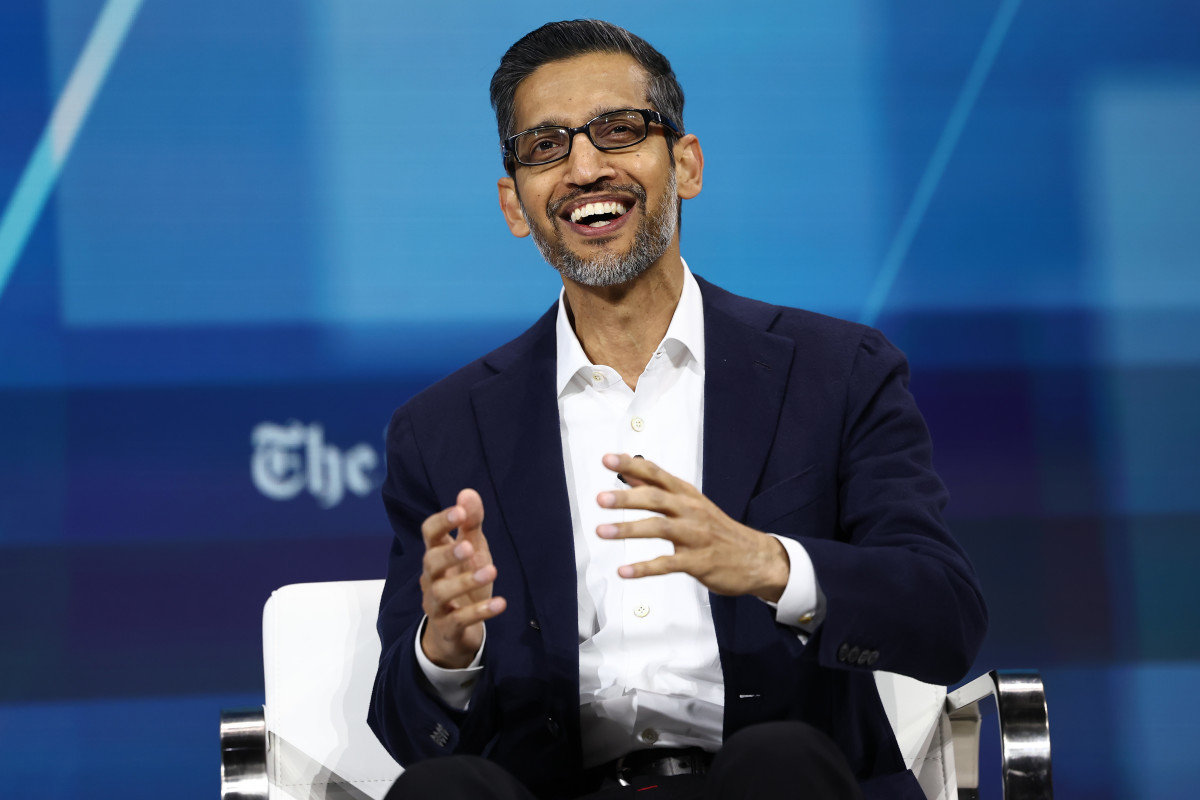 A quiet rollout and strict rules offer a clear upside for Alphabet.
Photo by Michael M. Santiago on Getty Images
A small Gmail tweak with very big “real life” value
Changing your Gmail address sounds like a cosmetic change on paper. In real life, it’s a problem with modern identity.
People use Gmail addresses to apply for employment, get health care messages, log into banks, save photos, keep family calendars, and access anything from school portals to utility bills.
That’s why not being able to update an old handle has been such a bothersome, ongoing problem.
More Tech Stocks:
- Morgan Stanley sets jaw-dropping Micron price target after event
- Nvidia’s China chip problem isn’t what most investors think
- Quantum Computing makes $110 million move nobody saw coming
- Morgan Stanley drops eye-popping Broadcom price target
- Apple analyst sets bold stock target for 2026
Google’s move is not very showy; instead, it involves a stealth deployment with minimal documentation and numerous guardrails in place.
But it does fix a real problem, and it reveals something about Alphabet as it heads into 2026: The corporation is still ready to smooth out rough edges in older products, since retaining people in the ecosystem is more important than ever.
What Google is (and isn’t) letting users do
This isn’t a button that says, “Delete your old Gmail and start fresh.”
So far, the news is that Google is letting people change their @gmail.com handle while keeping the same Google Account.
Your original Gmail address stays active as an alias after the move. This means messages sent to the previous address continue to reach the same inbox.
Related: Nvidia’s $4 trillion moment came with a quiet warning sign
You don’t lose your Google account and may still access your Gmail, Drive, Photos, YouTube history, and contacts, all from the same account.
This option stays “Gmail to Gmail.” Early reports say that users are switching from one @gmail.com address to another @gmail.com address, not to a custom domain or another provider.
To put it another way, Google won’t let individuals leave the Gmail environment. It’s simply enabling them to improve their identity inside it.
Strict limits, cooldowns, and caution flags
Google also seems committed to preventing users from using this as a revolving portal.
Multiple reports describe rules such as:
- You can only apply once a year, subject to a 12-month cooldown.
- There’s a lifetime cap of up to three total changes.
- Additional restrictions apply after you change your address, including limits on changing/deleting again during the cooldown period.
Related: A $1 trillion IPO looms, and Amazon may have just locked in early
The Verge also pointed out something else that is very “Google”: a useful caution for folks who use ChromeOS. Google says you should do a backup before switching because there are known problems that can compromise ChromeOS settings and files.
Yes, it’s a gift to users, but it’s also a regulated and planned one.
Why this matters for Alphabet’s business
This change won’t directly bring in billions more dollars. It’s not a new kind of ad or a new cloud service.
But it’s a perfect example of how Alphabet keeps its main advantage: size and stickiness.
Gmail is one of the “everyday Google” products that keeps consumers linked to more than just email. It also keeps them logged in to Calendar, Docs, Photos, Drive, YouTube, Android services, and Google Pay-adjacent activities.
Related: Oracle just made a power move Wall Street can’t ignore
This kind of action makes it easier to stay (without imposing a new account), which lowers the chance of churn in the background.
And it’s happening at the conclusion of a year when Alphabet told Wall Street that it is still a growth firm and not a fading incumbent.
2025 was a banner year, and the market rewarded it
In 2025, Alphabet’s stock had a huge year, and financial news outlets called it one of the best mega-cap winners.
The rally wasn’t based on feelings. Alphabet also reached a milestone in terms of size that even naysayers have to pay attention to: It made more than $100 billion in revenue in a single quarter for the first time.
That’s the point — Google is more than just enormous. It’s big and getting bigger.
Cloud: from “maybe someday” to enterprise credibility
The story of Alphabet’s 2025 also included a sharper change in how the market talks about Google Cloud.
Cloud has long been considered the company’s second engine, and this year saw more tangible signs of business traction, such as big, multi-year contracts related to security and infrastructure.
Security plus AI plus cloud is exactly where enterprise spending is flowing. Alphabet wants investors to think that the cloud is now a strong foundation, not merely an expensive goal.
The AI buildout is now an energy buildout
The component of the AI growth that most people don’t perceive is electricity.
Alphabet worked to get more access to data centers and energy infrastructure late in the year. This is a reminder that model quality isn’t the only thing that may slow things down. It has the ability to compute, power, cool, and sit.
As the AI wave grows, the companies with the greatest models won’t be the only ones that win. They will be the ones who can really run things on a large scale, reliably, and profitably.
Legal pressure didn’t vanish but Alphabet got meaningful relief
Regulatory risk is still a part of the Alphabet story.
Still, many investors saw 2025 as a significant break in the U.S. antitrust landscape, with solutions that weren’t as bad as some had anticipated earlier in the cycle.
That kind of outcome is important since markets don’t like not knowing what will happen. If “forced breakup” is taken out of the near-term base case, it could impact how investors value everything else.
2026 outlook gets tougher for Alphabet
Alphabet has a lot of momentum going into 2026, but it also has a lot of pressure.
As capital expenditures rise and investors want confirmation that the investment is making money, not merely impressing, AI spending discipline will become more important.
Even though Google is putting more effort into enterprise security and infrastructure, cloud competition won’t stop.
Regulators are still a real threat, and they are still being watched closely in the U.S. and other countries.
And on the side of the consumer, trust and friction will be an important but often overlooked battleground. That’s where the feature that lets you change your Gmail address comes in. It’s not AI for headlines; it’s retention engineering.
Alphabet didn’t end 2025 with a big product keynote.
It ended the year by quietly improving something users have desired for years, and in the process, it reminded everyone why it’s so hard to quit its ecosystem.
Related: Microsoft sends harsh message to millions of Microsoft 365 customers