
Warren Buffett quipped in Berkshire Hathaway’s 1992 shareholders letter that, “We’ve long felt that the only value of stock forecasters is to make fortune tellers look good.”
He has a point. History may rhyme, but rarely repeats, to paraphrase Twain. If I’ve learned anything over the past 30 years tracking the markets professionally, it’s that the market has a knack for making prognosticators look foolish.
The simple reality is that we, as investors, often fall victim to biases, and these biases frequently lead us to draw false conclusions. Again, I turn to Buffett, whose take on the impact of bias is often described as, “What the human being is best at doing is interpreting all new information so that their prior conclusions remain intact.”
That said, some forecasters are better than others, and among Wall Street‘s elite, Goldman Sachs is arguably the most revered. The 155-year-old institution has long been considered a leader in interpreting economic and market trends. Its alma mater includes not one, but three former Treasury Secretaries: Robert Rubin, Hank Paulson, and Steve Mnuchin.
Goldman Sachs’ ability to attract and develop Wall Street’s brightest and boldest voices suggests investors should pay attention to its latest insights into what’s next for the U.S. economy in 2026.
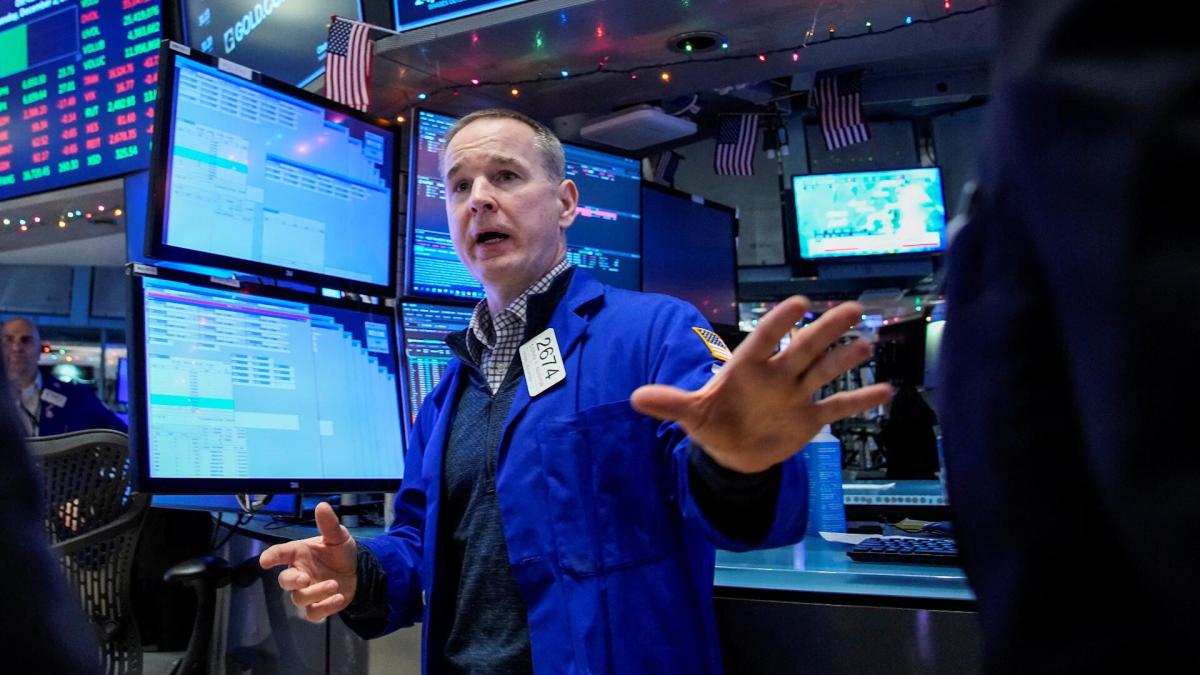 The U.S. economy is a tale of two stories in 2025 — GDP growth despite rising inflation and unemployment.
REUTERS
Fed caught in the crosshairs
The Federal Reserve meets eight times annually to set monetary policy. It doesn’t control bank lending rates, but changes to its Fed Funds Rate do influence them, making its decisions key to economic growth or contraction.
The Federal Open Market Committee is comprised of a rotating list of 12 Fed officials. They determine whether to raise or lower rates based on a dual mandate:
- Low inflation
- Low unemployment
Those goals are often at odds with one another, and that’s been especially true in 2025. The Fed, after cutting rates three times in 2024, left rates unchanged until September due to concerns that lowering rates further could spark inflation, which was already growing as a result of President Donald Trump’s tariff strategy.
In the end, it cut rates in September, October, and December due to unemployment rising rapidly, climbing to 4.6% in November from 4% in January.
Related: Every major analyst’s S&P 500 price target for 2026
Fed Chair Powell’s hesitancy to lower rates earlier in 2025 drew stern criticism from the White House and likely means he will be replaced when his term as Chair expires in May.
Nevertheless, he remains at the wheel, steering the Fed and by extension, the economy, during a relatively precarious period. Tariffs remain problematic, causing inflation to clock in higher than it would otherwise be. Meanwhile, layoffs have surged to 1.17 million through November, up 54% from the same period in 2024, according to Challenger, Gray & Christmas.
Worst years for layoffs since 2000:
- 2020* 2,227,725
- 2001* 1,956,876
- 2002 1,373,906
- 2009* 1,242,936
- 2025 1,170,821
- 2003 1,143,406 Source: Challenger, Gray & Christmas. *Indicates Recession years
Even more head-scratchy:GDP is soaring despite the challenges, rising 4.3% in the third quarter.
Goldman Sachs resets GDP forecast for 2026
The key to whether the Fed sits on its hands in 2026 hinges on how the labor market and inflation evolve. The unemployment rate is significantly higher than its cycle low of 3.4% in 2023, and it’s currently the highest since 2021. Meanwhile, inflation is a toss-up, rising since April due to tariffs, but falling in November thanks to missing data and a likely significant slowdown in rents.
So far, the U.S. economy has brushed off the problems and dashed recession worries that emerged after GDP sank by 0.6% in the first quarter, due to importers rushing to bring goods into America before tariffs and surging gold trading, both of which drag down GDP.
GDP Growth in 2025:
- Q4 2025 (est): 3%, according to Atlanta Fed’s GDPNow.
- Q3 2025: 4.3%
- Q2 2025: 3.8%
- Q1 2025: -0.6% Source: TradingEconomics.
In a recent research note shared with TheStreet, Goldman Sachs describes its outlook for GDP in 2026 as “sturdy,” with U.S. growth expected to outpace other developed markets.
Goldman Sachs expects the slower but solid growth to continue in 2026 because of:
- Reduced tariff drag
- Tax cuts
- Easier financial conditions.
While tariffs remain in place and companies continue to pass along higher import costs to consumers, the rate at which this happens is expected to slow in 2026, which should help inflation trend lower as the year progresses.
Goldman Sachs expects core inflation “to slow from around 3% now to near 2% as the impact of tariff pass-through and administered prices diminishes while wage and shelter inflation slow.”
It also sees an economic tailwind stemming from the One Big Beautiful Bill Act, or OBBBA, which was passed and signed into law by President Trump on July 4.
“We estimate that consumers will receive around an extra $100bn (0.4% of annual disposable income) in tax refunds (net of transfer reductions) in 2026H1. Moreover, the shift to full expensing of plant and equipment spending has already started to boost forward-looking capex indicators,” wrote Goldman Sachs’ economists.
The tax refunds stem from most employees having money withheld at previously prevailing rates, leading many Americans to overpay.
“We will see in an even larger crop of personal income tax refunds early in 2026 than was anticipated when the OBBBA was passed,” wrote J.P. Morgan Asset Management‘s Chief Global Strategist David Kelly in August. “These higher income tax refunds should work much like a new round of stimulus checks, adding to consumer demand and inflation pressures early next year.”
The capital expenditure (capex) tailwinds associated with full expensing encourage companies to move forward with projects, making them more cost-effective in the short run.
Goldman Sachs also expects the Fed to cut rates further in 2026, thereby encouraging people and businesses to borrow and spend.
“We expect the Fed to cut by 50bp to 3-3.25% in 2026. Given our conviction that the US inflation problem has been solved and concerns about further labor market weakening, we continue to see risks around our Fed funds rate forecast next year as clearly skewed dovish,” wrote Goldman Sachs.
US economy front-end loaded in 2026
Overall, Goldman Sachs expects U.S. GDP to grow 2.6% in 2026, but it doesn’t expect this growth to be a straight line. Instead, it projects a front-end-loaded year, with significantly higher growth in the first half than the second half of the year.
Goldman Sachs 2026 GDP forecast:
- Q1 2026: 3.5%
- Q2 2026: 2.5%
- Q3 2026: 2.1%
- Q4 2026: 2.1% Source: Goldman Sachs.
Goldman Sachs’ prediction that first-half growth will outperform is due to the timing and impact of tax refund-driven consumer spending, Fed rate cuts, and profit tailwinds tied to accelerated bonus depreciation for corporate capital expenditures from OBBBA.
“Bonus depreciation allows a business owner to claim an additional first-year depreciation deduction for qualified property (e.g., equipment, vehicles, aircraft, etc.) acquired and placed in service rather than spreading that depreciation out over the life of the asset, encouraging capital investment by reducing taxes,” explained J.P. Morgan Private Bank‘s Head of Tax Strategy Adam Ludman, in September.
Still, Goldman Sachs isn’t burying its head in the sand regarding risks to its outlook. It sees the biggest potential risk to its forecast for GDP growth in 2026 stemming from the labor market.
“The main vulnerability remains a crack in the US labor market, if jobs softness tips into a zone where recession becomes a serious prospect again,” wrote Goldman Sachs.
An uptick in unemployment that weighs on sentiment, causing consumers and businesses to preserve cash and hold off on spending, makes jobs data a critical economic trend to watch in 2026.
Overall, Goldman Sachs believes there’s plenty of good that could lead to the U.S. growing in 2026, but much can still go wrong, so investors should ‘trust but verify’ by keeping a close eye on how economic trends evolve. After all, putting too much emphasis on any forecast in the short term is risky.
As Warren Buffett said in 1992:
“Short-term market forecasts are poison and should be kept locked up in a safe place, away from children and also from grown-ups who behave in the market like children.”