
Bernstein just made the boldest calls I’ve covered in the semiconductor space over the years on ASML Holding stock (ASML), and it didn’t do it quietly.
It upgraded the Dutch semiconductor equipment giant’s stock to outperform while hiking its price target to $1,528, up from $935 (a mammoth 63% increase).
From the stock’s recent level around $1,242, Bernstein sees roughly 23% upside, or about $286 per share.
The rationale behind it is clear, as the firm argues that the current chip spending cycle is a multi-year growth story, and the market hasn’t priced that in.
Bernstein claims that demand linked to AI is not only boosting the sales of flashy logic chips and GPUs, but also laying the foundation for massive, multi-year capital spending by memory makers and foundries alike.
It comes at a point when AI stocks like Nvidia are pausing, while the company is selling the must-have tools to build more GPUs and is posting solid gains.
For perspective, in the past six months alone, ASML stock is up a tremendous 56%, surging past the S&P 500’s 11% gain in the process.
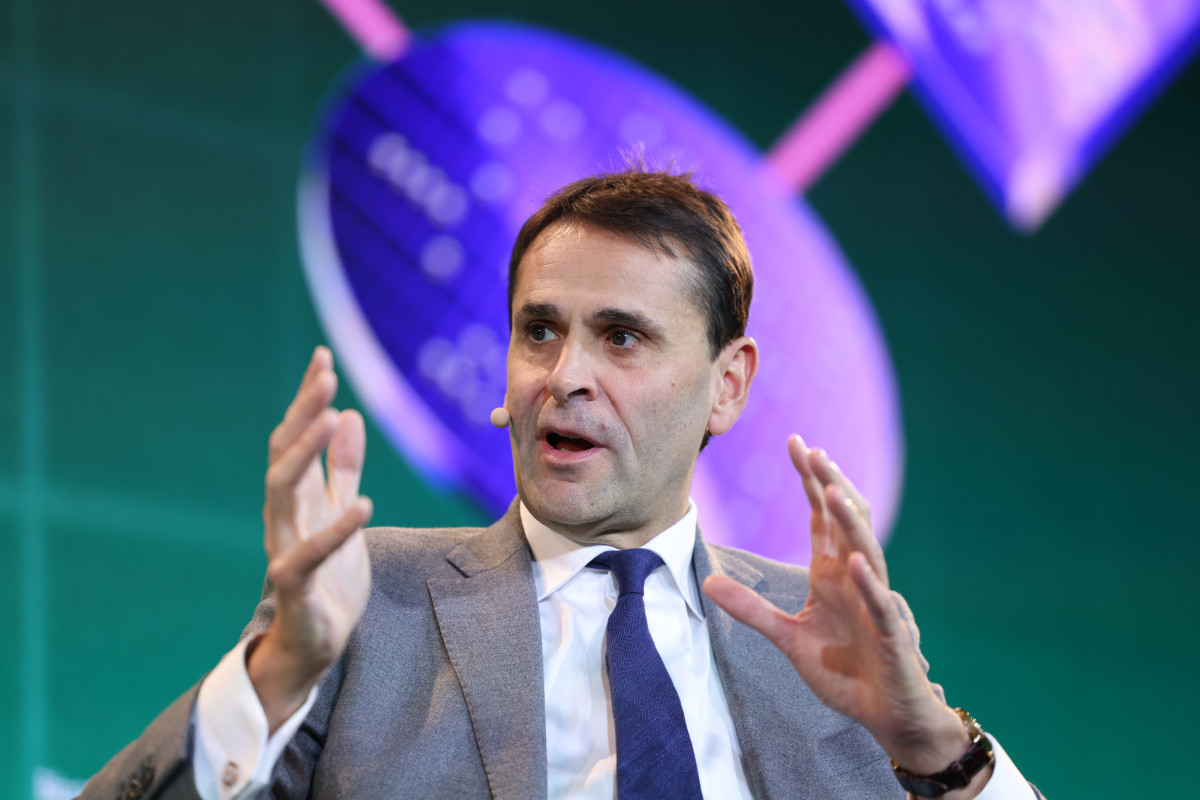 Bernstein’s sweeping upgrade signals ASML’s AI-driven growth cycle may be far from fully priced in.
Photo by Bloomberg on Getty Images
Memory stocks quietly left AI’s biggest names behind
Of late, we’ve seen the AI bellwethers that essentially spearheaded the stock market fall out of favor.
Case in point: Nvidia stock is up just 1% in the past three months, having closed out last year with a 25% gain. Conversely, memory chip stocks such as Micron and ASML have posted double-digit gains.
The reason lies in a simple supply-demand mismatch that has flipped the narrative.After a sustained downturn, the memory market swung into deficit right when AI demand exploded.
More Tech Stocks:
- Morgan Stanley sets jaw-dropping Micron price target after event
- Nvidia’s China chip problem isn’t what most investors think
- Quantum Computing makes $110 million move nobody saw coming
- Morgan Stanley drops eye-popping Broadcom price target
- Apple analyst sets bold stock target for 2026
For perspective, training advanced AI models entails massive amounts of DRAM (dynamic random-access memory), high-bandwidth memory, and flash storage, according to TechTarget.
A single Nvidia DGX B200 system carries a jaw-dropping 1,440GB of HBM3e (across 8 GPUs) along with 2TB of system memory (that’s excluding storage), Uvation reports.
However, supply couldn’t keep up, forcing prices to jump, and margins soon followed.
For instance, its AI-powered segments, such as Cloud Memory, put up a massive 66% gross margin (company-wide at 45%).
Additionally, Micron exceeded market expectations and revealed it had sold out of HBM chips through 2026.
Bernstein thinks ASML’s best growth is still ahead
Bernstein’s bullish take on ASML is grounded in a set of forecasts suggesting the market is underestimating the strength of the current chip spending cycle.
The firm expects ASML’s revenue to jump by another 6% in 2026, followed by a 10% to 12% annual growth rate through 2030, as chipmakers turn it up a notch on their investments to meet AI-driven demand.
Related: Nvidia CEO makes clear break from playbook
That robust growth will translate into stronger profits, with operational margins rising to 57.7% by the end of the decade, up substantially from 52.8% last year.
Moreover, Bernstein analysts believe that ASML’s fortunes are linked to memory rather than anything else.
The world’s top DRAM makers continue to boost capital expenditures (capex) in 2026 and 2027 to keep pace with the breakneck demand for AI servers, while migrating to more advanced manufacturing techniques such as lithography, which is explained in a video posted by Physics Frontier.
The memory giants powering the AI boom
- Samsung Electronics: The world’s largest memory producer benefits from its immense scale, early EUV adoption in DRAM, and deep integration across multiple devices.
- SK hynix: The clear frontrunner in HBM for AI supplies cutting-edge HBM to GPU makers, with much of its 2026 output sold out.
- Micron Technology: The pure-play AI memory player has sold out of HBM through 2026 as it dominates the space.
- Western Digital: A NAND and storage giant, Western Digital is making the most of exploding AI data requirements through SSDs and flash solutions.
Bernstein sees a double tailwind forming for ASML
Considering the massive AI workload requirements, memory companies are compelled to spend a lot more and differently than in previous cycles.
For ASML, the core aspect is complexity.
Bernstein argues that the upcoming “1c” DRAM node will allocate a remarkable 28% of manufacturing steps to lithography, up from 20% to 24% in previous generations.
Related: Micron could send these stocks soaring in 2026
For perspective, lithography is essentially the “printing” step for chipmakers, where light is used to draw out microscopic circuit patterns onto chips.
Needless to say, that part costs a ton, and ASML’s EUV tools that perform it cost nearly $150 million each.
More steps entail more tools, yet ASML CEO Christophe Fouquet reiterated the company’s competitive edge, Fintool reports.
The logic part adds another major boost.
Bernstein cites “unprecedented AI demand,” compelling foundries such as TSMC and Samsung to grow their capacity. TSMC alone could potentially add a head-turning 40 to 45 EUV scanners by 2027, Qualtrim posted on X (the former Twitter).
Related: Goldman Sachs stuns with Taiwan Semiconductor stock price target
