
This article is based on TheStreet’s Stock & Markets Podcast. Hosted by Chris Versace, the veteran Wall Street investor and lead portfolio manager for TheStreet Pro, these weekly podcasts are available early to members of TheStreetPro investing club.
Abraham Maslow believed that we always have two options.
In any given moment, the renowned psychologist said, we can step forward into growth or step back into safety.
One of the most recognized names in the field, Maslow is famous for his Hierarchy of Needs framework, a motivational theory that suggests humans must satisfy fundamental needs before advancing to self-actualization, or becoming the most authentic and capable version of themselves.
Maslow’s name came up during the Jan. 7 edition of TheStreet Pro’s Stocks & Markets Podcast, when Peter Tchir, head of macro strategy at Academy Securities, discussed his ProSec 2026, or production for security, investment theme for the new year with TheStreet Pro’s Chris Versace.
“There’s an element of resiliency and I ultimately think it’s going to kind of replace ESG as a policy fuel,” Tchir, a contributor to TheStreet Pro, said, referring to Environmental, Social, and Governance investment strategy.
ESG considers non-financial factors alongside traditional financial analysis to evaluate a company’s long-term sustainability and ethical impact.
The strategy has roots in 18th-century religious ethics, but it became formalized in the mid-2000s, notably by the UN in 2004’s “Who Cares Wins” report.
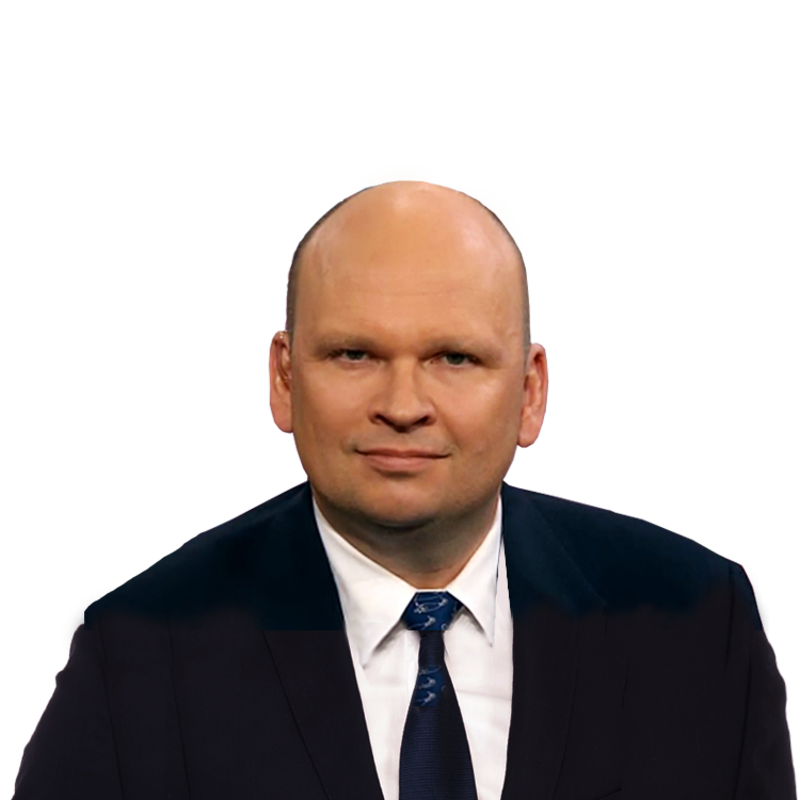 Peter Tchir, head of macro strategy at Academy Securities, discussed his investment strategy.
Investors getting back to ground level
ESG has been losing steam lately due to such factors as political backlash, shifting investor priorities, and underperformance compared with the broader market.
President Donald Trump has described ESG as a “scam” and “radical left garbage.”
More economic analysis:
- CPI inflation data rocks stocks
- Trump’s bold new tax promise has families asking one big question
- Longtime fund manager sends blunt message on P/E ratios
- Mortgage rates tick lower as the Fed trims key rate
- Both high-and low-income holiday shoppers are following this trend
- November BLS jobs data show the good, bad, and ugly
Among other actions, Trump has signed an executive order in his second term to end Diversity, Equity, and Inclusion (DEI) programs at the federal level and encouraged the private sector to follow suit.
“Maslow’s Hierarchy of Needs says you’ve got to take care of your basic physical needs,” Tchir said.
“When we were looking at sustainability, we could figure out what we would really like to happen, but it was very dependent that we were getting everything from China. That has fallen through the cracks.”
Investors are going to back that ground level, he added, “and saying what do we need to produce ourselves, what do we need to produce with our close allies to make sure that we you know can’t get screwed over easily.”
“I think chips, AI and data center, (and) electricity that goes in hand in hand with that,” Tchir said. “I think you’re going to see it in pharma; you’re going to see it a lot of commodities.”
He said that people in the administration understand that processing and refining are more important than the raw resources
“If we found a huge amount of cobalt tomorrow, we’d still have to ship it to China to get processed,” Tchir said.
Trump looking to midterms
Recent trade negotiations showed very clearly that China holds the keys to the rarest and most critical minerals, he said, “which in turn hold the keys to our ability to build and sell products, so I think that’s created an element of urgency.”
“That leaves a huge amount of investment opportunity,” he said. “And that to me is it’s just a change of mentality. And while the US government started this, you’re already starting to see capital go to it. What is the government going to invest in next?”
Related: Stocks & Markets Podcast: TheStreet Pro’s analysts look to 2026
Tchir said the growth of AI and the data centers artificial intelligence has shown us that we do not have enough electricity.
“Elon Musk tweets about that every single day,” he said, citing the Tesla (TSLA) CEO. “I don’t think he’s wrong.”
Versace said that ESG is falling by the wayside in the U.S., but it’s still hanging on in Europe.
“But you’re thinking that’s going to go away?” he asked.
“I think that’s going to go away and it’s already being reframed a little bit,” Tchir replied, adding that the Trump Administration wants to accomplish a great deal ahead of the midterm elections.
“I think their whole goal is to win the midterm elections and they realize probably stocks being higher coming into the midterms is a part of that,” he said. “So, I think they’re going to try and do a lot of things. I’m not sure whether they’ll be successful or not, but that’s what I think we’re facing now.”
Versace noted that Trump recently warned Republican members of Congress during a House GOP retreat that if they didn’t win this midyear’s midterms, he would be impeached, according to news reports.
“I think that’s really the lesson we learned from Trump 1.0,” Tchir said. “If you lose the midterms the last two years are basically a disaster. I think they have a full understanding of that. Under Trump 2.0 he’s got the team in place. He knows what he wants to do.”
“I don’t know whether he’s going to be successful in doing it or not, but there is a clear plan and agenda and I think it’s on a very fast time scale.”
Related: From dancing robots to job disruption: AI’s rapid march into the real economy
