
Apple is wagering that it can resolve a long-standing problem with one of its products rapidly by using a competitor’s artificial intelligence. This might lead customers to buy new iPhones and use more services, which would boost Apple’s income.
Apple and Google have announced a multi-year partnership in which Google’s Gemini models and cloud technologies would be used to build the next generation of Apple Foundation Models. The businesses said that those models will help make future Apple Intelligence services work better. For example, Siri will be more personalized, “coming this year.” Apple Intelligence will still function on Apple devices and Apple’s Private Cloud Compute.
It’s easy to see why Apple would want a significantly improved Siri in the near future: it might help the company “buy time” by showing a visible improvement sooner while it continues to build more of its own AI stack behind the scenes.
In all the years I’ve covered Apple, the business hardly ever relies on a competitor for a key user-facing experience unless the internal clock is going off. It seems like Apple is buying time for now, even if it means having to answer a broader question later about who really owns the iPhone’s assistant layer.
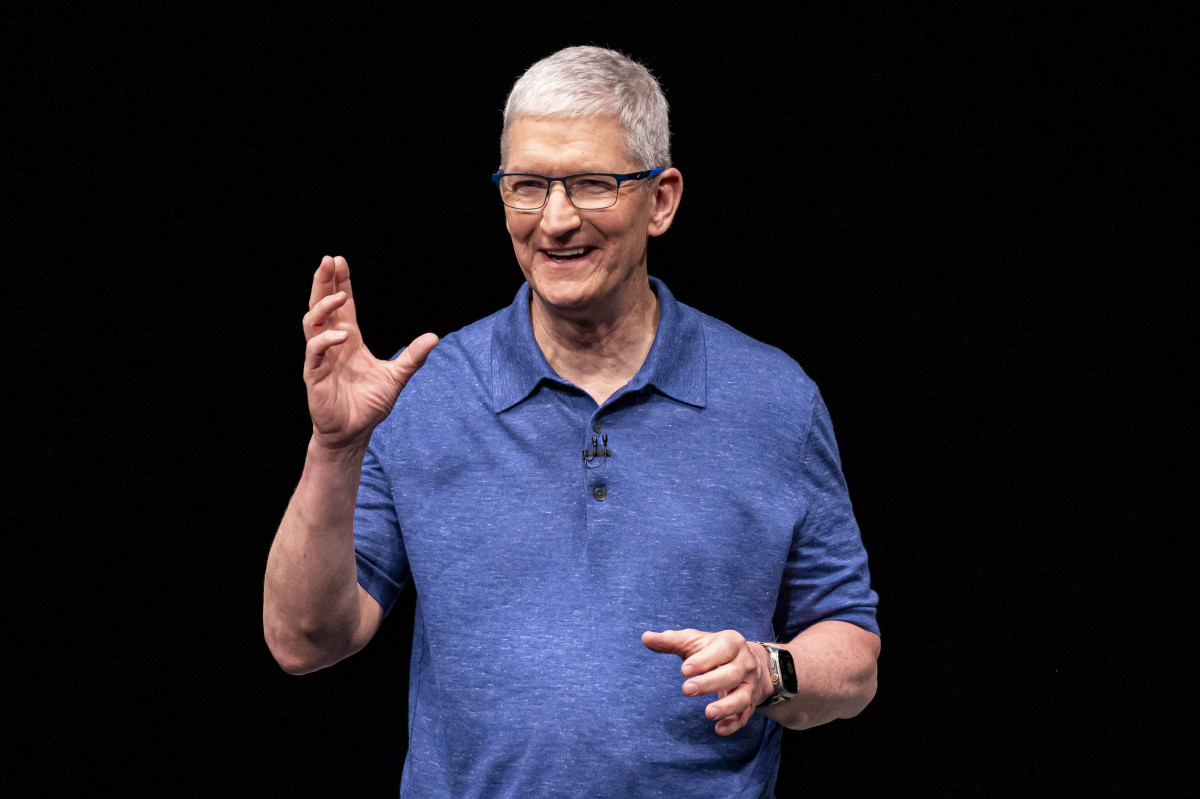 Apple’s latest Siri strategy could reshape the ecosystem conversation.
Photo by Bloomberg on Getty Images
Apple buys time with a Google-powered Siri reset
Apple is so big that even slight changes in demand can have a big effect on its finances.
Apple’s net sales for fiscal year 2025 were $416.16 billion, a 6% increase over fiscal year 2024. Its net income was $112.010 billion.
Related: India’s security plan could create a new headache for iPhone and Android users
Apple wants Siri to be more than just a curiosity, and its category breakdown explains why:
- iPhone net sales: $209.58 billion in the fiscal year 2025
- Net revenues for services: $109.158 billion in fiscal 2025, a 14% increase from fiscal 2024.
The goal of the agreement with Google is to speed up an update of Siri that Apple has been promising for years. The firms called Gemini the “foundation” for Apple’s base models in their joint announcement. Apple will retain Apple Intelligence running on devices and on the Private Cloud Compute.
A smarter Siri could finally pull iPhone upgrades forward
A Siri reset is important because the iPhone is still Apple’s primary source of income. The revenues of $209.586 billion for the iPhone in fiscal 2025 were about half of all company revenues.
In fiscal 2025, Apple also had record quarterly statistics that show how much power the iPhone series has.
Related: Wall Street sends message on Tesla after Nvidia self-driving move
Apple made $102.5 billion in sales in the fourth quarter of fiscal 2025, which concluded on Sept. 27, 2025. This was an 8% increase from the previous year. The company’s diluted earnings per share were $1.85, which was a 13% increase on an adjusted basis, according to Apple.
More Tech Stocks:
- Morgan Stanley sets jaw-dropping Micron price target after event
- Nvidia’s China chip problem isn’t what most investors think
- Quantum Computing makes $110 million move nobody saw coming
- Morgan Stanley drops eye-popping Broadcom price target
- Apple analyst sets bold stock target for 2026
The Siri challenge for investors is whether Apple can make “better assistant” a cause to upgrade, especially when the overall smartphone market doesn’t always increase quickly every year.
Apple doesn’t share how many iPhones it sells, so the best approach to keep an eye on sales is to look at revenue patterns and mix, as well as what management says about how many people are upgrading and how much demand there is.
“Services attach” is the near-term upside Apple wants
Apple has been constructing a higher-margin engine in its services business, and the company’s papers illustrate how big the discrepancy in profits is.
Apple’s gross margin percentages for fiscal year 2025 were:
- Products: 36.8%
- Services: 75.4%
The “services attach” margin spread is what makes it important. If a better Siri gets more people to use Apple’s services, the extra profit can grow quickly, even if the number of hardware sales doesn’t change much.
Apple also kept spending a lot of money on development. In fiscal 2025, the cost of research and development was $34.55 billion, which is 10% more than in fiscal 2024.
Apple’s filings and releases reveal that the business kept giving money back to shareholders:
- Apple said its quarterly dividend was $0.26 per share as of Sept. 27, 2025.
- Apple said it repurchased $89.3 billion of common stock in fiscal 2025 and paid $15.4 billion in dividends and dividend equivalents.
- Apple’s cash, cash equivalents and marketable securities totaled $132.420 billion at fiscal year-end 2025, according to its filings.
- Apple reported $111.482 billion in cash generated by operating activities in fiscal 2025.
Google gets a rare win inside Apple’s ecosystem
The Gemini-in-Siri arrangement is a win for Alphabet in terms of dissemination.
It puts Google’s AI models deeper into the world’s most important consumer electronics ecosystem, even though Apple is preserving the brand and privacy stance that users see.
Related: Samsung’s profit blueprint resets Micron stock bets
Alphabet’s own data indicate how big their AI drive is. Alphabet said in the quarter that concluded on Sept. 30, 2025:
- Revenue: $102.346 billion, up 16% year over year
- Google Services revenue: $87.1 billion, up 14%
- Google Cloud revenue: $15.2 billion, up 34%
- Net income: $34.979 billion; diluted EPS: $2.87
Alphabet also talked about a huge expansion of its infrastructure. It indicated that it now thinks that capital spending in 2025 will be between $91 billion and $93 billion.
Alphabet still has a lot of cash on its financial sheet. Alphabet said that as of Sept. 30, 2025, it had $98.496 billion in cash, cash equivalents, and marketable securities.
Apple’s privacy guardrails will shape what Gemini can do
Apple is trying to walk a fine line: they want to add a model that can improve Siri’s powers without losing the confidence that sets the iPhone brand apart.
The firms stated in a joint statement that Apple Intelligence will keep running on Apple devices and Apple’s Private Cloud Compute, “while keeping Apple’s industry-leading privacy standards.”
Related: What Nvidia just did could rewire the AI race
That framing gives them an idea of what the integration will be like. Users could be able to understand language and do tasks better without Apple switching to a totally cloud-first assistant approach. For investors, this also implies that the actual test will be how well the company does every day, not what it says in its ads.
What does it mean for Apple investors?
Apple’s short-term goal is to turn a smarter Siri into two things that will show up on the income statement: steady iPhone sales and growth in Services. Apple’s estimates for fiscal year 2025 show what “small percentage changes” might look like in dollars.
A quick check of the scenario (as an example, not advice): utilizing the gross margin and segment sales percentages from Apple’s 10-K for fiscal 2025:
- If iPhone sales went up by 1% from the fiscal 2025 base of $209.586B, that would mean an extra $2.1B in iPhone sales. With a gross margin of 36.8%, that is an extra $0.77B in gross profit from products.
- If Services sales went up 1% from the fiscal 2025 base of $109.158B, that would be around $1.1B more in Services sales. With a Services gross margin of 75.4%, that means an extra $0.82 billion in Services gross profit.
That “mild win” scenario would mean around $3.2 billion more in sales and nearly $1.6 billion more in gross profit, before operating costs.
If there were a significant change in behavior, such a 3% increase in iPhone sales and a 2% increase in Services sales, it would add around $8.5 billion in sales and nearly $4.0 billion in gross profit, using the same margins and bases for fiscal year 2025.
The issue in the long run is strategic. Apple is making its assistant better by using a competitor’s model as a base. This could make it work better sooner, but it also begs the question of whether Apple is slowly giving up control over the assistant layer, which is where user intent starts to grow.
If Siri’s redesign is an obvious upgrade, Apple buys time and may even boost its short-term financial momentum. Apple might raise expectations while still giving Google a win at the platform level if it is gradual.
Related: Samsung’s AI companion push could fuel a pricier upgrade cycle