
Updated January 20, 2026, at 9:40 am EST to reflect S&P 500 and Nasdaq returns.
Twain said it best: “History doesn’t repeat itself, but it often rhymes.” That quote resonates today after President Donald Trump reignited trade wars over the weekend, slapping new tariffs on Europe that sent the stock market reeling on January 20, even as the Supreme Court ruling on tariffs looms.
The new tariffs, designed to cudgel support in Europe for the U.S. to gain control of Greenland, are set to begin at 10% on February 1 and rise to 25% on June 1. The timing of new tariffs hits as the odds of the Supreme Court upholding last year’s tariffs increase to over 30% on Polymarket and Kalshi.
Countries impacted by “Greenland” tariffs:
- Denmark
- United Kingdom
- France
- Germany
- Norway
- Sweden
- Finland
- Netherlands
The latest move kicks the tariff beehive, rekindling investor worry that another tariff tantrum could yet again derail stocks. Last year, harsher-than-expected tariffs caused the S&P 500 to tumble 19% from all-time highs between February and early April (nearly bear market territory), when reciprocal tariffs were paused to enable trade deals.
The S&P 500 opened down 1.5% and the technology-heavy Nasdaq fell 1.7% in early action Tuesday
Whether we’re in store for a similar reckoning remains to be seen, but tensions are high, and investors aren’t generally fans of uncertainty. In my 30 years of tracking the markets, if I’ve learned anything, it’s that investors tend to take a “shoot first, ask questions later” approach when things get dicey.
Supreme Court tariff decision looms
The Supreme Court’s ruling on whether the Trump administration’s tariffs, put in place last year, are legal is imminent.
A decision was anticipated earlier this month, on January 9, when the Court had its first “opinion day” of the year. However, that didn’t happen. The high court hasn’t said when it will officially decide whether the President had legal authority to impose tariffs under the International Emergency Economic Powers Act, or IEEPA.
Still, most expect a decision sooner rather than later.
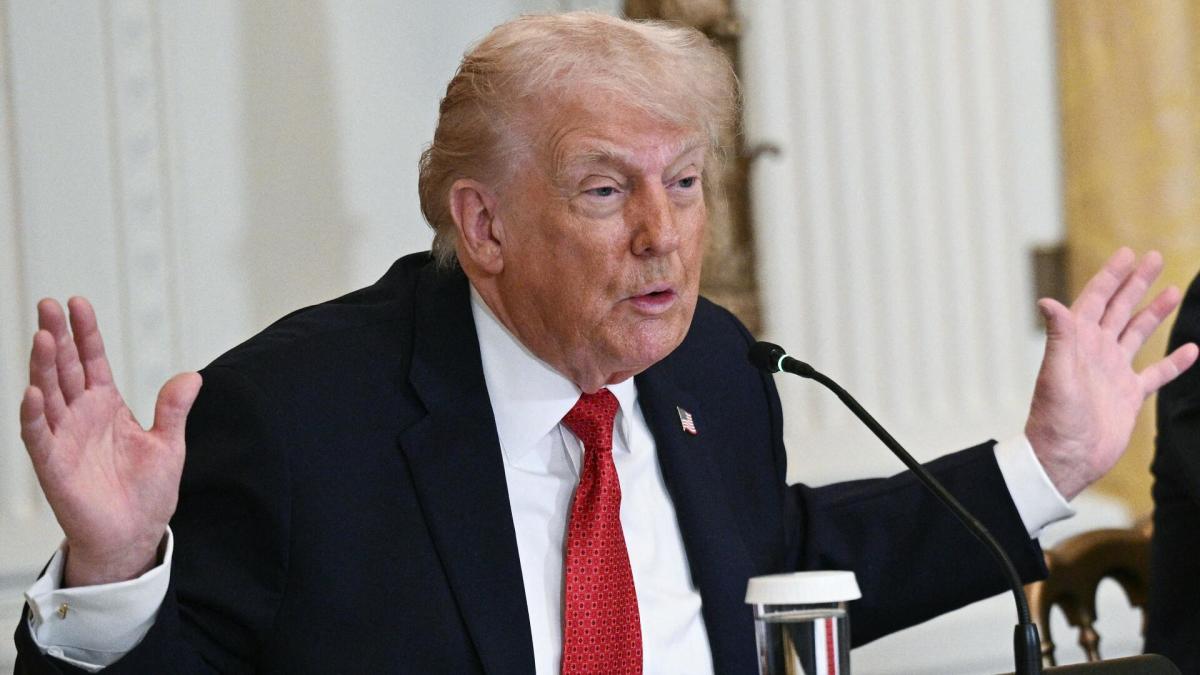 The Supreme Court is about to rule on whether the Trump administration had legal authority to implement tariffs last year under IEEPA.
BRENDAN SMIALOWSKI/GETTY IMAGES
Hundreds of billions of dollars are at stake. Tariff revenue is clocking in near $30 billion per month, including $28 billion in December, according to the Treasury Department. If the Supreme Court reverses tariffs, it could force the government to issue refunds to importers, including major retailers such as Walmart and Home Depot.
While most view a decision as “go-no-go,” the reality is that it may not be as cut-and-dried as “yes” or “no.” I previously wrote about how Morgan Stanley outlined a range of potential outcomes, including partial reversals or approval of existing tariffs, while preventing future ones under the Act.
Supreme Court tariffs, IEEPA ruling scenarios:
- Prospective relief: Existing tariffs remain but future tariffs require Congress or another authority other than IEEPA.
- Technical mix shift: Other tools can be used to maintain and create tariffs if IEEPA tariffs are retroactively invalidated.
- Temporal limitation: Tariffs remain in place for a specified period, allowing the administration time to transition to other tools.
- Partial overturn: Only specific IEEPA tariffs are removed. Source: Morgan Stanley analysts
The White House’s decision to toss a tariff hand grenade at Europe to force support for the U.S.’s plans for Greenland is clearly coming at a unique time, and that’s at least some reason to think a decision in Trump’s favor may be more likely.
Kalshi, Polymarket Supreme Court ruling odds shift
Prediction market odds have changed over the past two weeks. Those peer-to-peer prediction markets, backed by blockchain, allow users to bet on real-world events, including politics, sports, and pop culture.
Billions of dollars are flowing into prediction markets, most of which is being captured by Kalshi (thanks partly to its deal with Robinhood) and Polymarket. Unlike sports betting, where bets are placed against the “house,” these markets act as exchanges (like the NYSE), matching bets directly against those on the other side.
More Wall Street
- Goldman Sachs issues urgent take on stock market for 2026
- Analyst who nailed 2023 bull run sets S&P 500 target for 2026
- Longtime fund manager sends blunt message on P/E ratios
- Nasdaq’s near 24-hour trading plan sparks Wall Street backlash
- Every major analyst’s S&P 500 price target for 2026
These aren’t fly-by-night operations. The Intercontinental Exchange Inc., the company behind the New York Stock Exchange, invested $2 billion in Polymarket — the biggest player — in October 2025 (Polymarket was valued at $8 billion before the deal).
“Combining ICE’s institutional scale and credibility with Polymarket’s consumer savvy, we will be able to deliver world-class products for the modern investor,” said Polymarket CEO Shayne Coplan.
Kalshi, which operates a federally regulated marketplace, cut a deal in March 2025 to be integrated into Robinhood’s platform. Robinhood doubled down on prediction markets in November, acquiring a 90% stake in clearinghouse LedgerX (formerly owned by now-defunct FTX) to build an in-house offering.
In short, these are big markets with billions of monthly bets being placed, and aggregating common wisdom has paid off. For instance, prediction markets favored Donald Trump in the 2024 presidential election, while traditional polls had the outcome largely incorrect.
As of January 19, Polymarket odds for the Supreme Court upholding last year’s tariffs is 30%, up from 21% on January 17. Over at Kalshi, the odds improved to 36.5% from a low of 22% in December.
How the Supreme Court eventually rules will have a significant impact on whether the newly announced tariffs on Europe will need to be rolled back.