
At Davos, President Donald Trump told the World Economic Forum that “growth is exploding, productivity is surging, investment is soaring, incomes are rising, inflation has been defeated.”
That line came as he bragged that the United States is “in the midst of the fastest and most dramatic economic turnaround in our country’s history.”
The president also pointed to recent data to back up that story. He said that over the prior three months, U.S. core inflation “has been just 1.6%,” while fourth‑quarter growth was projected at 5.4%, and he claimed grocery prices, energy, airfares, mortgage rates, rent, and car payments “are all coming down fast.”
The problem is that some of the numbers still look uncomfortable if you are paying those bills yourself.
Core consumer price index inflation is running around 2.6%, above the Federal Reserve’s 2% target, and many everyday items remain significantly more expensive than they were before the Covid pandemic, according to a CNBC review of government data.
Economists quoted by the same review pushed back on the Davos victory lap. Thomas Mathews of Capital Economics called Trump’s claim that the U.S. has “virtually no” inflation “factually incorrect,” saying inflation is “still concerningly elevated” and not yet “defeated” for households.
Inflation is “uncomfortably high” for many families, especially lower- and middle‑income consumers, Moody’s Chief Economist Mark Zandi also noted in a LinkedIn post.
If your grocery bill still feels sticky and you are paying more for services than you were a few years ago, that disconnect between the Davos rhetoric and daily reality explains why.
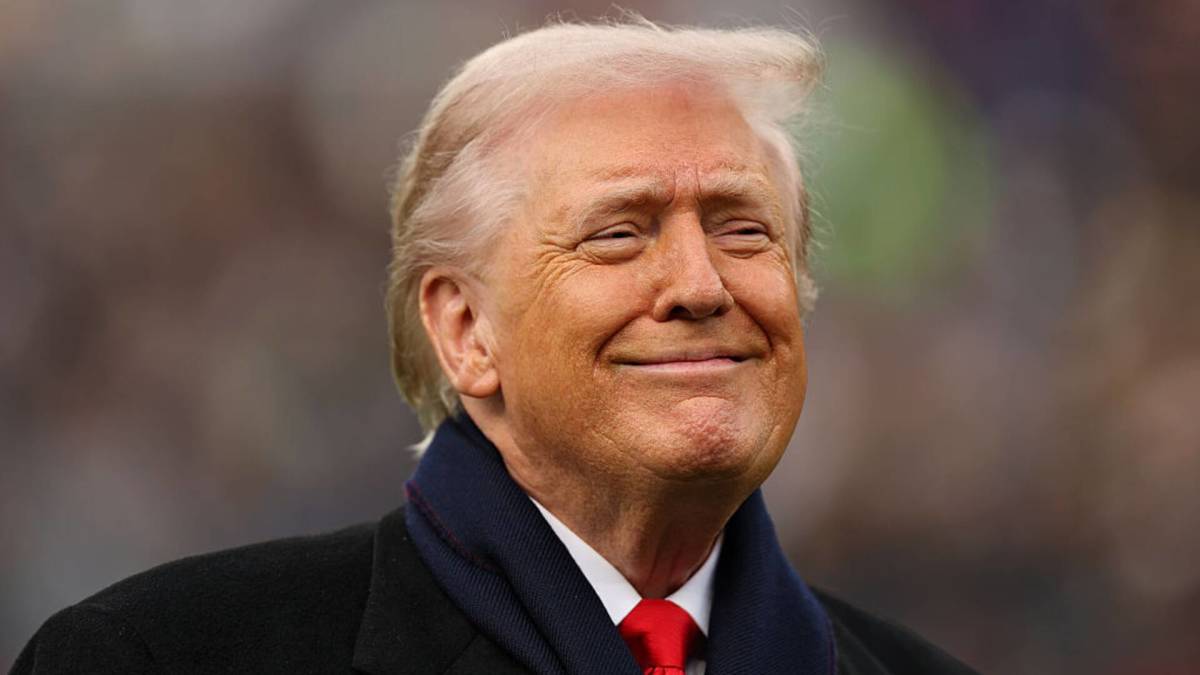 President Trump made big claims at the World Economic Forum in Davos.
The quiet role of tariffs in your higher prices
President Trump’s bigger tell at Davos was not the inflation-related bragging. It was how clearly he tied his economic story to a tariff‑heavy strategy that acts like a stealth tax on the goods you buy.
The president said his administration is “lowering” taxes on domestic producers while “raising tariffs on foreign nations to pay for the damage that they caused,” as highlighted in the World Economic Forum transcript. He framed tariffs as a core part of what he called an “economic miracle.”
Tariffs do not show up as a line item on your receipt, but they flow through the supply chain and land in your cart.
Related: White House sparks battle royale over defense stocks
The Yale Budget Lab estimates the effective average U.S. tariff rate at about 17.5%, the highest since 1932, as the Trump administration kept and expanded duties on a wide range of imports, according to CNBC.
Those levies raise the cost of imported inputs and finished goods, and companies try to pass those costs along through higher prices. Zachary Riccio, associate director at the Yale Budget Lab, told CNBC that current tariff levels could add roughly $1,300 to $1,700 in extra costs for the typical household in 2026 when compared with a pre‑Trump‑return baseline.
That is a meaningful hit when you are trying to build savings or pay down debt.
At Davos, President Trump also floated aggressive new tariff threats aimed at U.S. allies. In a passage that drew attention across Europe, he said that if European partners did not meet his demands, he would impose “a 25% tariff on everything that you sell into the United States, and a 100% tariff on your wines and champagnes.”
More Tariffs:
- Lululemon struggles to reverse concerning customer behavior
- Costco makes surprising move to keep prices down
- Macy’s sees holiday shopping red flags
- CPI inflation data rocks stocks
A new 10% tariff proposal on a group of European countries, with the rate rising to 25% by mid‑year, was big enough to “raise costs and slow growth” in ways that could blunt efforts to bring housing and other costs down, PBS noted while summarizing the reaction at Davos.
For the average consumer, that kind of tariff escalation would show up in the prices of imported food, wine, household goods, and potentially in higher financing costs, if markets start to worry about another round of trade shocks.
Trump, economists see a different inflation picture
President Trump’s message in Davos put tariffs and growth on one side of the scale and inflation on the other.
Many economists see the balance very differently. Joseph Gagnon, a senior fellow at the Peterson Institute for International Economics, argued that inflation would likely already be back at the Fed’s 2% target “if not for the tariffs,” calling them a continuing source of upward pressure on prices, CNBC reported.
That view undercuts the idea that tariffs are a free way to boost growth and punish foreign producers. Instead, they look more like a policy choice that keeps your costs higher than they need to be.
Here is how that shows up in specific categories Trump mentioned in Davos.
- Groceries and household items: Even as headline food inflation moderates, many categories remain well above pre‑2020 levels, in part because tariffs raise costs on imported ingredients, packaging, and equipment that feed into retail prices.
- Energy and utilities: Trump pointed to lower gasoline prices and bragged that some states had fallen below $2 per gallon, but electricity and natural gas bills are still elevated, especially where utilities face higher input and infrastructure costs.
- Housing and borrowing: Lower mortgage rates from 2023 and 2024 peaks still leave many borrowers facing higher monthly payments than in the ultra‑low‑rate era, and analysts told PBS that renewed tariff fights could push interest rates higher than they otherwise would be by undercutting business and investor confidence.
- Big‑ticket goods: Cars, appliances, and electronics all depend on imported components, so tariffs raise production costs, limit discounting, and make replacement cycles more expensive for households that are already stretched.
Hitting close partners with broad tariffs is a “recipe for weaker growth and higher prices” and could make homes “less affordable” by keeping borrowing costs elevated, warned Scott Lincicome, vice president for general economics at the Cato Institute, in comments cited by PBS.
So while Trump told Davos that tariffs helped reduce the U.S. trade deficit “with no inflation,” analysts looking at the same data see a different story: trade barriers that have made inflation control harder and your household budget tighter.
How the president’s tariff policy plays out in your day‑to‑day money
If you are a consumer, Trump’s Davos message sends a clear signal: He wants to keep using tariffs as a core economic tool, even while claiming inflation has been tamed.
That means you need to plan as if price pressure can flare back up quickly, especially in categories that depend on imports.
You can think about it in three buckets.
First, your everyday spending.
If tariffs stay high or increase, imported food, clothing, electronics, and home goods will be more vulnerable to price spikes. That is one reason economists told CNBC that households should expect inflation progress to be “bumpy,” not a straight line down.
Second, your debt and big purchases.
Tariff threats can rattle markets in ways that feed into bond yields and mortgage rates, so trade headlines can affect what you pay for a car loan or a home almost as much as a Federal Reserve meeting, PBS noted.
Third, your investments.
Stocks rallied when investors thought Trump might soften tariff threats and wobbled when he talked about hard lines on Europe and other partners, CNBC’s markets coverage around Davos showed.
If you own consumer, retail, manufacturing, or auto stocks, I’d assume you already feel that volatility in your portfolio every time tariffs hit the headlines.
When I listened to the president tell Davos that “with my growth and tariff policies” the U.S. economy could beat IMF projections by a wide margin, my takeaway was that he sees tariffs as a standing feature of policy, not a short‑term bargaining chip.
The real message out of Davos was not just that inflation is supposedly beaten; it was that tariffs are likely to stick around. And if they climb further from already-historic levels, I expect the extra cost to keep landing on consumers and investors, not just on overseas trading partners.
Related: White House turns up heat on Powell as Fed chair pick nears