
I stopped using my bank card for payments. I had to, in order to reduce all unnecessary spending. When I pay with a card, it doesn’t feel like I am spending at all, but when I count the actual cash in my hands, I notice it.
Paying with cash allows us to see the money leaving our wallet and not coming back, while a card seems like an inexhaustible source of funds.
Today’s economic situation is hard on the majority of middle- and low-income consumers. That’s why I decided to reduce the use of my card and avoid any kind of wasteful expenditures. I am also looking at special discounts and carefully analyzing prices.
Industry data confirm that I am not alone in these struggles. In 2026, retailers will deal with a structural shift toward value-seeking behaviors as consumers analyze what constitutes a fair price, according to the 2026 Retail Industry Global Outlook from Deloitte.
The report also notes that “four in 10 Americans now demonstrate deal-driven or cost-conscious habits, and even higher-income households are reassessing what ‘value’ means,” and that retail executives view this consumer behavior as more than just a temporary response to inflation.
For many retailers, this is a gut punch, and even discount retailers are now being forced to close their doors. The latest such vendor is Retail Rebel.
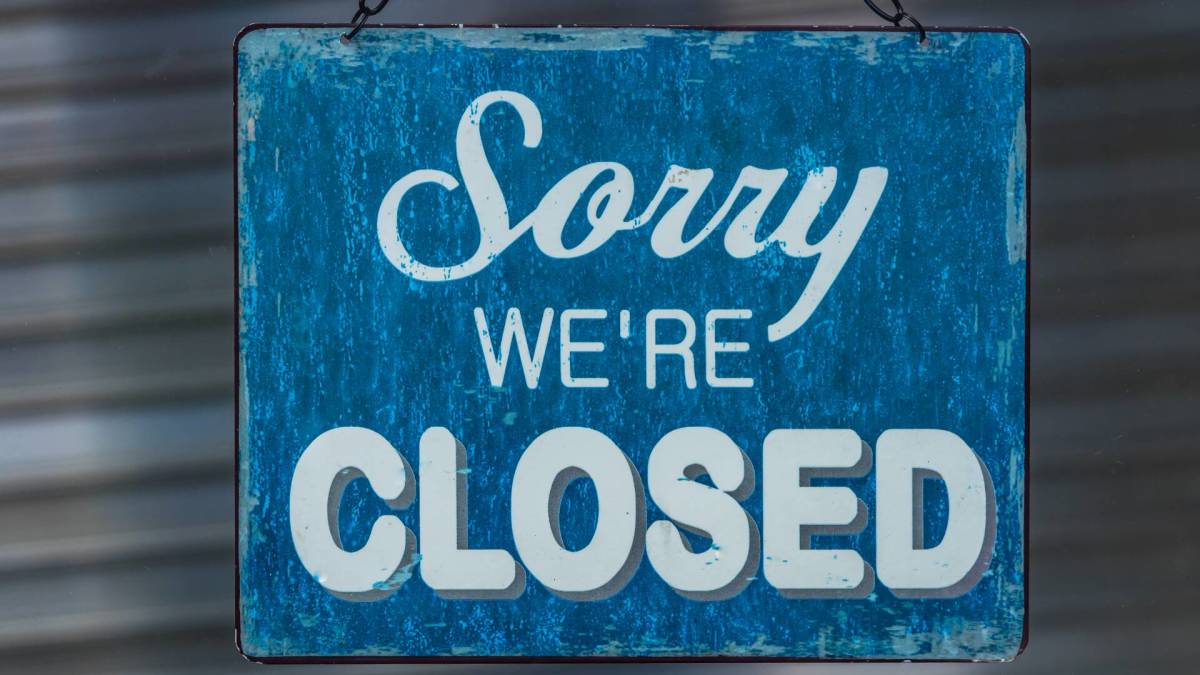 Retail Rebel closes the majority of its Kansas City-area stores due to supply and demand issues.
John And Penny/Shutterstock
Retail Rebel to close the majority of its Kansas City-area stores
Even discount retailers are struggling in this climate, because affordability is no longer enough to win customers. Deloitte’s research suggests that 40% of consumer perceptions of a brand’s value stem from factors other than price, including quality, customer service, and loyalty programs.
The report argues that understanding all these factors and creating a complementary value offering may enable retailers to win over today’s value-seeking consumer.
More Closings
- Starbucks coffee-chain rival permanently closes dozens of locations
- 127-year-old restaurant that invented legendary cocktail close
- Controversial clothing store closes after 132-years
However, not everyone is able to adapt so quickly. Retail Rebel, a high-growth liquidation retailer that specializes in selling overstock and returned merchandise from major retailers at steep discounts, is closing the majority of its Kansas City-area stores.
“We’re sharing an important update regarding several Kansas City-area Retail Rebel locations. While this isn’t easy news, we believe in communicating clearly, respectfully, and with gratitude for the communities that have supported us,” Retail Rebel wrote in a Facebook post on Jan. 21.
The discount retailer said that “after careful consideration of current economic conditions, we’ve made the difficult decision to close the following KC Metro locations.” These include:
- Belton, MO
- Claycomo, MO
- Olathe, KS
The final day for picking up auction items and the final day for “The Bins” at the closing stores is Jan. 23, after which the three locations will be permanently closed. Its Kansas City, Kansas, store at 4301 State Ave. with “expanded inventory” will remain open.
Currently, Retail Rebel has built its presence in Missouri, Kansas, and Iowa.
Retail Rebel CEO confirms closures are due to supply and demand issues
While stating in the official post that the company made a thorough assessment of the current economic climate, Retail Rebel didn’t reveal more details about the reason for the closures. However, CEO Nathan Wright told FOX4 on Jan. 22 that the permanent closures were due to supply and demand issues.
“The cost of the goods became too much for the infrastructure overhead that we had. What that means is, when you pay more for product, you have to cut costs in other places. In this business, when you’re selling at such great discount, it doesn’t leave much room,” Wright said.
The CEO confirmed that some workers have been transferred to the Kansas City, Kansas, location, but added that the number of employees who lost their jobs was “significant.”
Retail Rebel’s history, sales strategies, and famous “bins”
Retail Rebel was founded in 2019 as “It’s $5.” The Kansas City-headquartered company rebranded in 2020, to become the “Retail Rebel,” as it expanded its footprint and diversified its product offering, surpassing the fixed $5 price point.
The liquidation retailer operated on a decreasing-price model designed to clear inventory quickly, while providing a game-like shopping experience.
At Retail Rebel products are placed in large bins, and prices are the highest on “Restock Day.” Throughout the week, these prices drop daily.
“The Bins is a daily treasure hunt where we offer a selection of products at a flat price. Picture it as a room filled with incredible deals waiting to be discovered. Everything starts at $11.00 on Saturday with prices drop[ping] daily until our next restock,” reads the description on its web page.
The company is relying on real-time market data to ensure its products are priced lower than any major competitor’s.
“The Retail Rebel model is to offer deeply discounted inventory to an area while keeping customers engaged. As items remain in stock, it is customary for them to be further discounted each additional day they remain in stock. This creates deeper customer engagement as they seek out bargains not available at other merchants,” reads Retail Rebel’s Corporate Summary.
The retailer promotes sustainability by acting as a secondary market for returns, preventing millions of items from ending up in landfills. Over the years, it managed to win over loyal customers, so it is common to see lines out the door on their restock days.
Its offering includes high-end brands, everything from electronics to diapers, at a fraction of the cost. To make sure everything is working properly, the stores have testing stations, where customers can check electronics they’re interested in purchasing.
Shoppers can also bid on premium electronics and brands through online auctions starting at $10, with winning items collected at local warehouses.
Retail Rebel made every shopping experience an adventure, in addition to trying many strategies that retail experts recommend, including discounts and offering a variety of high-quality merchandise.
Still, its latest closures are a clear sign of extremely challenging times for retailers.
Related: Beloved 120-year-old gardening retailer closes permanently