
In his January 2026 video explaining how he’d invest $1,000, $10,000, and $1 million, the bestselling author of “I Will Teach You to be Rich,” Ramit Sethi, describes a problem.
He talks about the person who finally saves $10,000 and either leaves it in cash while inflation “quietly chips away at it” or hands it to a friend’s stock tip and watches it “bounce around for years with really nothing to show for it.”
Sethi says that happens because nobody teaches the average person how to invest “the right way at each stage.” Everyday investors may mistakenly latch onto products and predictions, instead of building a simple system that handles the boring decisions for them.
As someone who writes about money for a living, I see the same pattern in readers’ emails.
People rarely ask whether their savings and investing are automated, or what happens to their money every time their paycheck changes. They ask for the next “winner.” That’s the knowledge gap Sethi is trying to fill in this video, and it’s what matters most for long-term results.
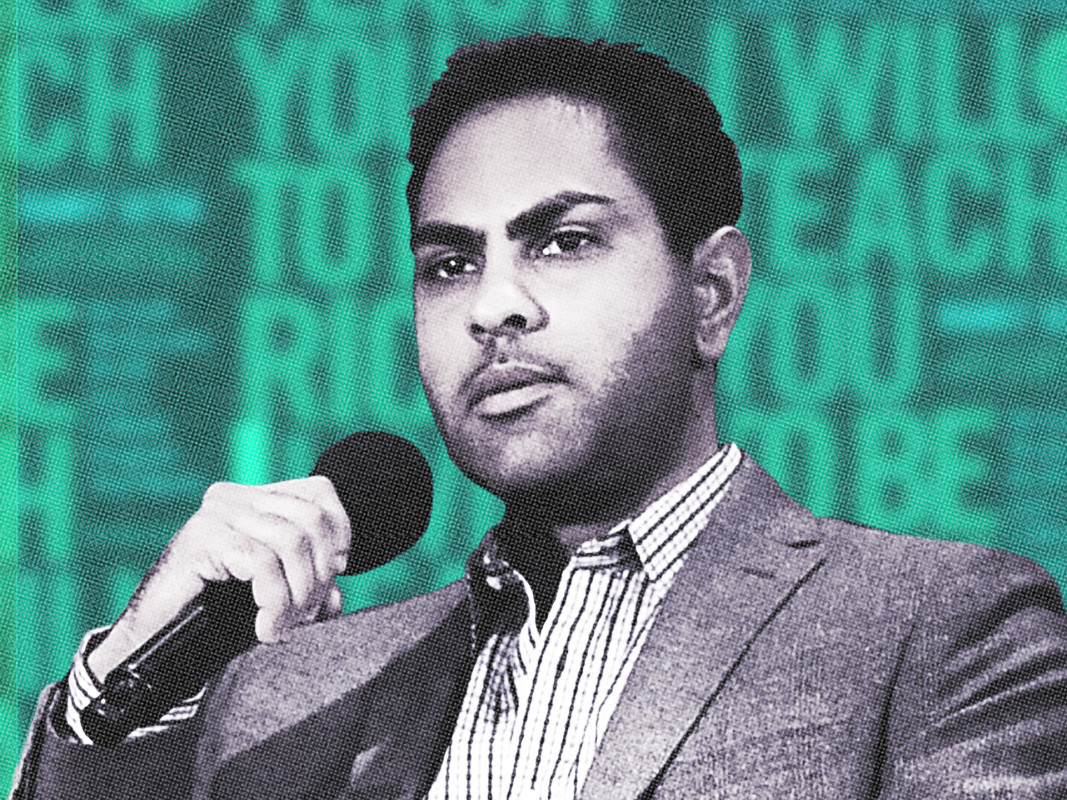 Personal finance expertRamit Sethi reveals how he would invest $1K, $10K, and $1M in 2026.
Getty/TheStreet
How Sethi actually invests the first $1,000
When Sethi walks through his $1,000 plan, the priorities are surprisingly plain.
He says $1,000 “is a lot of money” and reminds viewers that he started with less than that before it “completely changed my life.”
Here’s how he splits that money.
- He takes $500 and parks it in a high-yield savings account as an emergency buffer so a car repair or surprise bill doesn’t send you straight into credit card debt at roughly 27.99% interest.
- He uses the remaining $500 to open a Roth IRA or fund a 401(k), then picks either a low-cost S&P 500index fund or a target-date fund that lines up with his retirement year.
- He sets up an automatic transfer, “even if it is just $50 a month,” and calls that habit “worth more than almost anything you will ever do” with your money.
Sethi once told followers that once you pick a target-date fund, “all you’ve got to worry about is putting as much money as possible into it,” because the fund automatically diversifies and rebalances over time, as cited in his 2023 LinkedIn post.
More personal finance:
- Why selling a home to your child for a dollar can backfire
- Elon Musk says ‘universal high income’ is coming
- FTC, 21 states sue Uber over ‘shady’ subscription billing
- Trump’s bold new tax promise has families asking one big question
- SoFi Bank Shakes Up Subscription Product, Launches New Charge Card
He also tells viewers in the 2026 video to “stop hunting for the magic stock,” joking about people who take tips from “your best buddy who barely got a GED” and then wonder why their accounts feel like a roller coaster.
When I talk to new investors, this is the step they tend to skip. They want to start with stock screens and charts, not emergency cash and automation. Sethi flips that order on purpose.
Related: Ramit Sethi’s 5 best financial insights for building a rich life
How investor practices should change at the $10,000 level
Once you have $10,000, the questions you ask yourself should change. Sethi says that if you’ve saved that much, “you are already ahead of a lot of people” and you’ve proven that you can stick to a plan.
At that point, he wants you to stop thinking only about defense and start running what he calls a more “offense” style approach using the same core system.
Related: Dave Ramsey sends strong message on Social Security, Medicare
His three big moves at this level look like this.
- First, he tells you to contribute enough to get your full 401(k) match if your employer offers one, calling it “free money” and joking that refusing the match is like saying, “No, thank you. I don’t like free money.”
- Second, he pushes you to max out your Roth IRA if you’re eligible, using the current annual limit and again choosing a target-date fund or low-cost index fund, then automating those contributions so you’re not deciding every month.
- Third, he asks you to create rules for “unexpected money” such as tax refunds or side income, suggesting a rule where 75% of that cash automatically goes into investments as part of what he calls your “conscious spending plan.”
A 2025 Reddit thread discussing Sethi’s target-date fund advice summed up his philosophy as “establishing a robust investment system and automating it as much as possible to mitigate the impact of human behavior.”
Sethi laid out six “investing fundamentals” in a separate 2025 piece for Nasdaq. His advice tracks closely with this video, including focusing on low-cost diversified funds, automating contributions, and ignoring daily noise once your plan is set.
My read is that this is the level where you either get serious, or merely drift. If you keep everything manual, every raise, bonus, or windfall turns into a separate negotiation. You talk yourself into trips, gadgets, or new subscriptions instead of making your investments the default destination.
Once you write rules for your money, as Sethi suggests, you don’t trust your mood or your willpower. You trust your system.
What Sethi would do differently at the “real money” level: $1M
The $1 million tier might sound like fantasy if you’re just getting started, but Sethi makes the case that you should know what happens up there now.
He tells viewers that he has had “years where I invested millions of dollars” and then explains where that money went. Most of that capital, he says, still goes into “the same boring index funds that every single person has access to,” with the only major difference being bigger dollar amounts rather than access to a secret product.
Sethi does carve out a small slice, around 5%, as “fun money” for alternative investments like angel deals in startups he knows personally, but he stresses that he “didn’t expect a return” and admits he lost money on most of those bets before deciding he’d rather just buy the S&P 500.
At higher account values, he starts worrying more about taxes and estate planning than about finding a better fund.
He mentions tax-loss harvesting, backdoor Roth strategies, and estate planning techniques as examples of “tax optimization” that can matter when you have a large portfolio, while calling some of the hype around tax-loss harvesting “overblown” for everyday investors.
Sethi said he hired a financial advisor not to beat the market, but as “a second opinion to ensure you aren’t overlooking anything,” and emphasized that he chose a flat-fee planner instead of one who charges a percentage of assets, in a 2025 piece by Yahoo Finance.
He carries that argument into the video, calling percentage-of-assets fees a “big no-no” that can cost you “tens or hundreds of thousands of dollars” over a lifetime.
Once you cross the seven-figure mark, Sethi also moves philanthropy into the center of the conversation.
He tells viewers that “once you are at a million dollars, money stops being just about you” and asks questions such as “Who can I surprise?” and “What do I want my money to say for the people around me?”
He floats examples like starting a scholarship, covering a friend’s medical bills, or funding a clean water project as ways to treat giving as a skill, not an afterthought.
This is the part of the conversation most personal finance content skips. You are supposed to worry about your savings rate and investment choices forever. Sethi is telling you that at some point, the game shifts from “How much can I make?” to “What do I want all of this to do?”
The “boring” financial decision-making system behind all three investment tiers
If you strip out the numbers, Sethi gives you the same blueprint three times with different knobs.
- At $1,000, you learn to protect yourself from emergencies and become an investor at all.
- At $10,000, you start capturing matches, using Roth space, and writing rules so extra money doesn’t leak out of your plan.
- At $1 million, you stick with the same low-cost index core, get help with taxes and estate questions, and decide what kind of legacy you want to build.
My analysis, after covering personal finance for years, is simple. Most readers won’t miss out because they failed to identify the next hot sector. They’ll miss out because they never wrote down what happens to the next dollar of income, the next tax refund, or the next raise.
Sethi’s system fixes that at every level. You might disagree with every product choice he makes, but if you copy his habit of using automation, rules, and low-cost diversified funds as your default, you’re a lot less likely to be the person who, 10 years from now, stares at a stagnant $10,000, wondering where the time went.
Related: Suze Orman’s stern warning about the retirement move draining you