
Deutsche Bank just reset its gold price target in a big way to $6,000 an ounce, implying a nearly 14% bump from the current spot price of $5,267.
Though the sharp upward adjustment stands out, it’s the rationale that packs the bigger punch.
At this point, the shiny yellow metal is rallying without panic.
For perspective, I covered gold on Jan. 23, when it traded around $4,957 an ounce. Within five days, gold is up another 6%, extending a rally that still has plenty of legs.
For Deutsche Bank, the rally is less about the short-term drivers and more about the motivations that feel a lot more durable at this point. It points to supportive historical patterns, and today’s drivers think much more structurally.
It seems the rally isn’t being fueled by a single shock, and that power-packed combination usually doesn’t produce quick reversals.
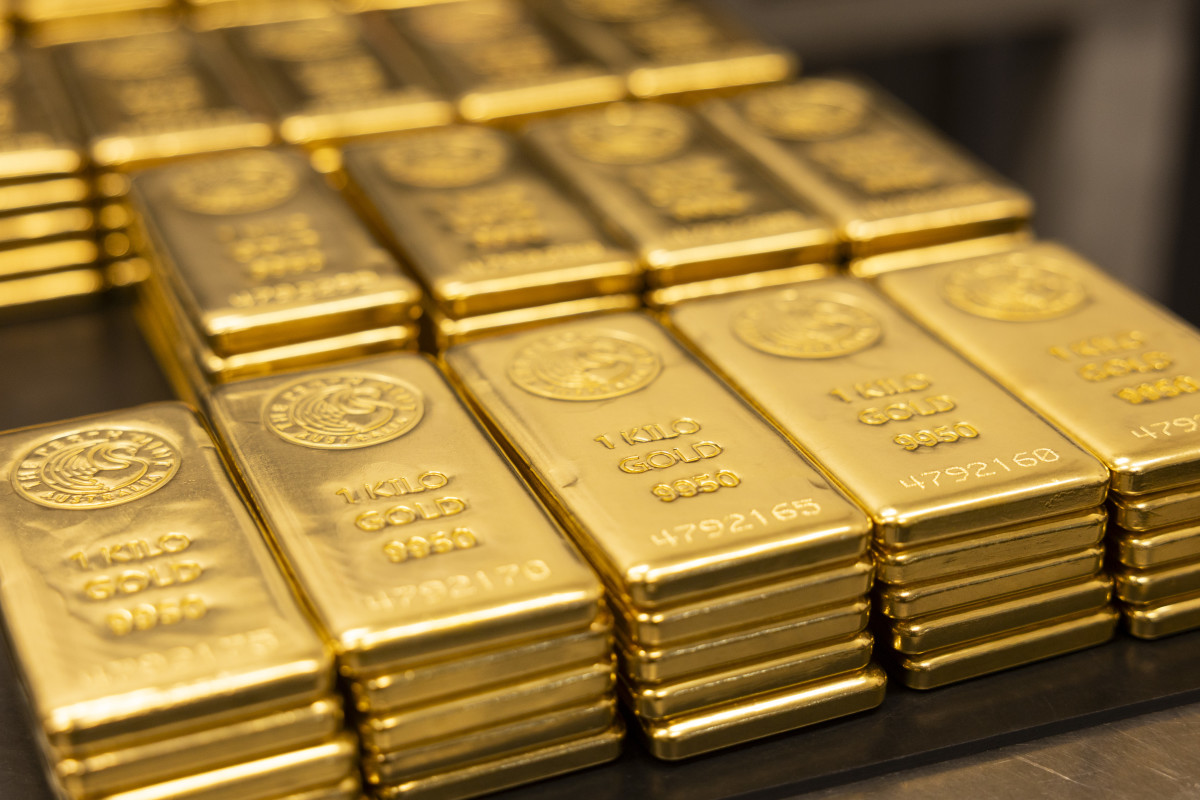 Deutsche Bank raises its gold forecast to $6,000, citing structural demand rather than short-term market panic.
Photo by Bloomberg on Getty Images
Latest major gold price targets
- Goldman Sachs (reset): $5,400/oz. by Dec. 2026
- HSBC: $5,000/oz. in the first half of 2026
- J.P. Morgan: Pushing toward $5,000/oz. by Q4 2026
- Morgan Stanley: $4,800/oz. by Q4 2026
- Citi: $5,000/oz. (0-3 month target)
The structural case behind Deutsche Bank’s $6,000 gold call
Deutsche Bank’s bullish reset is driven by its belief in gold’s evolving role in the investment landscape.
In a note by Singapore-based analyst Michael Hsueh, the bank asked a pointed question.
The answer is yes.
Though sharp gold rallies are often dismissed as speculative, Hsueh and his team found that in two-thirds of cases, the shiny metal is higher after six and 12 months.
Moreover, the demand isn’t episodic and is being driven by structural forces that include the following.
- Reserve managers are lowering exposure due to the “threat of foreign asset freezing.”
- Investors are seeking allocations to “non-dollar and real assets.”
- Long-term positioning is being spearheaded by “government debt growth.”
- Persistently higher geopolitical risk.
Related: Veteran analyst drops bombshell call on Intel stock
Gold’s longer-term returns tell the real story
- 2025 gain: +66.5% (from $2,606.72 on Dec. 31, 2024, to $4,339.65 on Dec. 31, 2025)
- 3-year gain: +173.1% (from $1,928.29 on Jan. 28, 2023, to about $5,267 spot on Jan. 28, 2026)
- 5-year gain: +185.4% (from $1,844.98 on Jan. 28, 2021, to about $5,267 spot on Jan. 28, 2026)
- 10-year gain:+372.3% (from $1,115.14 on Jan. 28, 2016, to about $5,267 spot on Jan. 28, 2026) Source: GoldPrice.org
De-dollarization and debt are quietly repricing gold
De-dollarization and long-term debt issues are pressing matters that will continue sticking out and repricing gold in the process.
In terms of currency reserves, International Monetary Fund (IMF) COFER data (from October) showed that the U.S. dollar’s share of allocated global foreign-exchange reserves fell to 56.32%, down from 57.79% the previous quarter.
More Gold:
- Market uncertainty resets silver, gold bets
- Billionaire Dalio sends 2-word warning on markets
- Every major analyst’s gold price forecast for 2026
For perspective, with global FX reserves at about $13 trillion in the third quarter of 2025, even modest shifts can reallocate hundreds of billions of dollars, benefiting gold, a non-liability asset.
That becomes doubly relevant, given that in 2022, nearly $280 to $300 billion in Russian sovereign assets were frozen, mostly in Europe. So “jurisdiction risk” essentially became tangible in no time, especially for managers who weren’t aligned or in geopolitically exposed countries.
The response shows up in the numbers as central banks added a whopping 1,045 tonnes of gold back in 2024 (the third consecutive year above 1,000 tonnes), after adding 1,037 tonnes in 2023 and 1,082 tonnes in 2022, World Gold Council noted.
The national debt is another elephant in the room, to say the least.
In fact, the biggest names in the financial space have been vocal about the threat. In a recent piece, I covered JPMorgan CEO Jamie Dimon’s argument that the rising national debt (at $38.4 trillion) is “not sustainable.”
In fact, the total global debt was at $251 trillion in 2024, IMF’s 2025 Global Debt Monitor reported, an eye-popping 235% of GDP.
Moreover, in the U.S., federal debt that’s being held by the public has also reached 100% of GDP, with deficits projected to widen further.
The biggest assets on the planet (ranked by market capitalization)
- Gold: $36.567 trillion
- Silver: $6.458 trillion
- Nvidia: $4.589 trillion
- Alphabet (Google): $4.044 trillion
- Apple: $3.816 trillion
- Microsoft: $3.572 trillion
- Amazon: $2.615 trillion
- Bitcoin: $1.783 trillion
- TSMC: $1.754 trillion
- Meta Platforms (Facebook): $1.696 trillion Source: Companiesmarketcap.com