
If you’re hoping for a 3% mortgage and bargain‑basement prices, J.P. Morgan’s 2026 housing outlook suggests you may be waiting a long time.
The bank expects 30‑year fixed mortgage rates to “stay elevated at 6+%” in 2026, even if the Federal Reserve begins easing policy later this year, according to J.P. Morgan Global Research.
At the same time, U.S. home prices, which have nearly doubled over the past decade, are projected to “stall at 0% nationally in 2026,” meaning prices flatten on average rather than fall outright.
When I read that, I see a “high‑price, high‑rate” market where you’re managing costs rather than waiting for a reset.
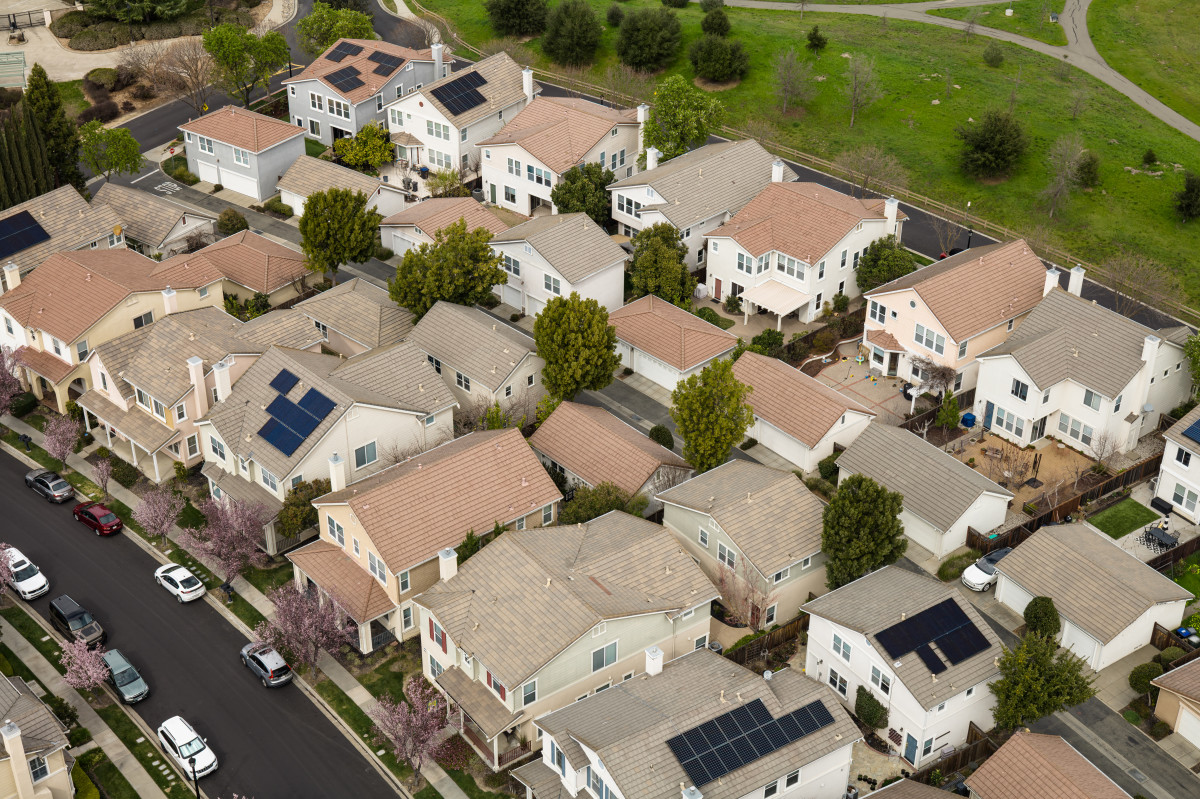 J.P. Morgan makes a 2026 housing prediction.
Photo by halbergman on Getty Images
What J.P. Morgan expects for mortgage rates
Here’s how J.P. Morgan thinks the mortgage‑rate picture plays out next year.
- 30‑year fixed mortgage rates: Expected to remain above 6% in 2026, even with potential Fed cuts.
- Adjustable‑rate mortgages (ARMs): Could “tick downward if the Fed decides to ease, thereby making homes more affordable.”
- Builder buydowns: Homebuilders “are continuing to offer rate buydowns — in which they pay a sum upfront to help lower the buyer’s mortgage rate — in a bid to clear their inventory.” Source: J.P. Morgan Global Research
“We think this could be enough, along with a rising wealth effect, to shift demand higher while supply increases subside. Consequently, we expect home prices to stall at 0% nationally in 2026,” said John Sim, head of Securitized Products Research at J.P. Morgan.
How J.P. Morgan sizes up the housing shortage
J.P. Morgan takes direct aim at the idea that the U.S. is short several million homes. Here’s how the bank frames the supply picture:
- Estimated shortfall: About 1.2 million homes, not the 3–5 million often cited.
- Long‑term balance: Over the past 30 years, new household formations and housing completions “net out to nearly zero,” suggesting the structural gap is modest.
- Risk of overbuilding: “Overbuilding is a sure path to home price declines, and builders have been navigating an increasing supply of new homes,” said Sim.
- Recent trend: Housing supply has “climbed in recent months,” particularly in markets with heavy pandemic‑era construction. Source: J.P. Morgan Global Research
To me, this supports a view where the bigger story is local oversupply or undersupply, not a sweeping national shortage that guarantees endless price gains.
Regions J.P. Morgan sees under the most pressure
J.P. Morgan highlights specific parts of the country where rising supply is already weighing on prices. According to the bank, the most notable trends are:
- West Coast: Home prices are “falling the most” in West Coast markets where a glut of new homes followed the pandemic building boom.
- Sun Belt: Similar price pressure is showing up in Sun Belt metros with large master‑planned communities and aggressive construction.
- Supply as the driver: “It should not be a surprise that supply is a key factor in areas where we see home prices decline,” said Sim.
- Tighter markets: Regions that did not see much new building remain constrained, with far less evidence of price softness. Source: J.P. Morgan Global Research
If you’re a buyer, I think that means your leverage will depend heavily on whether you’re in one of these overbuilt corridors or in a market where new homes are still scarce.
The lock‑in effect and why prices are sticky
J.P. Morgan argues that the biggest force keeping prices high is the “lock‑in” effect from ultra‑low mortgage rates, compounded by a weaker hiring market, according to J.P. Morgan Global Research. The bank notes that the U.S. house price‑to‑income ratio has been “near historic highs” for three years, underscoring how far prices have run ahead of incomes.
In its international comparison, J.P. Morgan points out that the United States is the only major developed market outside Japan that avoided outright house‑price declines during the recent tightening cycle, a sign of how resilient (and stubborn) valuations have been. That resilience is tied directly to how owners behave.
“Higher policy rates weighed on not just demand but also supply, as current homeowners were reluctant to move and sacrifice lower mortgage rates. Prices were thus kept high despite a fall in demand,” said Joseph Lupton, global economist at J.P. Morgan.
Related: Zillow forecasts big mortgage change for U.S. housing market
The labor market is reinforcing that lock‑in. J.P. Morgan says the hiring rate has “slowed to near recession lows,” which has “restricted an important channel that typically spurs both supply and demand in the housing market,” according to Lupton.
If you have a 3% mortgage, you probably don’t need a research note to explain why you’re hesitant to move, and for first‑time buyers, that individual hesitation shows up as a painful lack of listings.
What the latest home sales data tell buyers and sellers
Even with stretched affordability, J.P. Morgan sees signs that buyers respond quickly when rates pull back from their highs. The bank points to several recent trends.
- Existing home sales rose 5.1% in December, nearing a three‑year high.
- New‑home sales exceeded expectations in September and October, boosted by incentives and lower rates.
- Mortgage rates fell nearly 75 basis points (late-May to mid-September), finally translating into a clearer sales rebound.
- Residual seasonality may inflate existing‑sales strength, so J.P. Morgan is watching pending sales. Source: J.P. Morgan Global Research
How President Trump’s housing policies fit into the picture
J.P. Morgan also weighs in on the Trump administration’s new housing proposals and largely sees them as nibbling at the edges of the market rather than transforming affordability, according to J.P. Morgan Global Research.
The first plank is a proposed ban on institutional investors buying single‑family homes, meant to ease competition for would‑be owner‑occupiers, but institutional buyers account for only about 1-3% of purchases, so the policy is “unlikely to be a game-changer,” said Joseph Lupton, a global economist at J.P. Morgan.
More Real Estate:
- Why selling a home to your child for a dollar can backfire
- Commercial Real Estate Outlook 2026: Analysts See Signs of Recovery
- Redfin says mortgage rates, profits are hitting real estate now
Many big landlords have already pivoted to building their own rental communities, and “if the proposed ban also prevents these large operators from building their own homes or communities, we believe this could potentially have the opposite effect and theoretically tighten overall supply,” said Michael Rehaut, J.P. Morgan’s head of U.S. Homebuilding and Building Products Research.
On the financing side, the administration has told Fannie Mae and Freddie Mac to buy up to $200 billion in mortgage‑backed securities, equal to about 1.4% of the roughly $14.5 trillion mortgage market, which J.P. Morgan estimates would trim 30‑year mortgage yields by just 10 to 15 basis points.
“Most homebuilders already offer potential buyers mortgage rate buydowns of 100 bp to as much as 200 bp below the prevailing mortgage rate,” Rehaut added, arguing that such a modest cut is unlikely to materially change demand.
For landlords, the combined hit may amount to “perhaps less than a 1% annual headwind to net operating income (NOI) for a couple of years, in isolation,” said Anthony Paolone, J.P. Morgan co‑head of U.S. Real Estate Stock Research, reinforcing the idea that these moves tweak conditions more than they rewrite what buyers and renters can afford.
What the homebuying outlook means for your next move
When I step back from J.P. Morgan’s numbers, I don’t see a market where waiting automatically pays off. I see one where you have to stress‑test your decisions against higher carrying costs and slower price growth.
The National Association of Realtors’ affordability index was about 35% below its pre‑Covid level in November, according to J.P. Morgan’s summary, which means the squeeze on your paycheck is still real.
If you’re buying, that suggests three practical steps.
- Budget at today’s rates, plus a cushion, instead of assuming a much lower future rate will bail you out.
- Focus on markets with more new construction, especially overbuilt West Coast and Sun Belt areas where builders are cutting deals.
- Consider ARMs and buydowns with a clear refinancing strategy, rather than treating your first loan as permanent.
If you already own a low‑rate home, J.P. Morgan’s outlook explains why staying put can be a rational move, even if it keeps inventory tight for everyone else.
Related: Zillow reveals U.S. city with top housing market for homebuyers