
Amazon (AMZN) did all the right things this quarter. In short, AMZN didn’t suffer an earnings problem this quarter. But it did have a price-tag problem.
Amazon posted a clean win in the earnings report. A clean top-line beat and its fastest AWS growth in 13 quarters is usually cause for celebration. However, surprisingly, the reaction of the markets was incredibly different.
The stock fell as much as 9% on Friday, Feb. 6, Reuters reported.
Why is that? Well, investors are fixating on the return profile of a $200 billion capital expenditure plan for 2026.
Bank of America’s takeaway gets right to the point.
BofA reiterated a buy rating with a $275 price target, TheFly reported. Analysts also said the expenditure was not a show of strength, but a necessary cost of remaining ahead in AI and cloud.
Amazon CEO Andy Jassy’s own language was similarly direct.
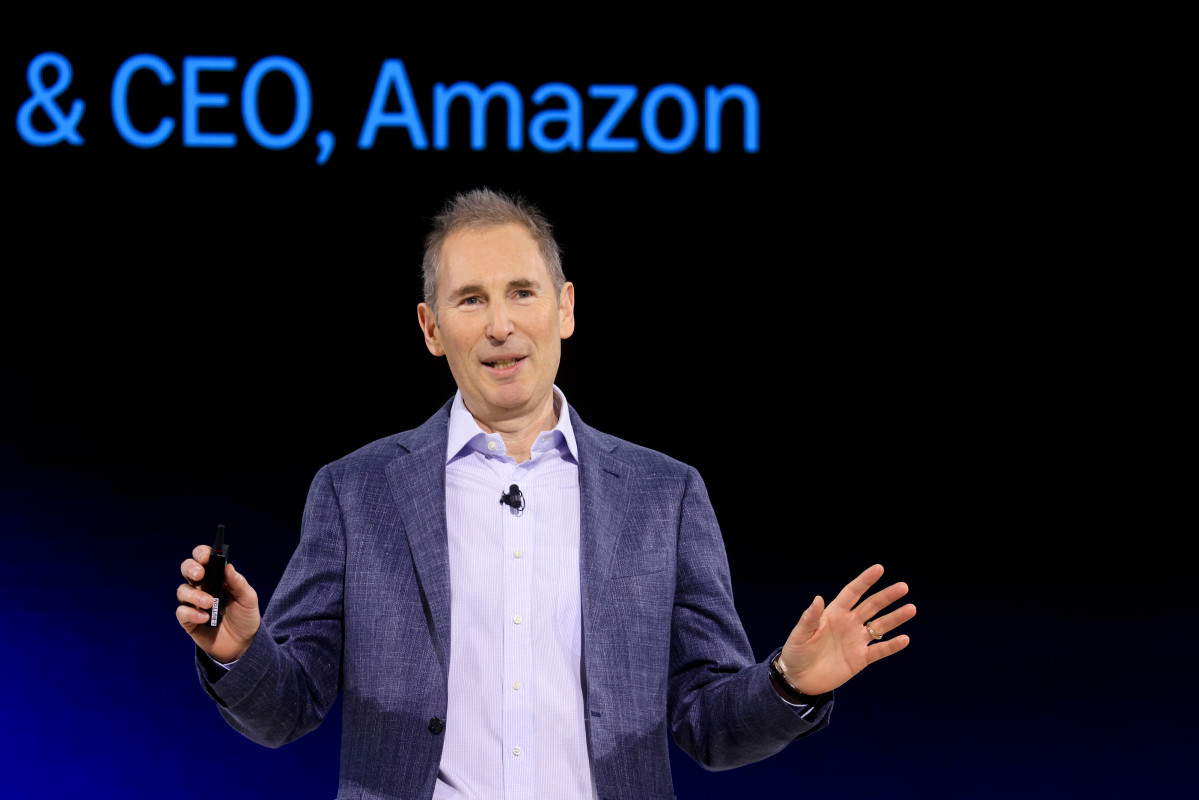 Amazon’s latest earnings win comes with a costly twist.
Photo by Bloomberg on Getty Images
AWS does the heavy lifting for Amazon yet again
Once again, Amazon’s fourth-quarter performance met expectations, declaring the kind of fundamentals that were required to calm the tape.
- Net sales:$213.4B, up 14% year over year
- Operating income:$25.0B (or $27.4B, excluding one-time charges)
- Net income:$21.2B, $1.95 per diluted share
- AWS sales:$35.6B, up 24% year over year
One thing I find noteworthy, after several years covering Amazon, is how important AWS is becoming for Amazon.
AWS remains Amazon’s bread and butter; AWS operating income was $12.5B in Q4.
BofA’s framing fits with that profit mix. Analysts noted that AWS’s growth exceeded expectations and accelerated from one quarter to the next as more capacity came online.
Amazon’s real story is cash: Operating cash surged, but free cash didn’t
Here’s the line that explains why investors immediately pivoted from “nice quarter” to “prove it.”
- Free cash flow:$11.2B, down from $38.2B a year earlier
- Operating cash flow:$139.5B, up 20%
What’s interesting is that Amazon pegs this issue as a forward-looking strategy.
That’s why the $200B capex target is hitting hard. This does not imply that Amazon has increased spending in this area for the first time.
The Street trembled when Big Tech became capital-heavy
Given its size, Amazon’s capital expenditure plan came as no surprise. However, the market reaction was due to one important fact: It comes at a critical time in the AI debate.
The market is currently debating whether hyperscalers are transforming from “asset-light” platforms into capital-heavy operators.
More Tech Stocks:
- Morgan Stanley sets jaw-dropping Micron price target after event
- Nvidia’s China chip problem isn’t what most investors think
- Quantum Computing makes $110 million move nobody saw coming
Under these circumstances, any slight stumble can have a large impact.
A Reuters report is intriguing in this regard. The combined AI-related investment plans from major tech firms sit at a very healthy $600B+ in 2026, amplifying investor anxiety. When will all of the returns come in?
Bank of America’s bull case: Build it, and you’ll fill it
BofA’s note gives me the cleanest “why this could work” logic, and if I were a day trader, this would be the best way to understand what the capex means.
- Amazon’s $200B capex outlook is outstanding, even considering what the broader industry is doing. The figure dwarfs Wall Street‘s approximately $148B expectation.
- However, BofA believes this figure is necessary to effectively compete in a crowded market.
- BofA sees the figure as a warning sign that Amazon is directing at its competitors.
- Accelerating AWS demand is real, and that is what Amazon is pointing toward. It can enable immediate capacity monetization, leading to possible further growth acceleration.
- BofA also points to AWS’s backlog growth of about 40% above revenue growth, which is basically the bullish “demand pull-forward” tell.
That’s the bet in one line: capex now, billable capacity next, and an AWS growth curve maintaining a positive trajectory.
Amazon’s bear case is in the guidance; growth holds, margins wobble
Amazon’s Q1 2026 outlook puts up some boundaries around forecasts.
- Net sales:$173.5B-$178.5B
- Operating income:$16.5B-$21.5B
BofA notes the profit guidance came below Street expectations, with stress from investments in global pricing, lower FBA fees, and approximately $1B in higher year-over-year Project Leo costs.
That’s the near-term tradeoff. Amazon is asking investors to accept more volatility now, in exchange for the opportunity to own the “AI infrastructure + cloud” compounding machine in the future.
Power, politics, and capital mingle during buildout
Demand for AI exists. However, execution has constraints.
AWS is facing power-grid connection delays in Europe, according to Reuters, which may hold down the process of bringing data centers online. This bottleneck becomes more significant as the scale of the capital expenditure increases.
Related: Palantir immigration enforcement bombshell hits just before earnings
And Amazon is still at risk of bad press outside of the cloud. For example, Germany’s cartel office moved to limit some price-control practices in the marketplace, and Reuters has also reported on a $309M U.S. returns settlement.
Separately, Amazon is cutting 16,000 corporate jobs as it increases efficiency and leans harder into AI, Reuters reports.
None of this is derailing AWS demand. But things are adding to the “2026 is an execution year” narrative.
What to watch in 2026: three tells that will drive AMZN stock
Now, let’s wrap this up and see what you as an investor need to do before the next re-rating. Here are the quarter-to-quarter tells.
- AWS growth + backlog: Is the backlog gap still large enough to make the capacity ramp worth it?
- Capex efficiency: Does extra spending quickly turn into billable capacity, or is it stuck behind limits?
- FCF path: Investors can tolerate lousy optics, but returns on capital are the market’s “driver.”
Amazon’s Q4 checked off all of the boxes. The $200B plan ensures the next chapters won’t be graded on growth alone.
The gradation will be on payback.
Related: Alphabet’s quiet $110B Waymo move blows up ‘other bets’ narrative