
You don’t need a chart to know prescription drugs are expensive.
When a pharmacist rings up a refill that suddenly jumps from a familiar copay to a painful list price, that sticker shock makes inflation feel a lot more real than any statistic ever could.
Against that backdrop, the Trump administration has decided to make drug costs the centerpiece of a new pocketbook pitch.
The White House has rolled out TrumpRx.gov, a website that promises significantly lower cash prices on some brand-name medicines for patients who are willing to pay out of pocket and bypass their insurance, according to CNBC.
President Donald Trump said Americans are “going to save a fortune” and called the effort “so good for overall health care,” according to The Economic Times’ account of his launch remarks.
I read those comments as a clear signal that the administration wants you to think differently about how you buy at least some medications, shifting from an insurance-first mindset to a direct buyer mindset where price comparisons feel more like shopping than filing a claim.
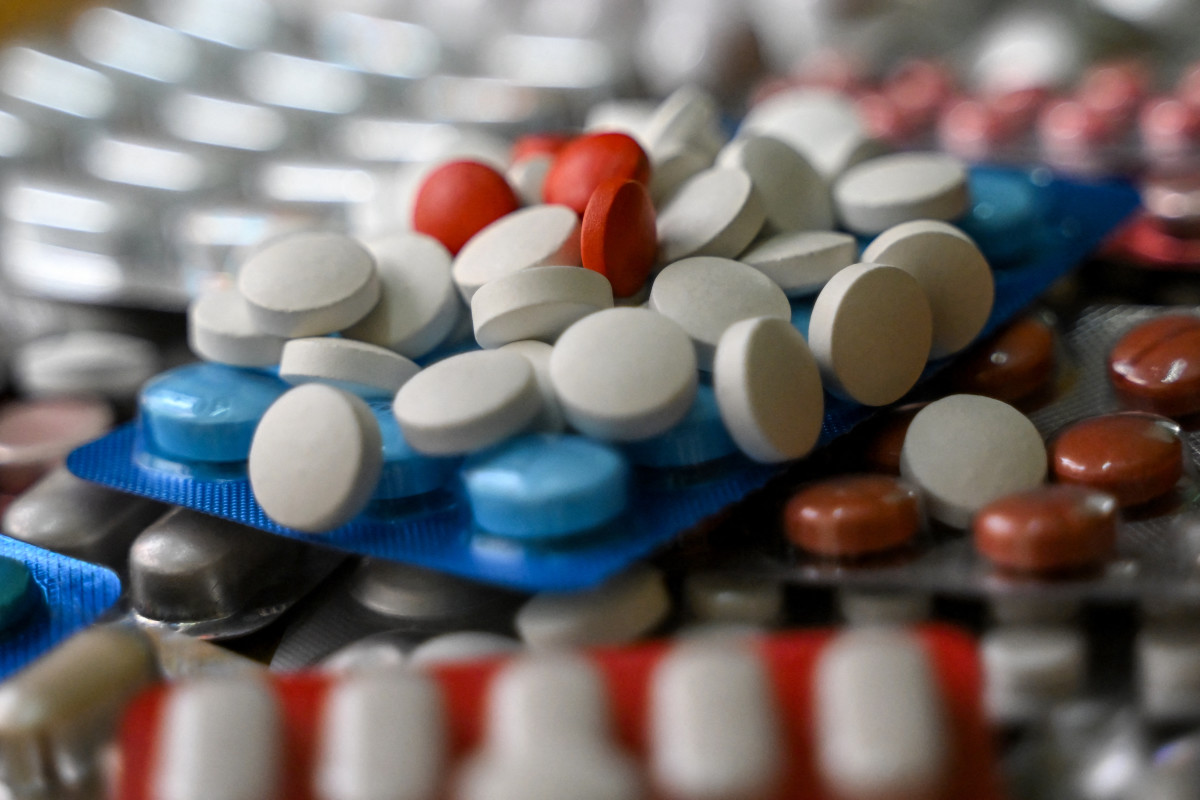 The White House launches a new drug-pricing website.
Photo by DIBYANGSHU SARKAR on Getty Images
What TrumpRx actually offers
TrumpRx is not an online drugstore in the traditional sense. The platform lists drugs and prices, then sends you either to a manufacturer’s own direct-to-consumer site or to a coupon you can present at participating pharmacies, as reported by NBC News.
On launch day, TrumpRx offered discounts on 43 brand-name medications. Those first-wave drugs come from five big names: AstraZeneca, Eli Lilly, EMD Serono, Novo Nordisk, and Pfizer, according to NBC News and NPR’s coverage of the rollout.
Related: Wall Street quietly rolls out new ‘Trump accounts’
When I dug into those lists, what jumped out was that the site leans heavily on high-cost categories including GLP‑1 diabetes and obesity drugs, migraine treatments, and certain specialty medicines, where list prices are high enough that even a partial discount translates into real money for you.
Under the deal Pfizer described, uninsured or insured patients who choose to self-pay can tap those savings without going through their insurance, according to the company’s press release.
From the administration’s side, additional manufacturers, including Merck, have already agreed to so‑called “most favored nation” pricing in Medicaid and on new drugs that go to market through TrumpRx, Firstpost reported in a summary of the broader push.
In plain language, the government is trying to anchor some prices to the lowest levels in comparable wealthy countries, while drugmakers get tariff relief and a more predictable framework in return.
How big are the actual discounts on headline drugs through TrumpRx?
The real test for you is whether the numbers beat what you are paying now for prescription drugs.
On that front, there are some eye-catching examples, especially on GLP‑1s and other expensive brand-name medicines.
TrumpRx launched with more than 40 medications and includes examples where costs were cut sharply from list price, including migraine drugs like Zavzpret, which dropped from 1,189 dollars to 549 dollars under the program, according to NBC News.
More Health Care:
- If your Medicare plan was canceled, do this now
- Health care costs are the wild card in year-end tax planning
- 22 million Americans hit by ACA health insurance cliff after vote fails
Ozempic is listed at $350 per month on TrumpRx, less than half of its roughly $1,000 list price, MEXC News highlighted.
The White House pointed to Reyataz, an HIV drug, with a price cut from $1,237 to $217 for cash buyers using TrumpRx, according to Ground News.
Pfizer said that for many of its primary care and select specialty medicines, TrumpRx discounts would average around 50% and could reach 85% in some cases.
When I compare that to typical Medicare Part D discounts that hover around 40% off list for brand-name drugs, as MEXC News noted when citing research on average rebates, TrumpRx’s headline savings are in the same ballpark or a bit better for certain products.
That does not make every offer a no-brainer.
You still need to compare the TrumpRx cash price not just to the official list price, but to what you already pay under your insurance after deductibles, copays, and any manufacturer coupons you may be using.
Paying cash for prescription drugs vs. using insurance: who benefits
On paper, TrumpRx is open to anyone with a prescription. In practice, the biggest winners are people who are uninsured, underinsured, or effectively paying cash because their deductibles are so high.
Uninsured patients stand to gain the most from TrumpRx, but insured patients might actually pay more if they chase discounts that do not apply toward their deductibles, according to Ground News, which quoted KFF expert Juliette Cubanski.
Cubanski said there is “not a lot of upside” for people whose insurance already delivers reasonable copays, because TrumpRx purchases generally will not count toward annual out-of-pocket caps.
To put that into your real life, imagine you have a high-cost chronic condition and you eventually hit your out-of-pocket maximum every year. If you switch to a TrumpRx cash price that looks cheaper early in the year, you might save a bit now, but you also risk delaying the point at which your plan kicks in and starts covering most of the cost.
Based on my view, TrumpRx looks most attractive in three situations.
For these people, TrumpRx might make sense:
- You are uninsured or between jobs, and TrumpRx beats your current cash quotes.
- Your insurer flatly refuses to cover a particular drug, but your doctor still wants you on that medicine.
- Your plan has such a high deductible that you rarely reach it, so every dollar you spend is effectively cash anyway.
If you are squarely in one of those buckets, the discounts TrumpRx advertises could be the difference between starting a recommended treatment and walking away at the counter.
What to check before using TrumpRx
If you are thinking about using TrumpRx, I would treat it like any other price-shopping tool, with a few extra steps.
- First, ask your insurer for the exact out-of-pocket cost of your prescription under your current plan, including how much of that spending would count toward your deductible and maximum.
- Second, pull up TrumpRx and see whether the listed cash price actually beats what your plan offers.
- Third, compare the TrumpRx price to other discount programs, including transparent-price pharmacies and any manufacturer savings cards your doctor’s office can help you access.
If TrumpRx came out ahead after all those comparisons, and I was not on track to hit my out-of-pocket maximum anyway, I would feel more comfortable pulling the trigger.
If I had a condition that makes hitting the maximum likely each year, I would be more cautious about giving up the long-term benefit of insurance just to grab a short-term discount.
Why TrumpRx matters for investors and the next round of reforms
For investors in big pharma, TrumpRx is not a one-quarter story.
The platform is “live and complicated” and layers on top of existing discounts and benefit designs, which means the earnings impact will likely show up gradually as contracts reset and as more drugs are folded into the most-favored-nation model, according to PharmExec.
Additional manufacturers are already in talks with the administration, and more deals are expected, which would deepen the program’s reach over time, CNN reported.
For you as a consumer, TrumpRx is one more sign that the old model of hidden rebates and mysterious copays is slowly giving way to more visible pricing, even if that transparency is partial and heavily branded.
I do not think this site, or any single site, can “solve” America’s drug-cost problem, especially when U.S. prices remain roughly two to three times higher than in comparable countries on average, as CNBC’s reporting on the broader issue has noted.
But if you treat TrumpRx as a tool rather than a miracle, and if you use it to pressure your insurer and pharmacy to meet or beat the best deals you can find, you may be able to claw back some money that used to disappear inside the system.
In a world where a single prescription can feel like a car payment, that kind of leverage is priceless.
Related: White House’s ‘Great Healthcare Plan’ sounds big – what’s the catch?