
Amazon (AMZN) and Google-parent Alphabet (GOOGL) are collectively spending a ton on AI, to say the least. However, according to a top-ranked Citi analyst, they’re doing it with remarkably different financial safety nets, with major implications for their investors.
Citi Global Head of Tech and Communications Heath Terry argues that the AI arms race isn’t just about who has demand, but also about who can pay for the next big phase without weighing down their balance sheet.
That’s exactly where Amazon and Google start to diverge.
For perspective, TipRanks indicates that Terry is a 5-star Wall Street analyst.He is among the top analysts tracked, with a 67% success rate, along with an average return of 26.5% on his sharp stock calls.
The easy part of AI is over, and the stock market sentiment is reflecting that of late.
Google’s stock is down 4.5% in the past week, while Amazon’s stock has tanked 12% over the same period.
Nevertheless, Google is entering this new phase with a far more robust funding engine, flush with substantial free cash flow. Conversely, Amazon finds itself layering AI spending onto an already capex-hungry business, with weaker free cash flow, while making debt a more likely bridge.
The takeaway isn’t simply which business wins the AI race; the cost of staying competitive is a difference that shows up clearly in their financials.
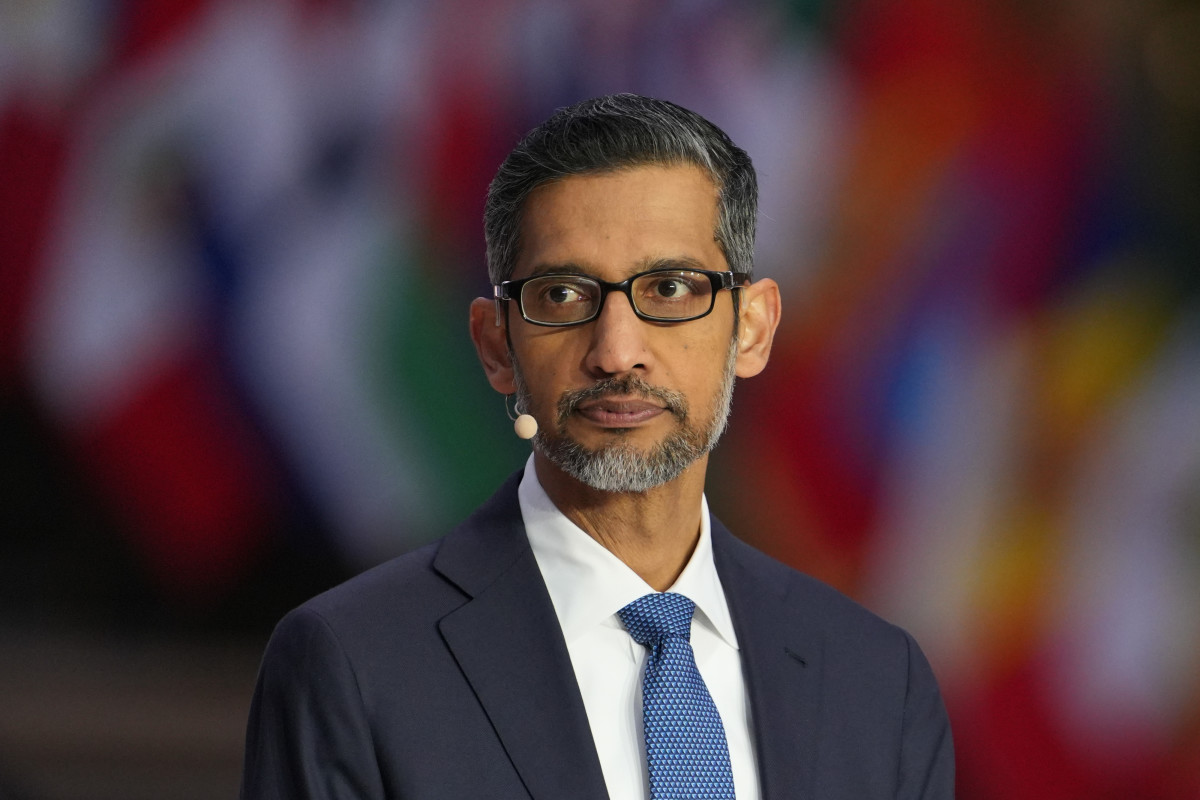 A top analyst says Amazon and Google face diverging financial dynamics, despite operating in the same tech landscape.
Photo by Bloomberg on Getty Images
AI’s next phase exposes a widening funding gap
Terry is arguing that AI spending is shifting from experimentation to full-scale enterprise deployment, and in that, the real test is scaling up without stressing the balance sheet.
More Tech Stocks:
- Morgan Stanley sets jaw-dropping Micron price target after event
- Nvidia’s China chip problem isn’t what most investors think
- Quantum Computing makes $110 million move nobody saw coming
The next phase has less to do with adding a few GPUs but with building the industrial backbone. That entails constructing data centers, power infrastructure, cooling systems, and networking gear, among other things.
That’s exactly where Terry sees the divergence.
Google is entering a new phase with a massive internal cash engine, but given the margin-heavy nature of its business, it could fund the expansion with internal resources. Amazon, by contrast, is layering massive AI capex on top of a retail and logistics business that’s already consuming a lot of capital.
Google’s cash engine looks built for the AI capex war
Google and Amazon are both in a race to add AI capacity at a relentless pace.
However, FY 2025’s cash-flow picture shows that both companies are running that race with completely different “fuel tanks,” and 2026 is likely to only widen that gap.
- In FY2025, Alphabet generated nearly $70 to $73 billion in free cash flows, while Amazon’s trailing 12-month free cash flow dropped to $11.2 billion as AI-linked capex jumped.
- In FY2025, Alphabet posted $139.5 billion in operating cash flow and spent roughly $91.4 billion on capex. On the flip side, Amazon also delivered $139.5 billion in operating cash flow while spending roughly $131 billion on capex, leaving a far thinner free-cash buffer.
- From FY2024 to FY2025, Amazon’s trailing free cash flow tanked from $38.2 billion (2024) to $11.2 billion (2025), showing how quickly the AI buildout could swallow internally generated cash.
- In FY2026 guidance, Alphabet told investors to expect $175 to $185 billion of capex (nearly double FY2025’s $91 billion), according to CNBC, while in FY2026 guidance, Amazon projected roughly $200 billion of capex (up about 50% from FY2025’s $131 billion).
Hence, Terry’s concern is that Amazon’s spending could outpace cash generation, pushing free cash flow into negative territory and making borrowing the least disruptive option.
Another sharp dynamic, identified by TheStreet tech expert and financial journalist Vuk Zdinjak, is perhaps equally disconcerting.
In his latest piece on Amazon, Zdinjak says the Amazon’s incessant spending is being built around clients who still aren’t financially self-sustaining.
He notes that Project Rainier was developed for Anthropic and that a big chunk of Amazon’s $244 billion backlog is linked to Anthropic/OpenAI, flagging a major vulnerability.
OpenAI and Anthropic aren’t profitable, and essentially, his take is that if they go bust, it’s unclear what Amazon will do with that capacity.
Google and Amazon earnings calls reveal two very different AI funding mindsets
Google and Amazon weren’t at loggerheads on their respective earnings calls, but the contrast in how they view AI spending and cash was tough to miss.
For instance, Google CFO Anat Ashkenazi often spoke about discipline, explaining that in evaluating investments, the tech giant company uses a “highly rigorous framework” that weighs “the cash flow generation, the health of our financials, and the balance sheet,” reported Investing.com.
The company’s management designed last year’s massive capex and the larger 2026 “envelope” to make the company feel comfortable from a cash-flow standpoint.
Related: Morgan Stanley tweaks AMD stock price target post-earnings
CEO Sundar Pichai reinforced that confidence. “We are seeing our AI investments and infrastructure drive revenue and growth across the board,” he said, adding that the boom is backed by strong, supply-constrained demand.
Amazon’s tone was remarkably different, however.
CEO Andy Jassy spent time defending the eCommerce pioneer’s $200 billion capex plan, touting AWS’s 24% year-over-year growth on a “$142 billion annualized run rate.”
- In Q4 2025, Synergy Research estimated that AWS held 28% of global cloud infrastructure spend, compared to Microsoft Azure at 21% and Google Cloud at 15%.
- In Q4 2025, AWS revenue grew 24% year over year, Google Cloud grew 48% year over year, and Microsoft Azure grew 39% year over year.
Jassy said the spending is a necessary bet, adding that Amazon now has “a chance to build an even more meaningful business” and stressing that it’s already seeing tremendous demand in these areas, despite being early in the piece.
In essence, Amazon essentially asked investors to trust that the payoff is still ahead.
Wall Street resets Amazon and Google stock price targets after earnings
Amazon stock:
- Bank of America (Justin Post): $275 (cut from $286), +30.8% upside
- Morgan Stanley (Brian Nowak): $300, +42.6% upside
- Goldman Sachs: $280 (cut from $300), +33.1% upside
- Citigroup: $265 (cut from $320), +26.0% upside Sources: FxStreet, Investing, TipRanks, MarketScreener
Google stock:
- JPMorgan (Doug Anmuth): $395 (raised from $385), +22.3% upside
- Goldman Sachs (Eric Sheridan): $400 (raised from $375), +23.9% upside
- Citigroup: $390 (raised from $350), +20.8% upside
- Bank of America: $370, +14.6% upside Source: TheStreet, Investing, TipRanks, MarketScreener
Related: Bank of America resets Google stock forecast post-earnings