
Whether due to pricing, proximity, or habit, many consumers become attached to a certain grocery store, making it their primary shopping destination. Over time, navigating the aisles becomes second nature, favorite brands are easy to spot, and weekly routines are built.
That sense of trust is broken when a neighborhood grocery store closes, especially as inflation and rising food prices strain household budgets. For many shoppers, replacing an affordable, nearby option isn’t just inconvenient; it can also drastically affect their everyday life and financial stability.
Although Aldi’s roots trace back to 1913, when it began as a small food store in Essen, Germany, it has become one of the fastest-growing grocery chains in the U.S. After opening its first U.S. location in 1976, the grocer quickly expanded nationwide, increasing its footprint at a pace that even many American rivals struggle to match.
The chain has built a loyal U.S. customer base through its minimalist store design, private-label products, and cost-cutting operational practices. These strategies have enabled Aldi to consistently offer lower prices than many competitors.
In today’s uncertain economic climate, this value-driven model is a major draw for shoppers, making Aldi a preferred destination.
However, one community is now losing access to that once-reliable option.
Aldi confirms permanent store closure
Aldi has confirmed it will permanently close its store at 1712 S. 108th St. in West Allis, Wisconsin, in spring 2026. This location has served local residents for at least a decade, according to the store’s oldest Yelp review.
“Aldi will continue to provide residents great products at the lowest possible prices at our stores across Wisconsin, and we remain committed to making a positive impact in every community we serve,” an Aldi spokesperson told the Milwaukee Journal Sentinel.
The company also noted that all affected employees have been offered transfers to nearby Aldi stores.
While the grocery chain operates about 90 locations across Wisconsin, the West Allis closure reduces convenient access for some residents. The nearest remaining Aldi stores are more than three miles away, and reaching them typically requires a vehicle, according to the company’s store locator, which can be a barrier for lower-income and elderly shoppers.
Nearby Aldi locations:
- 4225 S. 108th Street, Greenfield, Wisconsin: 3.3 miles
- 5811 W. Oklahoma Ave., Milwaukee, Wisconsin: 4.8 miles
- 1441 S. 35th St., Milwaukee, Wisconsin: 6 miles
- 1325 W Cleveland Ave, Milwaukee, Wisconsin: 7.1 miles
To help customers who are unable to shop in person, Aldi continues to offer grocery delivery through partnerships with Instacart, DoorDash, and Uber Eats, though delivery fees can be a challenge for price-sensitive shoppers.
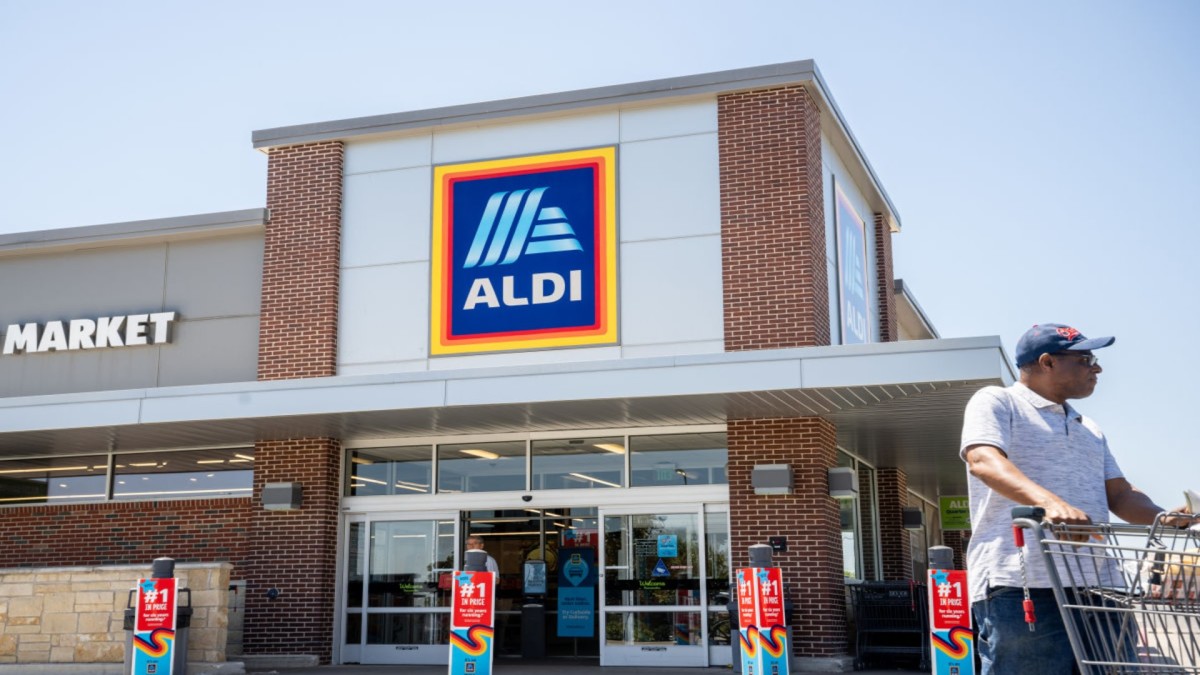 Aldi confirms another grocery store closure for 2026.
Another Milwaukee Aldi store closes
The West Allis shutdown follows Aldi’s closure of its store at 5301 N. Hopkins St. in Milwaukee in January 2026.
At the time, Aldi said the decision was part of a broader strategy to better allocate resources while maintaining a high-quality shopping experience at its nearby locations, according to the Milwaukee Journal Sentinel.
Aldi’s 2026 expansion plans
Despite these Milwaukee closures, Aldi remains committed to expansion across the U.S.
In early 2025, the company unveiled plans to open more than 225 new stores nationwide, marking its largest-ever single-year expansion. That effort is part of a five-year growth strategy that includes a $9 billion investment through 2028.
Most recently, Aldi revealed it will open over 180 stores across 31 states by the end of 2026. Once completed, the chain expects to operate nearly 2,800 U.S. locations, keeping it on pace to reach around 3,200 stores by the end of 2028.
“In 2026 we’re focused on making it even easier for customers to shop our aisles first,” said Aldi U.S. CEO Atty McGrath in a press release. “That means bringing Aldi to even more neighborhoods, upgrading our website and planning distribution centers to keep our shelves stocked with the products our shoppers love.”
The expansion represents a significant jump from 2024, when Aldi opened nearly 120 stores, bringing its total nationwide to more than 2,400. As of early 2026, the company operates over 2,600 locations, making it one of the largest grocery retailers in the U.S. by store count.
As part of this growth strategy, Aldi plans to expand into new and existing markets.
States with planned Aldi store openings
- Maine: Entering the state in 2026 as its 40th U.S. market, beginning with a Portland location
- Colorado: More than 50 stores planned for the Denver and Colorado Springs areas, along with a new distribution center
- Phoenix: Opening 10 new stores in 2026, with 40 planned by the end of 2030
- Las Vegas: Doubling its current store count by the year 2030
- The Southeast: Converting approximately 80 Southeastern Grocers locations to the Aldi format in 2026, with more than 200 conversions expected by the end of 2027
Distribution center growth strategy
To support its expanding footprint, Aldi is increasing operational capacity by opening three new distribution centers over the next three years. Each facility is expected to create hundreds of jobs, boost local economies, and improve its supply chain infrastructure.
Projected Aldi distribution center openings
- Baldwin, Florida: 2027
- Goodyear, Arizona: 2028
- Aurora, Colorado: 2029
Retail industry under mounting pressure
Aldi’s Milwaukee-area closures come as the broader U.S. retail industry faces mounting challenges. Economic uncertainty, shifting consumer behavior, and ongoing trade pressures are forcing many retailers to downsize or consolidate their operations, contributing to a surge in store closures and layoffs.
Store closures announced in 2025 were up 67% year over year, according to CoreSight Research.
“For consumers, the fallout means fewer choices, diminished access to in-person shopping, and, in some cases, higher prices due to reduced competition,” said Approved Funding President and Chief Lending Officer Shmuel Shayowitz.
Job losses are also accelerating. More than 1.2 million job cuts were made in 2025, a 58% increase from the year prior, according to the Challenger, Gray, & Christmas 2025 Job Cut Announcement Report. The retail sector alone accounted for nearly 93,000 layoffs, a 123% surge.
Meanwhile, the U.S. Bureau of Labor Statistics’ Employment Situation update showed that the unemployment rate stood at 4.4% in December 2025, representing approximately 7.5 million unemployed Americans.
“The implications of these closures go far beyond the retail floor,” added Shayowitz. “Thousands of workers are losing their jobs, many of them in communities where retail employment has historically been one of the biggest anchors.”
Industry analysts warn that continued store closures and layoffs could further strain an already fragile economy.
“The widespread closures of physical retail stores in the digital age significantly impact business outcomes, urban communities, and regional economies,” said industry experts at ScienceDirect. “Understanding this phenomenon is crucial for retailers, policymakers, and society at large.”