
Ben Affleck and Matt Damon, who both appear in commercials for Dunkin’, which many people still think of as Dunkin’ Donuts, grew up in New England before the chain faced competition from Starbucks.
As someone who shared that upbringing, and who at 52, is a little younger than Damon (53) and Affleck (55), I can say that the coffee and doughnut chain was likely a major part of their childhoods. My family regularly got doughnuts when guests were visiting, or if we had to travel somewhere in the morning.
As I got older, Dunkin’ was where I became a coffee drinker, and it was a place for hanging out and dates because it was cheaper than going to a restaurant. The Dunkin’ in my hometown of Swampscott, Mass., serves as an unofficial community center with anyone from town officials to coaches to teachers joining the old-time regulars on any given day.
Back in the 1980s, however, Starbucks was not a Dunkin’ rival, at least not in New England. Instead, the chain battled with Pewter Pot, which went out of business in the 1990s, and Mug ‘N Muffin, a similar chain that offered muffins, coffee, and more in a classic New England setting.
Mug ‘N Muffin has one location left
Swampscott actually had a Pewter Pot, and going there was a treat because it was upscale compared to Dunkin’. Coffee was served in mugs, and you got an entire teapot when you ordered tea.
Both chains offered Colonial‑inspired décor with wood paneling, warm earth tones, and antique-style accents, giving diners a cozy, “old New England” feel, according to Visiting New England.
Pewter Pot was actually the bigger brand, having roughly twice as many locations at its peak.
“Vincent (VJ) Catania, a native of Chelsea, Mass., founded The Pewter Pot chain in 1963, despite the menu’s claims of being ‘famous since 1831.’ For the next 10 years, he expanded the chain to its height of 40 locations. You could find a Pewter Pot Muffin House in almost every neighborhood of Boston and Cambridge and beyond,” The Next Phase Blog shared.
More Restaurants
- Chipotle’s new consumer strategy raises eyebrows
- Burger King revives iconic kids’ meal toys after 22 years
- Walmart surprises shoppers with bold new restaurant offering
Mug and Muffin, however, has outlasted its rival with a single remaining location in Norwood, Mass. Both chains were very similar.
That location has been in business for 42 years, according to the Better Business Bureau.
“The two restaurants became household names in Massachusetts for their great coffee and muffins, and slice of old-fashioned Americana vibe with colonial-style post and beam design, period wall lights and dimly-lit candle fixtures, flowery wallpaper design, red brick walls around the kitchen area, long carpeted dining rooms with old wood accents and furnishings, hanging plants, and an American flag proudly perched on a wall,” Visiting New England shared.
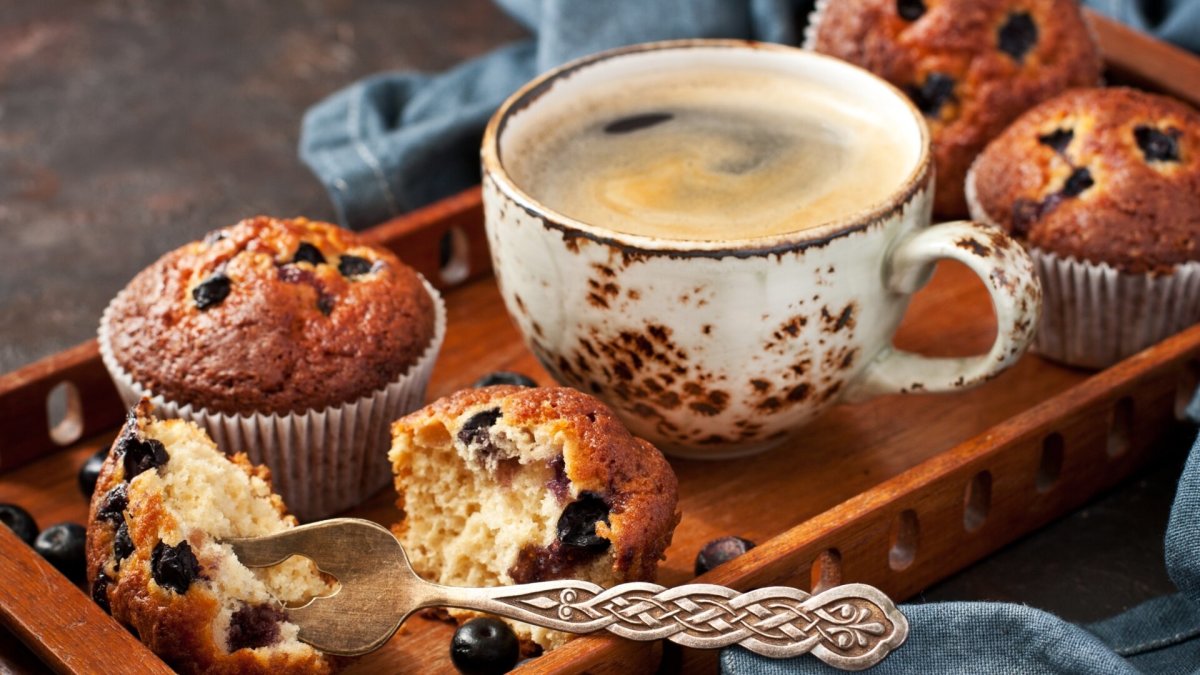 Mug ‘N Muffin offered a more elegant breakfast experience than Dunkin’ or Starbucks.
Shutterstock
Mug ‘N Muffin: History and context
In 1976, Mug ‘N Muffin opened in the historic square, across from an entrenched rival, which used to be a Pewter Pot.
“Harvard Square will become the battleground for a muffin war when the Mug ‘N Muffin chain begins to bake muffins at a new restaurant opposite the Country Kitchen muffin house,” The Harvard Crimson reported.
Neither restaurant still operates.
- Regional breakfast and lunch franchise: Mug ‘N Muffin was a popular Massachusetts‑based restaurant chain in the 1970s and 1980s, known for coffee, muffins, and hearty diner fare.
- Colonial‑style diner vibe: The restaurants featured a distinctive colonial‑themed interior with wood accents, dim lighting, and casual family‑friendly menus that set them apart from other local spots.
- Competition with Pewter Pot: At one point, Mug ‘N Muffin competed directly with other regional muffin‑house chains like the Pewter Pot, with locations battling for customers in Boston area neighborhoods such as Harvard Square.
- Chain decline: By the late 1980s and early 1990s, most franchised locations had closed as dining trends shifted and the brand lost ground to larger chains and changing breakfast habits.
- Solo survivor: Today, one Mug ‘N Muffin remains open at 716 Washington St. in Norwood, Massachusetts — operated by longtime team members who bought the location and preserved its classic menu and atmosphere.
- Community staple: The Norwood location is beloved locally, with regulars returning year after year for its breakfast and lunch staples, and its owner still working in the dining room decades after joining the company in the early 1970s. Source: Visiting New England
Why Mug ‘N Muffin closed most locations
Mug ‘N Muffin saw a gradual decline. It did not have a bankruptcy filing or a single inflection point when a lot of stores closed.
Instead, it fell victim to changing times as Starbucks slowly moved into New England.
“As Starbucks aims to make its mark in new territories and saturate existing ones further, local coffee shops could face unprecedented challenges. The scale and resources of Starbucks confer it a competitive advantage that could potentially crowd out smaller players, thereby altering the dynamics of local coffee cultures and economies,” Report Linker reported.
Both Starbucks and Dunkin’ crowded out a lot of local doughnut shops, diners, and breakfast places as they both expanded greatly beginning in the 1990s. It was a phenomenon I noticed near our family home in Jaffrey, New Hampshire.
A Dunkin’ opened in a local plaza with a diner that sold fresh-made doughnuts. The chain struggled, but it siphoned off enough business from passers-by, tourists, and even some locals that eventually the local place closed.
“While corporate coffee chains are convenient, they harm coffee culture, local coffee shops and roasters and create unreasonable working environments. I have worked as a barista for the majority of my collegiate career and have loved it. However, the amount of times that I have to clarify what a macchiato actually is has turned out to be my least favorite part of the job,” Elinor Shelp-Peck wrote in an opinion piece for the Meredith Herald.
The challenges Mug ‘N Muffin faced in the 1980s and 1990s, competition from regional and national chains, foreshadowed the broader market pressures that local coffee shops experience today, as seen in Boston with Starbucks closures and a surge of specialty competitors.
New England’s coffee scene is in flux
Starbucks closed some Boston locations earlier this year as part of a broader effort to rightsize its portfolio.
“Who knows where things are going?” George Howell, who started The Coffee Connection in the 1970s, told Boston.com. “The entire specialty coffee industry is in turmoil right now.”
The market, some noted, is saturated.
“There is a coffee shop on every corner, and that wasn’t the case 25 years ago when we started operating,” said Jennifer Park, owner of Diesel Cafe located across the street from the former Starbucks.
Competition has increased from growing regional and national players.
“Starbucks has other challengers, like the fast-growing drive-thru chains 7 Brew, Scooter’s Coffee and Dutch Bros. Chinese chains like Luckin Coffee and Mixue are opening U.S. stores. High-end coffee shop Blue Bottle, which has 78 U.S. stores, has opened two more since the start of the year. Even McDonald’s and Taco Bell are bolstering their beverage offerings, acccording to the Associated Press (AP).
Related: Popular cookie brand closes cafes, files Chapter 11 bankruptcy