
Billionaire fund manager David Tepper just made a massive $285 million bet on Micron (MU) stock, doubling down on the AI memory boom.
Tepper’s hedge fund Appaloosa just disclosed a head-turning bet on Micron, turning the memory giant into one of the fund’s biggest holdings. That position now accounts for nearly 6% of reported assets.
Micron has been one of the biggest beneficiaries of the relentless AI infrastructure boom, becoming one of the market’s hottest stocks as a result.
For perspective, Micron stock has gained more than 230% over the past six months and 324% over the past nine.
High-bandwidth memory (HBM) has become a critical chokepoint in AI data centers, and supply remains tight as ever.
CEO Sanjay Mehrotra recently acknowledged that memory markets are expected to “remain tight past 2026.”
Moreover, Micron stock has appeared across other major 13F filings I’ve covered in recent weeks.
Ray Dalio’s Bridgewater built a massive Micron position, with a nearly $253 million stake, while Jim Simons’ Renaissance swung even harder, adding nearly $520 million.
Bridgewater’s Micron was part of a larger “AI plumbing” build, with sizeable additions to Nvidia and Oracle. Renaissance, meanwhile, treated Micron as more of a conviction play, bumping its stake by more than 50% and scooping up 1.81 million shares.
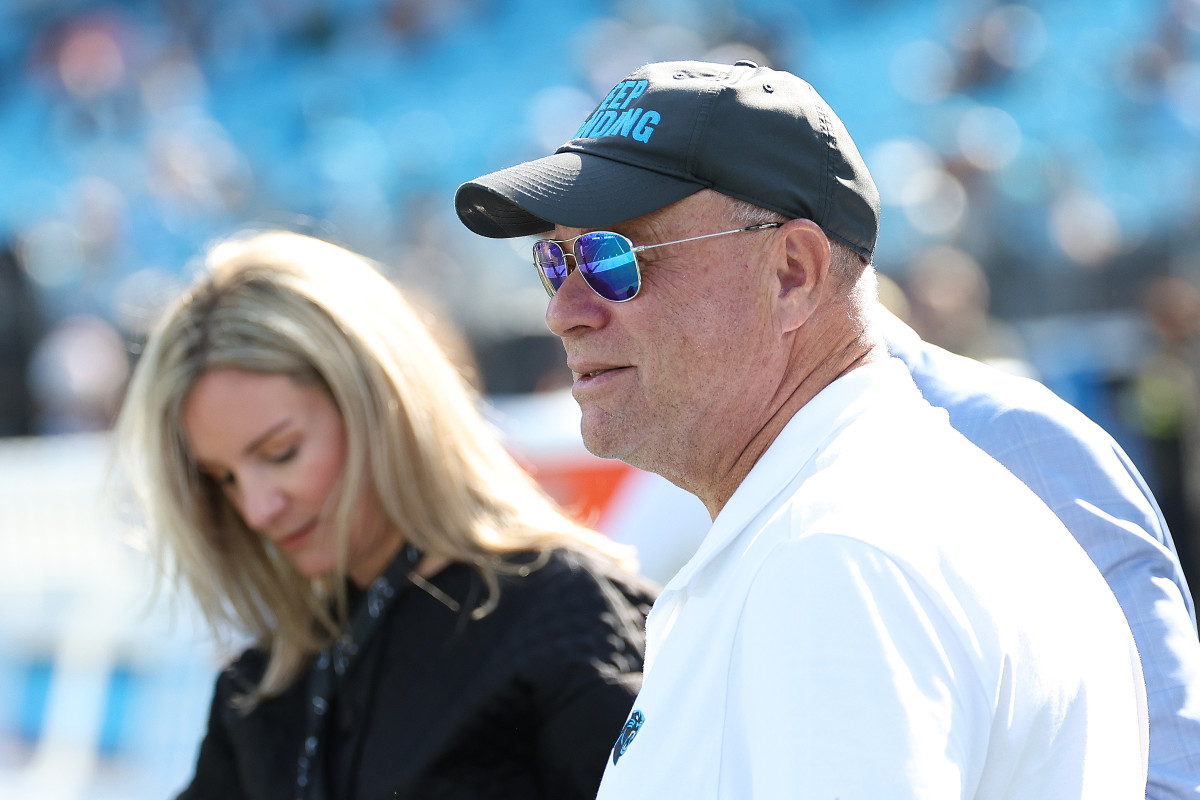 David Tepper’s hedge fund Appaloosa disclosed a $285 million Micron stake in its latest 13F filing.
Photo by Icon Sportswire on Getty Images
Appaloosa Management’s latest 13F activity
- Market value: $6.93 billion (prior: $7.38 billion)
- Inflows (outflows) as % of total MV: (3.9)%
- New purchases: 3 stocks
- Added to: 12 stocks
- Sold out of: 9 stocks
- Reduced holdings in: 24 stocks
- Top 10 holdings concentration: 59.01%
- Turnover: 25% Source: WhaleWisdom
Who is billionaire David Tepper?
That quote sums up Tepper’s investing style in a nutshell.
The legendary fund manager has built a rock-solid reputation for acting quickly, betting big, and sticking to his guns, even when the market initially moves the other way.
More Fund Managers:
- Ray Dalio’s Bridgewater invests $253 million in major AI stock
- JPMorgan builds $2.93 billion stake in health care stock
- Jim Simons’ Renaissance drops $520 million on surging tech stock
His playbook revolves around going where the market is under stress and scooping up assets that no one is willing to touch when panic peaks.
After climbing the ranks at Goldman Sachs in high-yield and distressed debt, Tepper launched his popular hedge fund Appaloosa Management in 1993.
Perhaps his most prescient call came in 2009, when he loaded up in a big way on beaten-down bank stocks and credit during the financial recession, pocketing billions when the sector returned to form. At the time, Appaloosa’s reported profit for the year came in at a whopping $7 billion, according to The Guardian, led by bets that big banks would thrive.
In the early 2000s, Tepper made a massive bet on distressed utility debt, securing a 149% gain when the sector rebounded the next year.
It’s important to note, though, that Appaloosa operates more like a family office, so Tepper is essentially managing his personal capital.
Tepper’s personal net worth is at an eyebrow-raising $23.7 billion, Forbes reports. Football fans know him as the owner of the Carolina Panthers, since he purchased the team in 2018 for an NFL-record $2.275 billion.
Top 13F moves at Appaloosa
Top buys (largest value)
- Micron Technology: $285 million
- iShares MSCI South Korea ETF: $182 million
- Meta Platforms: $152 million
- Alphabet (Class): $125 million
- Owens Corning: $88.2 million Source: WhaleWisdom
Top sells (largest value)
- Alibaba Group: $192 million
- Advanced Micro Devices: $134 million
- Whirlpool: $115 million
- Fiserv: $112 million
- KraneShares CSI China Internet ETF: $90.2 million Source: WhaleWisdom
13F holdings summary (% of portfolio)
- Alibaba Group: 10.88%
- Alphabet (Class): 8.1%
- Amazon.com: 7.26%
- Micron Technology: 6.18%
- Meta Platforms: 5.72% Source: WhaleWisdom
Leaning into the AI memory bottleneck
Tepper’s Appaloosa poured into Micron, as have other major hedge funds, per WhaleWisdom.
The hedge fund raised its stake in the business from 500,000 shares to 1.5 million shares, valuing the business at roughly $285 million (at the reported price $285.41).
Micron now represents over 6% of its portfolio, and for a concentrated hedge fund, that is some serious sizing.
Related: Legendary skeptic delivers 6-word verdict on Palantir’s hot streak
From a financial standpoint, Micron’s numbers are mighty impressive and are screaming “AI cycle.”
In fiscal Q1 2026, the company posted $13.6 billion in sales, a 56% gross margin, and $5.24 billion in GAAP net income.
Management then guided to nearly $18.7 billion in Q2 sales with margins approaching 67% to 68%. Moreover, the tech giant significantly bumped its fiscal 2026 capex to about $20 billion to grow its HBM capacity.
HBM is clearly where the money is, and after exiting its direct-to-consumer memory business, Micron is now focused squarely on its large AI customers.
In fact, according to Emergent Mind, HBM commands average selling prices and margins that are remarkably higher than those of traditional commodity memory.
Moreover, TrendForce reported that HBM3E pricing was nearly four to five times that of conventional server DDR5.
Consolidating around AI winners
Micron was Appaloosa’s headline bet, but the broader pattern of leaning hard into AI infrastructure and powerful mega-cap platforms was on full display, along with trimming exposure to areas with macro noise.
In doing so, Appaloosa boosted its Meta Platforms stake by roughly $152 million, to 600,000 shares.
That bet lines up with Meta’s aggressive AI buildout, where the tech giant is projecting $115 billion to $135 billion in 2026 capex, according to Bloomberg. The tech punditry is betting that Meta has the balance sheet strength to continue funding its AI endeavors and pushing ahead in the arms race.
The same logic applies to Google-parent Alphabet, where Appaloosa added nearly $125 million. Google has the cash machines that can continue absorbing the AI hits without reversing course.
On top of that, Tepper’s fund dropped an eyebrow-raising $182 million on the iShares MSCI South Korea ETF.
With healthy exposure to Samsung Electronics and SK hynix, the ETF is an indirect bet on the incredible demand for memory and semiconductors.
On the sell side, Tepper’s fund cut exposure to Alibaba and the China internet ETF, curbing geopolitical risk. The fund also reduced its stake in chipmaker AMD, favoring memory over compute in this cycle, while clearing out names such as Whirlpool and Fiserv in funding higher-conviction areas.