
If you own gold right now, you are living through one of the wildest “safe haven” runs in decades. To put that in perspective, gold has hit above $5,000 per ounce at least seven times and currently trades above $5,200 at the time of writing, according to Tradingview.
J.P. Morgan Private Bank just released a note titled “The case against gold and why it’s wrong,” arguing there is a reasonable case against the rally’s continuation, but that case is still incorrect.
The bank lays out the bear arguments, then concludes that gold “retains its role as a strategic diversifier” for portfolios even after its huge move, according to the J.P. Morgan Private Bank piece.
At first read, that sounds contradictory.
When I dug into the note, I saw it less as a sell signal and more as a blunt reminder that you should not mistake a strong structural story for a one‑way trade.
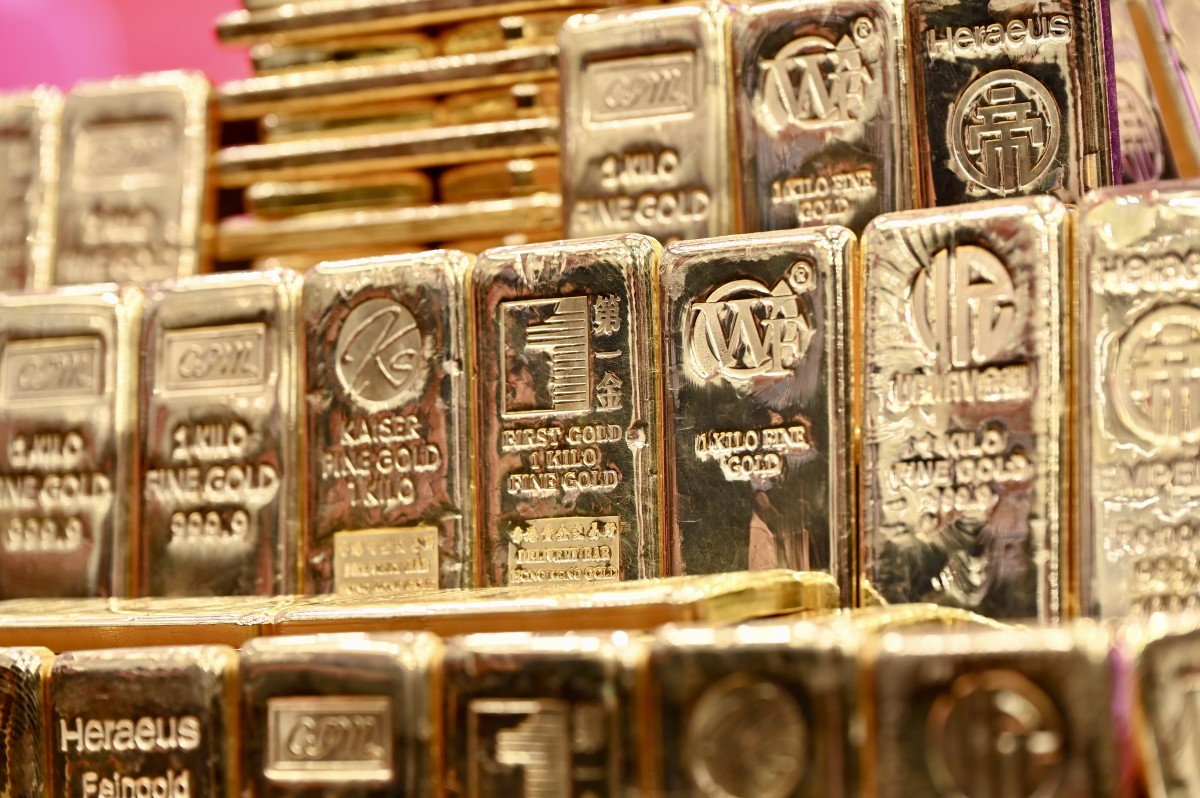 Gold hits $5,200 per ounce.
Photo by China News Service on Getty Images
How the bank breaks the mood on gold euphoria
The note starts by asking a question that every gold bull hates: What could actually stop this rally?
J.P. Morgan says the single biggest driver of gold’s surge has been central banks, with net purchases roughly doubling after Russia’s 2022 invasion of Ukraine as countries moved to diversify away from the dollar following sanctions and asset freezes.
Related: Silver, gold surge as Iran bets shift
The bank reminds readers that official institutions used to be net sellers, and that “the selling only stopped” after the Washington Agreement on Gold capped large, price‑moving disposals, a deal that lapsed in 2019 once central banks became consistent buyers again.
The uncomfortable question J.P. Morgan asks is simple: What if that structural demand waned or even flipped back toward sales?
The authors also warn that retail investors who have bought bars, coins, and gold‑backed ETFs in size could easily turn into net sellers if prices stall, with the result that “plateauing demand” is a real risk, not just a theoretical one.
Outside data back up how stretched this market has become.
More Gold:
- Gold, silver surge after record drop flashes technical signal
- Silver and gold tumble triggers major reset for mining stocks
- J.P. Morgan revises gold price target for 2026
Global gold demand hit a record 5,002 tons in 2025, with investment demand jumping to 2,175 tons and ETF holdings up 801 tons, according to the World Gold Council’s latest annual trends report.
“2025 saw surging demand for gold and rocketing prices,” said Louise Street, a senior markets analyst at the World Gold Council, who added that investors “raced to access gold through all available routes” as geopolitical and economic risks became the new normal.
To me, that is the core of the reality check. When everyone has already rushed in for the same reasons, your margin for error shrinks.
Why J.P. Morgan still calls the bears wrong
What makes the note interesting is that J.P. Morgan doesn’t stop at the risk list. It turns around and explains why it still sees the bearish case as wrong, at least for now.
The bank says outright that a reversal in central bank buying is “unlikely to happen. At least, not anytime soon,” in both the U.S. and European versions of the report.
Gold’s rally is being driven by a new era of geopolitical fragmentation, worries about currency debasement, and stretched fiscal finances that are not fully reflected in sovereign bond markets, according to J.P. Morgan’s framework.
That bigger backdrop shows up again in the bank’s published price targets.
Related: Top bank revisits gold stock price target for rest of 2026
On Feb. 2, J.P. Morgan told clients it now expects gold to reach about $6,300 per ounce by late 2026, citing an “ongoing, unexhausted trend of reserve diversification” and saying it remains “firmly bullishly convicted in gold over the medium term,” highlighted in my TheStreet summary of the call.
The same update lifted the bank’s projection for central bank buying to roughly 800 tons in 2026 and described a “clean, structural, continued diversification trend” toward real assets and away from paper claims.
When I put J.P. Morgan’s language next to those numbers, I see a bank that wants its clients to respect the downside without giving up on what it clearly views as a multi‑year regime shift.
How I connect the gold rally to your portfolio decisions
Reading the note as an individual investor, I tried to translate the institutional language into practical questions you and I actually need to answer.
First, what do you want gold to do for you?
J.P. Morgan keeps coming back to gold as a “strategic diversifier,” not a hero asset that will fix a broken portfolio overnight.
Ray Dalio has framed the role similarly, arguing that gold behaves “much more like insurance than an investment” in a world of rising debt, sanctions, and capital controls, according to an interview cited by TheStreet.
Second, can you live with the volatility that comes with this story?
The World Gold Council data show ETF flows and bar‑and‑coin buying are doing more of the heavy lifting, while jewelry demand has dropped 18 percent and Chinese jewelry consumption has slumped 24 percent in volume terms.
That tilt toward financial investors means gold trades more like a macro hedge and less like a consumer good, which, in my experience, usually translates into sharper swings when sentiment shifts.
Third, how much of your net worth do you really want tied to implicit bets on central bank behavior and geopolitical stress?
J.P. Morgan is effectively betting that high debt loads, concerns about the dollar, and elevated geopolitical risk will keep the official‑sector and private demand robust.
Bank of America’s commodity strategists have argued that the White House’s “unorthodox” fiscal and monetary mix should keep supporting gold and that, after a near‑term correction, gold and silver could still push toward $5,000 an ounce in 2026, according to their October 2025 metals note, as reported by Reuters.
I find that combination persuasive, but not comforting. If the bullish case rests on the world staying messy and unpredictable, you should think of gold as a way to transfer some of that stress into your portfolio, not to escape it.
How I would personally use J.P. Morgan’s reality check on gold
When I step back from the numbers and think about how I would invest my own money, J.P. Morgan’s blunt framing nudges me toward moderation, not bravado.
Here is how I translate the message into action for an everyday portfolio.
- Treat gold as insurance, not as a lottery ticket. The big banks are still modeling higher prices, but their own notes describe sharp pullback risks and warn about “crowded” positioning in momentum phases.
- Size the position so that a 20 to 30 percent drawdown is annoying, not life‑changing. The World Gold Council’s record demand numbers and J.P. Morgan’s caution about potential retail selling tell me this market can move fast in both directions.
- Think in years, not months. The themes J.P. Morgan highlights, from de‑dollarization to fiscal strain, are multi‑year forces, and trying to trade every spike and dip is, in my experience, a good way to lock in losses.
Put simply, J.P. Morgan is dropping a reality check on gold’s price surge, not a death sentence.
The bank is telling its wealthy clients that the rally can stumble and that the bear case is worth taking seriously, even as it quietly raises its own price targets and keeps gold in the “strategic” bucket.
If you and I listen carefully, the message is pretty clear. It is fine to own gold here, as long as you remember that even a “golden era” can have some very rough days.
Related: J.P. Morgan revamps silver stock price target for 2026