
Jensen Huang has a message for Wall Street: You misread the AI playbook. The Nvidia (NVDA) CEO stepped in front of CNBC’s cameras Wednesday night and delivered a pointed rebuttal to the panic selling that has hammered enterprise software stocks for weeks. His verdict was blunt and direct.
“I think the markets got it wrong,” Huang told CNBC after Nvidia posted a record-breaking quarter. Far from killing software, he argued, agentic AI will become one of the biggest users of the tools investors are currently dumping.
The timing gave his words extra weight. Nvidia just reported fiscal Q4 revenue of $68.1 billion, up 73% year over year, with data center sales alone climbing 75% to $62.3 billion. When the man supplying the shovels for the AI gold rush says the mines are safe, markets tend to listen.
Why Huang thinks the selloff is a mistake
The backdrop here matters. What traders have dubbed the “SaaSpocalypse” has wiped out more than $1 trillion in enterprise software market value since January. Salesforce has shed roughly 27% year to date. ServiceNow, Workday, and Adobe are all deep in the red.
The fear driving the selloff centers on “seat compression.” The logic goes: if one AI agent can do the work of a dozen employees, companies will need far fewer software licenses. Forward earnings multiples for the software industry have collapsed from 39 times a year ago to just 21 times today, according to analysts tracking the sector.
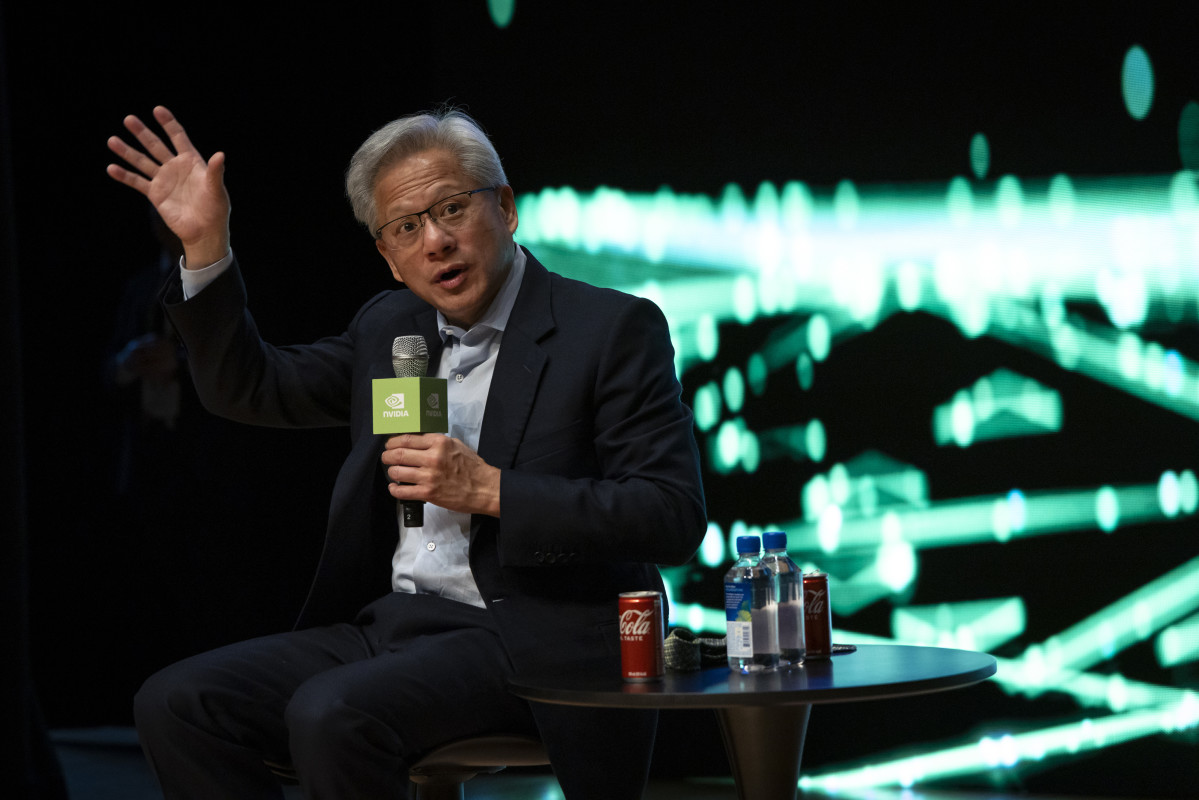
Photo by Woohae Cho on Getty Images
Huang called that framing a deep misunderstanding of how AI agents actually function. He compared them to tool users, not tool destroyers. An agent running inside ServiceNow still needs ServiceNow. A copilot embedded in Salesforce still runs on Salesforce infrastructure.
What Huang said and what it means for investors
Huang used his own workforce as an example. He said he has 42,000 human employees today, and expects to soon have hundreds of thousands of digital ones. More agents running means more software licenses consumed, not fewer.
Key reasons Huang says software survives the AI wave
- Agents run inside platforms, not around them. ServiceNow, SAP, and Salesforce all “exist for a fundamentally good reason,” Huang said. AI agents will execute tasks through those tools, not bypass them.
- Enterprise contracts provide a long runway. Multi-year agreements insulate top SaaS vendors from near-term disruption. Switching costs remain high regardless of the AI hype cycle.
- History backs the incumbents. Cloud computing killed on-premise software but made Amazon and Microsoft bigger. Mobile crushed BlackBerry but created Apple’s empire. Platforms that adapt tend to win.
- Hyperscaler spending lifts all boats. Big Tech is on pace to spend nearly $700 billion on AI infrastructure in 2026. Those workloads need SaaS layers to be useful inside the enterprise.
Wall Street is starting to agree
Huang is not alone in his view. Market watchers at CNBC noted Thursday that several portfolio managers called the software rout overdone. Siddy Jobe of Econopolis Wealth Management said Huang was right, pointing to Snowflake and Datadog as names worth picking up at current levels.
Neal Shah, an AI and healthcare innovation entrepreneur, offered a nuanced take. He acknowledged some cannibalization is real, but argued the selloff punished the entire sector when it should have been far more selective. The companies that move fastest to outcome-based pricing, charging per task rather than per seat, will capture the bulk of the next era’s market.
More AI Stocks:
- Morgan Stanley sets jaw-dropping Micron price target after event
- Bank of America updates Palantir stock forecast after private meeting
- Morgan Stanley drops eye-popping Broadcom price target
Salesforce reported earnings Wednesday and offered some vindication. Agentforce revenue reached $800 million in annual recurring revenue, up 169% year over year, with 29,000 deals closed in the most recent quarter. CEO Marc Benioff described the company as “the operating system for the agentic enterprise.”
Risk Is real but priced too harshly
Not everyone is fully buying Huang’s optimism. Dan Niles of Niles Investment Management warned on CNBC’s Squawk Box Asia that some software companies will not make it through this transition.
“There’s some real companies that are going to go to zero in the software space,” he said, adding that the most resilient players will be in the database and cybersecurity sectors.
The valuation gap is striking, though. Nvidia trades at roughly 45 times forward earnings while leading SaaS names have compressed to the low-to-mid 20s. Free cash flow yields on the top software platforms are sitting above 4%, levels that historically attract long-term buyers.
Huang’s seven words may not end the SaaSpocalypse overnight. But they reframed a conversation that had veered toward outright panic. Software platforms are not the enemy of agentic AI. For the companies that move fast enough, they may become its infrastructure.
Related: Nvidia buys $3 billion in under-the-radar tech stocks, exits Arm